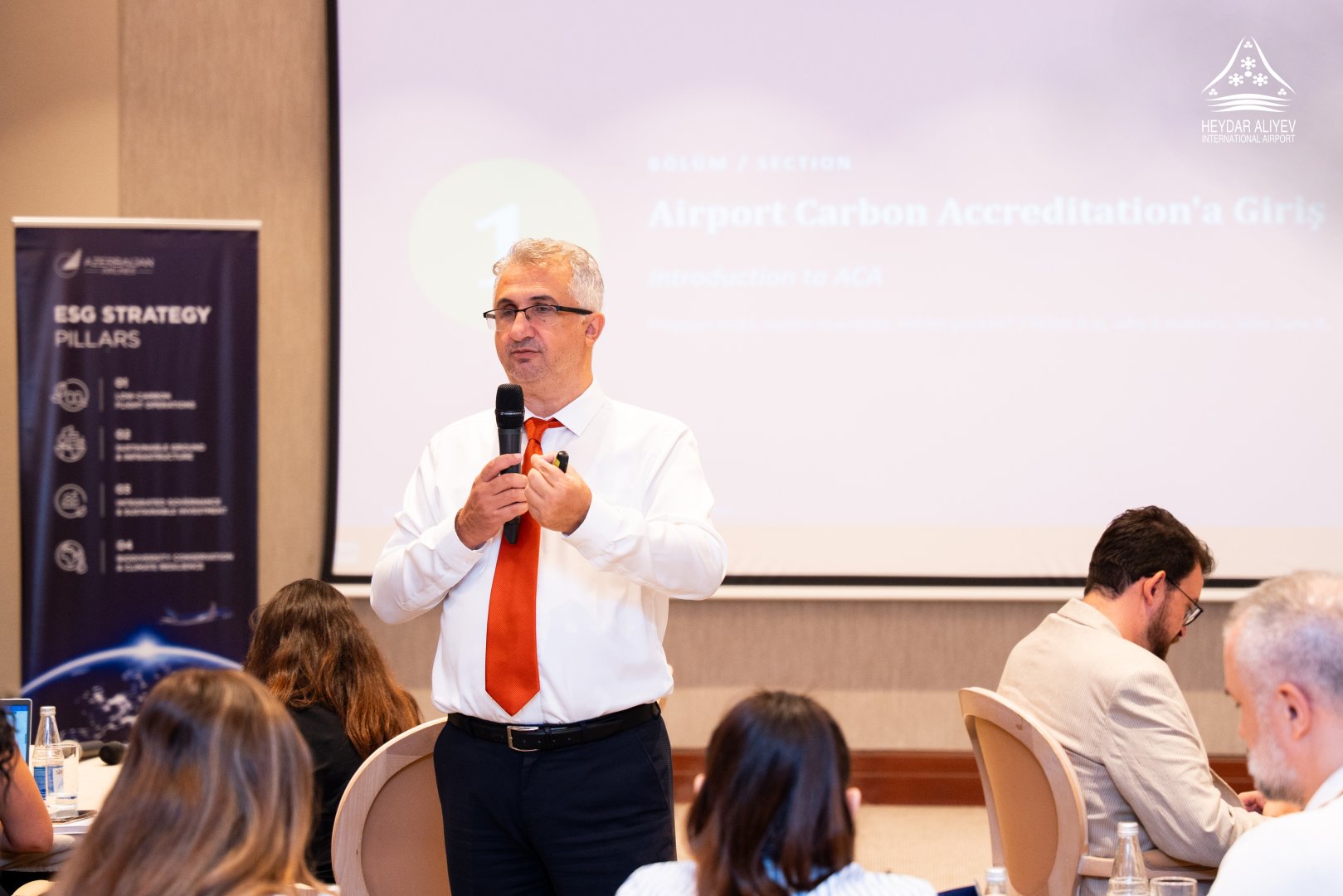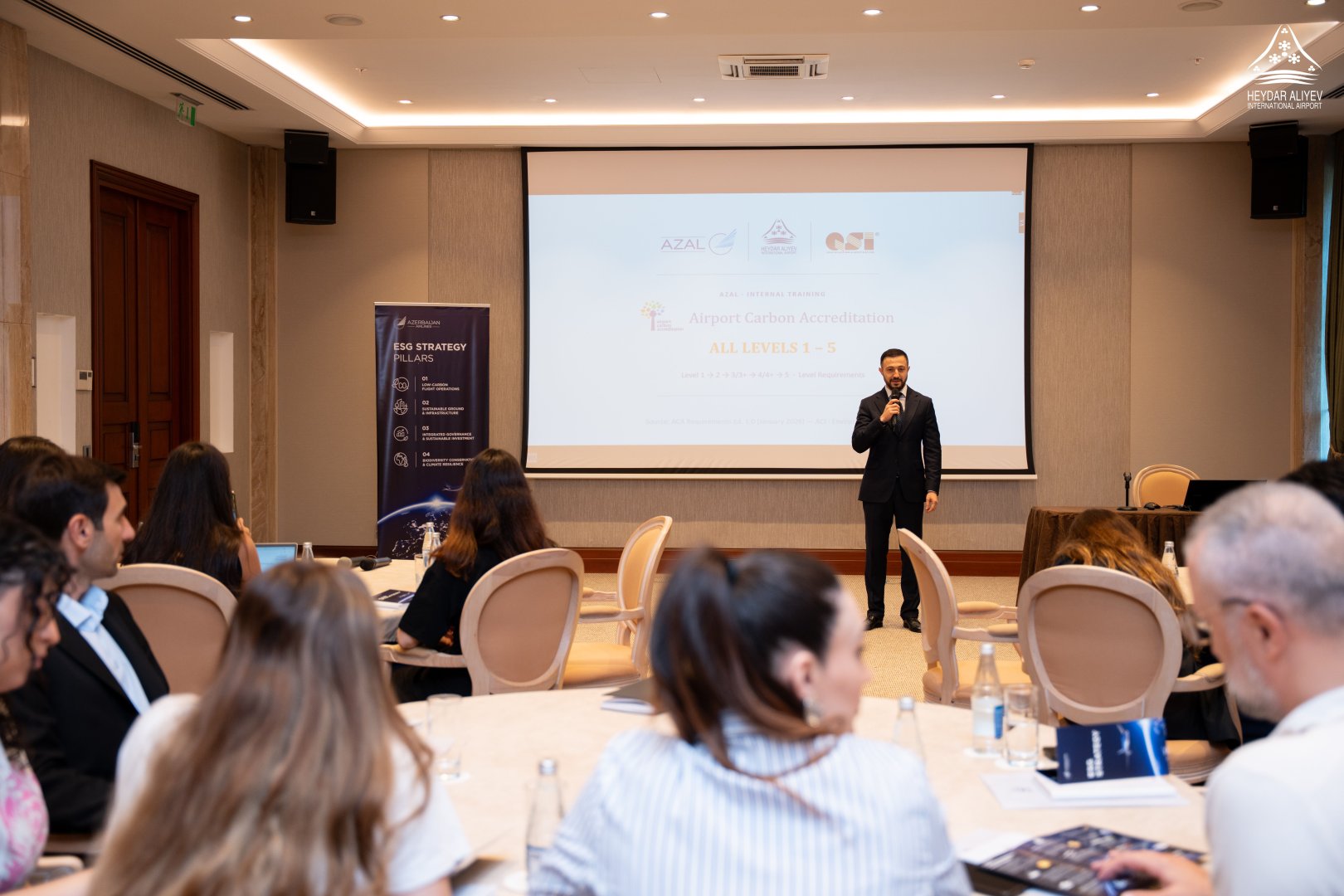
BAKU, Azerbaijan, August 12. A seminar dedicated to the Airport Carbon Accreditation (ACA) programme was held at Heydar Aliyev International Airport, jointly organised by the airport, Azerbaijan Airlines (AZAL) and QSI.
The seminar, held at Heydar Aliyev International Airport - the first airport in the region to achieve Level 3 accreditation under the ACA programme - focused on the requirements for progressing to higher accreditation levels, AZAL’s decarbonisation targets within its Environmental, Social and Governance (ESG) strategy, and future areas of action.
The seminar, conducted by Okay Kayhanlı, Chief Executive Officer of QSI, identified systematic carbon emissions monitoring, reliable data exchange and joint decarbonisation initiatives with stakeholders as key priorities.
Particular attention was given to the management of indirect emissions under Scope 3 and the more active engagement of key stakeholders across the airport ecosystem. In this context, strengthening cooperation with airlines is envisaged, ground handling operators, fuel and energy suppliers, transport companies and other service providers.
It should be noted that Heydar Aliyev International Airport has already implemented a number of measures aimed at improving energy efficiency and reducing emissions. More than 4,000 outdated lighting fixtures have been replaced with energy-efficient alternatives, while new lighting management systems have been introduced. These measures deliver annual electricity savings of approximately 1.2 GWh and reduce carbon emissions by around 600 tonnes of CO₂ per year.
The implementation of the ISO 50001:2018 Energy Management System began in 2025. As a result, electricity consumption per flight decreased by 2.3% in 2025 compared with the previous year.
In parallel, the Building Management System (BMS) at Terminal 1 has been upgraded, enabling more efficient management of lighting and ventilation systems. The next phase will include the integration of additional systems into the BMS and the expansion of renewable energy projects.
These initiatives form part of Heydar Aliyev International Airport’s long-term efforts to progressively reduce carbon emissions, improve energy efficiency and develop a more sustainable airport ecosystem. The airport continues to advance its work in this area as it progresses towards its long-term goal of achieving net-zero emissions by 2050.