



BAKU, Azerbaijan, August 12. Kazakhstan will allocate 5 billion tenge ($10.6 million) from its Special State Fund to build a water pipeline from the Sarybulak groundwater deposit to Aktobe, adding up to 70,000 cubic meters of daily water capacity for the region.
According to the government of Kazakhstan, the funds will finance the drilling and development of 20 artesian wells at the Sarybulak deposit, located 56 km from Aktobe, as well as the construction of a pipeline connecting the source with the city’s water supply network.
Once commissioned, the project will supply up to 70,000 cubic meters of water per day to Aktobe and the Alga and Mugalzhar districts. Up to 25,000 cubic meters per day will be directed specifically to the growing Batys-1, Batys-2 and Batys-3 residential districts. The Sarybulak deposit has proven reserves sufficient to provide water supply for the region for 30 years. The project is expected to address existing capacity constraints. Currently, the expansion of residential construction in several districts is limited by available water infrastructure, with additional supply needed to support future connections.
The initiative is part of Kazakhstan’s broader use of returned assets for public infrastructure. Since 2024, the Special State Fund has approved financing for more than 500 social projects worth 610 billion tenge ($1.3 billion). Of these, 267 projects worth 226.5 billion tenge ($482 million) are related to water infrastructure.
At the same time, Kazakhstan is expanding efforts to improve water efficiency, particularly in agriculture, where water management remains a key development priority.
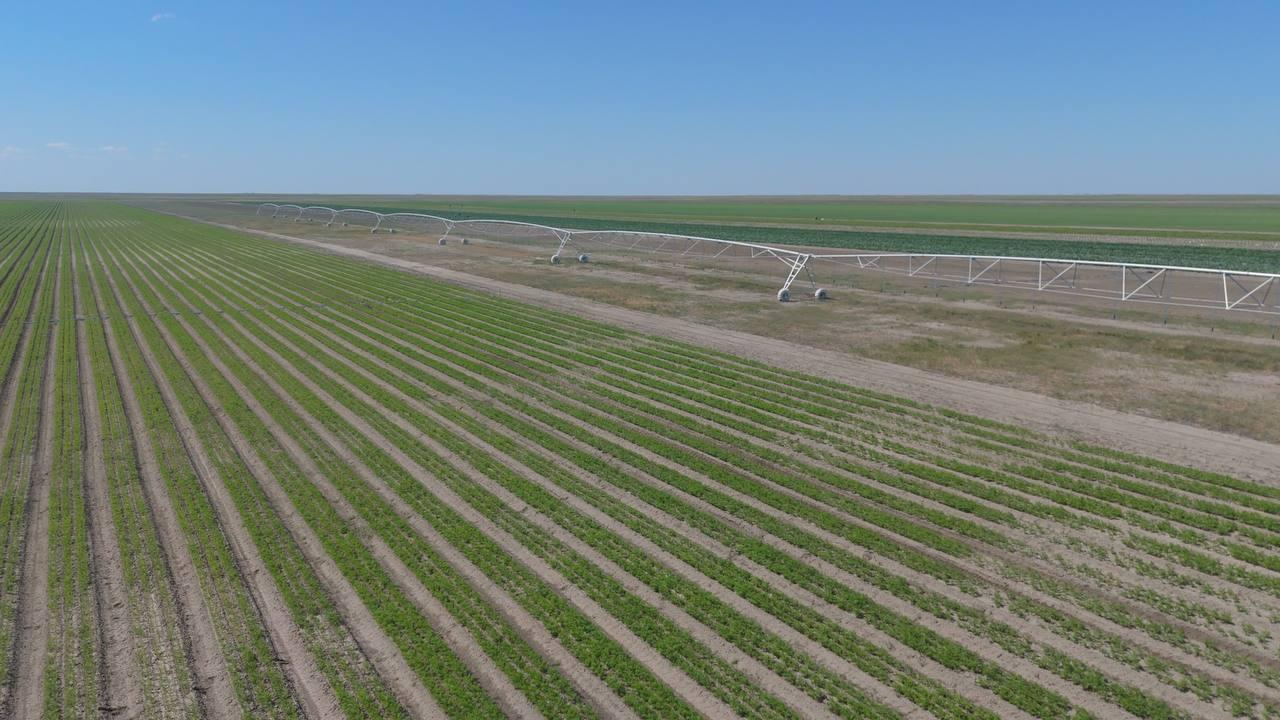
A pilot irrigation modernization project supported by the Eurasian Development Bank (EDB), the United Nations Development Programme (UNDP) and Kazakhstan’s Ministry of Water Resources and Irrigation is testing modern irrigation technologies that could later be scaled across Kazakhstan and other Central Asian countries.
According to an EDB Analytical Department, the $5.3 million initiative will establish demonstration sites for modern irrigation systems, including plastic pipelines and drip irrigation solutions, in Kazakhstan’s southern and eastern agricultural regions, including Almaty, Zhambyl, Kyzylorda, Turkestan and Zhetysu regions.
"The project will show which technologies work best in local conditions, what technical standards are required, what skills farmers and water-sector specialists need, and how equipment can be installed, operated and serviced at scale," the bank told Trend.
The initiative also aims to develop local expertise, with at least 180 specialists expected to receive training. According to the EDB, Kazakhstan’s experience could later support the development of a regional irrigation technology industry.
The bank estimates that Central Asian countries currently spend $140-320 million annually on imported irrigation equipment, while demand for up to 2 million new irrigation systems by 2040 could create a potential market of around $426 million per year for locally produced solutions.
Trend’s analysis shows that the Sarybulak project illustrates how Kazakhstan’s water policy is moving beyond individual infrastructure upgrades toward a broader approach combining new water sources, network expansion and more efficient consumption.
Trend’s calculations based on standard urban water consumption norms of approximately 300 liters per person per day show that 70,000 cubic meters of additional daily capacity could theoretically serve around 233,000 residents. At the announced project cost of $10.6 million, this represents approximately $45 per person served, highlighting the efficiency of large-scale centralized water infrastructure.
The Batys districts context is particularly significant. Similar to the Shu gas distribution project funded through the Special State Fund, the Sarybulak pipeline addresses an infrastructure limitation affecting further urban development. Additional water capacity will allow residential expansion to continue and remove a key constraint for future construction activity.
The concentration of Special State Fund resources in water infrastructure - more than half of approved projects by number - reflects the growing importance of water security for Kazakhstan. Rapid urban growth, expanding industrial activity and agricultural demand are increasing pressure on existing water systems, making both new supply projects and efficiency improvements increasingly important. The use of returned assets for such projects also creates a direct link between asset recovery mechanisms and public infrastructure development, directing recovered funds toward services with visible social impact.
The combination of projects such as the Sarybulak pipeline and the EDB-supported irrigation initiative suggests that Kazakhstan is pursuing a dual-track water strategy: increasing available supply where infrastructure gaps exist while improving the efficiency of water use across key sectors of the economy.



