


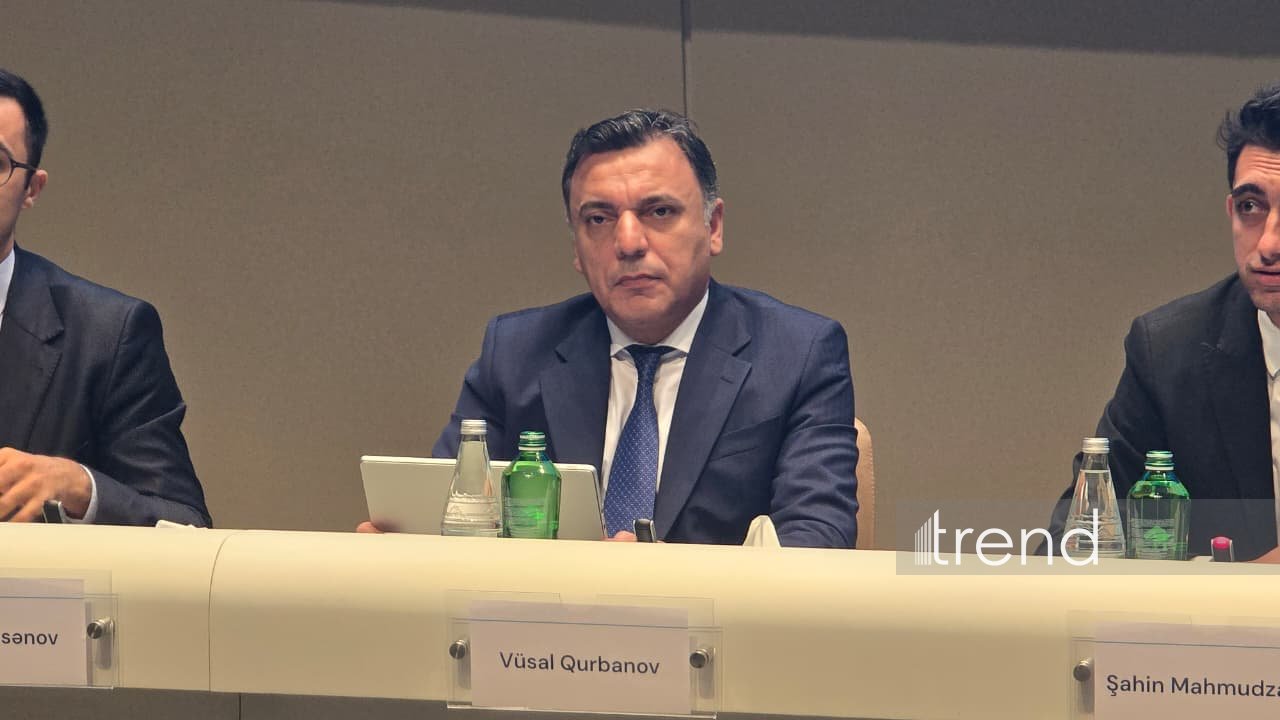

BAKU, Azerbaijan, October 15. Legislative amendments are being drafted in Azerbaijan aimed at expanding financing opportunities for microfinance organizations, particularly those that provide loans to small and medium-sized businesses, the Executive Director of the Central Bank of Azerbaijan, Shahin Mahmudzade, said at a press conference on Thursday dedicated to the presentation of the Financial Stability Report, Trend's correspondent reports from the event.
According to him, the proposed changes are intended to create additional opportunities for certain microfinance organizations that prioritize business lending to attract funding and conduct their operations.
Mahmudzade noted that there are certain challenges in the microfinance sector, particularly in the area of financing small and medium-sized enterprises. The proposed changes are aimed at addressing these issues, increasing the volume of business lending, and enhancing competition in the financial services market.
As Mahmudzade noted, the sources of funding for microfinance organizations primarily fall into three categories: the issuance of securities, borrowing from banks and other financial institutions, and raising funds from foreign sources.
He emphasized that the hedging mechanisms introduced last summer for foreign-currency borrowings were primarily aimed at improving financing opportunities for microfinance organizations.
“Hedging the currency risks of microfinance organizations that raise funds in foreign currency helps reduce their financing costs. It also contributes to increased competition in the financial market,” he said.
A representative of the Central Bank of Azerbaijan emphasized
that microfinance institutions’ access to alternative sources of
financing also intensifies competition among banks. Thus, as
microfinance institutions gain greater opportunities to raise funds
from other sources on more favorable terms, banks may also be
interested in offering them loans on more attractive terms.
“If microfinance organizations lack alternative sources of
financing, their options are limited. In such cases, banks may
offer loans at higher interest rates. However, expanding
opportunities to attract foreign financing and implementing
mechanisms to manage currency risks can reduce financing costs and
encourage banks to offer more competitive terms,” Mahmudzade
noted.
According to him, the planned legislative changes will also affect the ability of microfinance organizations to raise funds through the issuance of securities. In particular, consideration is being given to creating additional conditions for organizations that focus more on business lending, self-employment projects, and financing small and medium-sized enterprises, rather than consumer lending.
Shahin Mahmudzade reported that drafting the amendments and adopting the relevant regulatory acts will take some time.
"Therefore, the new opportunities will be implemented only after the legislative process is completed. He noted that work on implementing the main changes is scheduled to be completed in phases next year," he added.
The Executive Director also clarified the issue of the Central Bank providing financial resources to banks. He stated that the Central Bank’s financing of banks is not intended to create a permanent and general source of funds for lending to the economy.
“We do not provide funds to banks so that they can channel this money directly into the economy. The financial instruments provided by the Central Bank to banks are primarily related to liquidity management and, when necessary, to fulfilling the role of lender of last resort. The allocation of credit resources in the economy is determined by market forces and demand,” he added.



