



BAKU, Azerbaijan, October 15. A study by the Islamic Organisation for Food Security (IOFS) is expected to guide practical measures to support women in Kazakhstan's agri-food sector and foster further development of the Women in Agriculture Development Initiative (WADI), IOFS Chef de Cabinet of the Director General, Ambassador Azamat Berdibay, said.
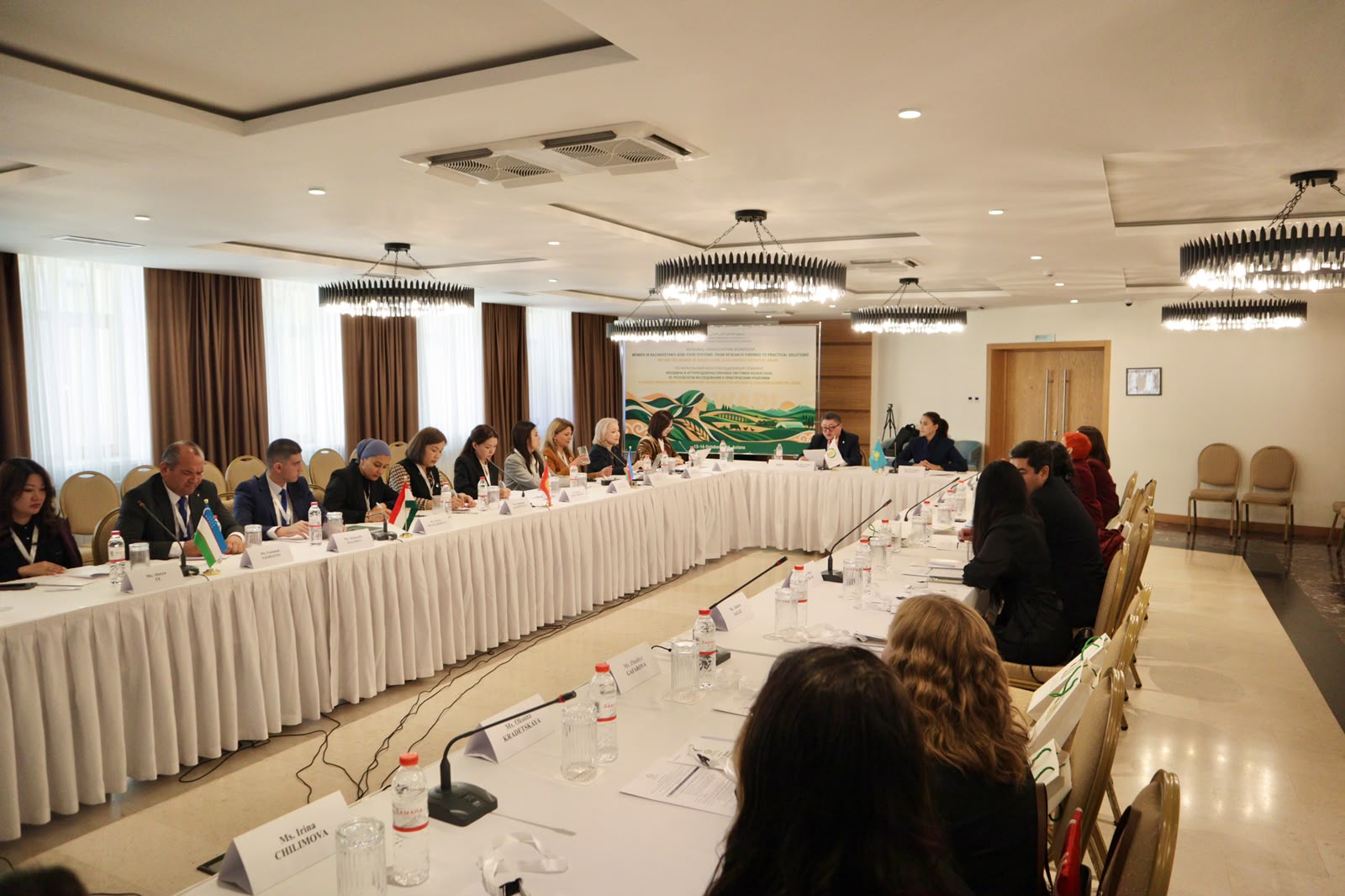
According to IOFS, the study, titled "Women in Kazakhstan's Agri-Food Systems," was conducted under the WADI initiative and surveyed 477 women across 17 regions of Kazakhstan. Its findings were presented on October 15 at a regional seminar titled "Women in Kazakhstan's Agri-Food Systems: From Research Findings to Practical Solutions."
The study identified several barriers facing women seeking to develop agricultural businesses. More than 53% of respondents cited a lack of personal funds as the main constraint on developing their farms or businesses, while nearly one-third reported difficulties obtaining loans.
At the same time, the findings point to strong interest in modern agricultural technologies. Nearly half of respondents (49.5%) expressed interest in using modern agricultural machinery. However, 60.2% identified a lack of funding to purchase equipment as the main obstacle to technological modernization.
Financial constraints are not the only challenge. Some respondents also reported limited access to markets and essential agricultural resources. A total of 44.2% cited difficulties accessing markets and logistics, 43.4% reported limited access to seeds, fertilizers, and veterinary medicines, and 41.5% pointed to problems with irrigation and water supply.
The study also highlighted demand for business-related training. Financial literacy was identified as a priority by 46.1% of respondents, while 45.5% expressed interest in entrepreneurship training. The findings point to a need not only for financial assistance but also for knowledge and skills that can help women develop their businesses over the long term.
Commenting on the findings, Berdibay said food security and sustainable agricultural development remain global priorities that require close international cooperation.
"Climate change, water scarcity, the need to introduce modern technologies and improve agricultural productivity require joint efforts by states, international organizations and the private sector. Women also play a significant role in agricultural production, food processing, rural entrepreneurship and ensuring food security," he said.
The seminar was attended by Kazakhstan's Vice Minister of Agriculture Nazgul Khatepova, Head of the UN Women Central Asia Liaison Office Ceren Güven Güres, experts from Central Asian countries, and representatives of the Atameken National Chamber of Entrepreneurs, the Damu Entrepreneurship Development Fund and international organizations.
Participants discussed the study's main findings and practical recommendations aimed at expanding women's economic opportunities in the agri-food sector.
The Women in Agriculture Development Initiative (WADI) is an IOFS initiative aimed at expanding women's participation in agri-food systems across member states of the Organization of Islamic Cooperation (OIC). It promotes women's access to financing, modern technologies, training, markets, and professional networks to support more inclusive and sustainable agri-food systems.
In Kazakhstan, the initiative has supported the country's first national study of women's participation in the agri-food sector. The findings are expected to inform practical recommendations and pilot projects tailored to the actual needs of women working in agriculture.



