


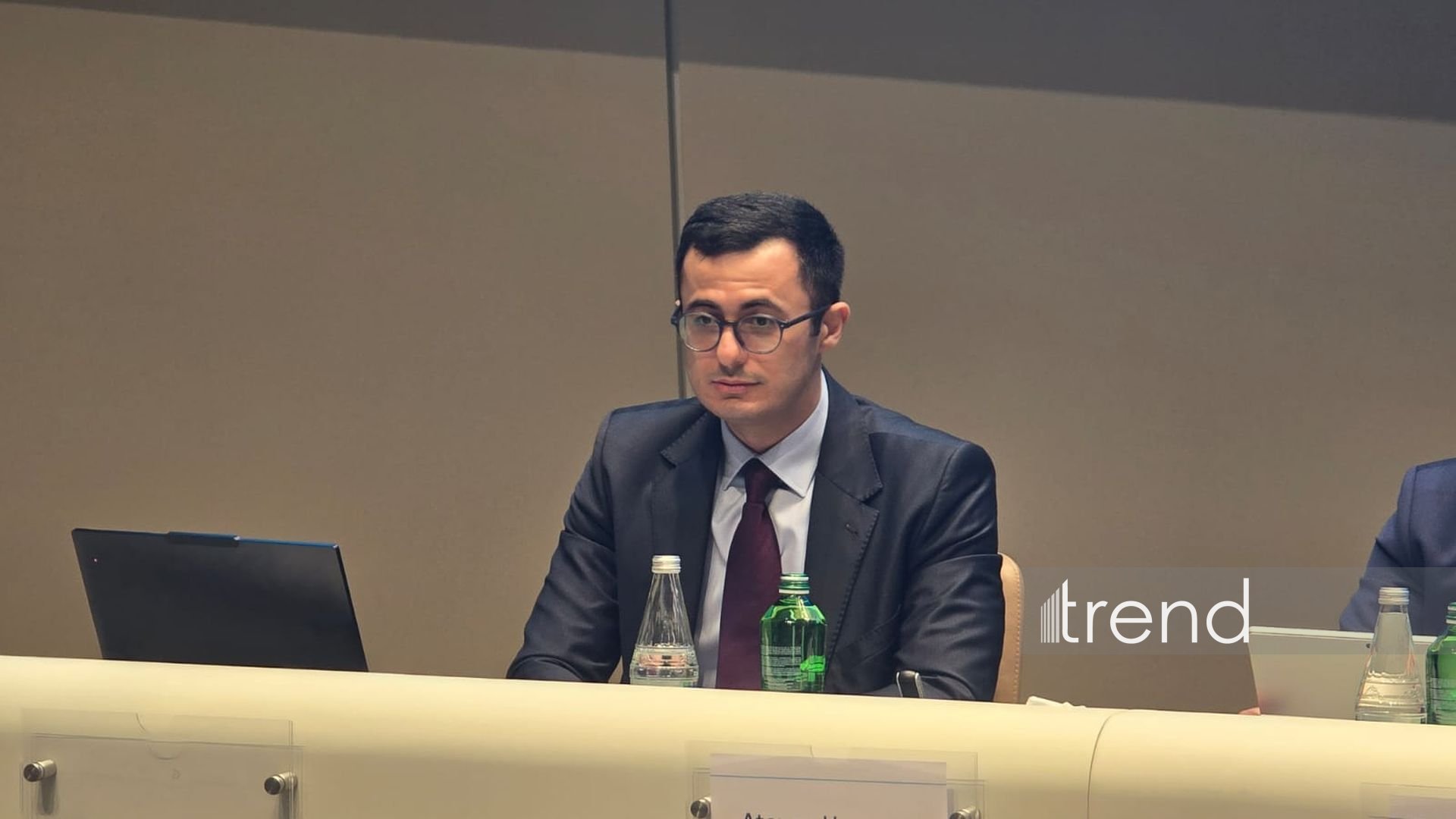

BAKU, Azerbaijan, October 15. Azerbaijan’s banking sector loan portfolio grew by 11.8% year-on-year as of July 1, 2026, outpacing nominal GDP growth of 6.4%, Atakhan Hasanov, director of the Financial Stability Department at the Central Bank of Azerbaijan (CBA), said at a press conference presenting the Financial Stability Report, Trend’s correspondent reports from the event.
He said the faster growth in lending compared with GDP indicated that the banking sector was playing an expanding role in financing the economy.
“During the first six months of this year, the loan portfolio grew across all segments, including business, consumer and mortgage lending,” Hasanov said.
According to him, the increase in consumer lending was driven mainly by lending to groups with lower debt burdens, a positive trend from the perspective of monitoring household indebtedness.
“As a result of the macroeconomic policies implemented in our country, consumer lending has mainly grown among individuals with a low debt burden, meaning those whose debt-service-to-income ratio is below 45%. Consequently, the share of the loan portfolio with a debt-service-to-income ratio above 45% fell to 27%, from 38% in the same period last year. The Central Bank closely monitors household borrowing trends and will continue to do so,” he said.
Hasanov also addressed the banking sector’s financial resilience, noting that the sector’s aggregate capital reached 7 billion manat ($4.1 billion), which is 0.6 billion manat ($352.9 million) more than on July 1, 2025. The capital adequacy ratio stood at 17.7%. According to him, the current capital position enables the sector to support an additional 20.1 billion manat ($11.8 billion) in risk-weighted assets.
He added that the implementation of a new regulatory framework governing funds raised by banks in the national currency was continuing, with banks currently complying with the relevant requirements. The framework is intended to strengthen the sector’s financial resilience.
The CBA is also assessing maturity mismatches between banks’ assets and liabilities, Hasanov said. During the reporting period, the share of assets with maturities of less than one year rose by 1 percentage point to 52% of total assets. The corresponding share of liabilities remained unchanged at 51%. “Our analysis shows that banks’ exposure to interest rate risk is currently low,” he added.
Hasanov also discussed dollarization trends. He said the share of foreign-currency lending had declined in the loan portfolios of both individuals and legal entities, with both segments reaching their lowest levels.
He attributed the trend to exchange-rate stability and the existing macroeconomic framework. However, dollarization across the overall loan portfolio had increased somewhat, mainly due to secured business lending.
The department director said the CBA had expanded its analysis of the financial performance of the non-financial sector in its Financial Stability Report since last year. Since a significant share of banks’ major borrowers operate in the non-financial sector, assessing their financial position is important for financial stability, he explained.
“The banking sector continues to finance various areas of the economy. As of July 1, 2026, banks’ business loan portfolio had increased by 13.4%, or about 2 billion manat ($1.18 billion), year-on-year to 17.2 billion manat ($10.12 billion),” Hasanov said.
He added that business lending growth was mainly recorded in construction, information technology and digital technology.
According to the department director, analysis across different economic sectors shows varying levels of resilience. However, no individual sector of the economy is currently considered risky as a whole.
Hasanov noted that the banking sector remained highly profitable despite increases in interest and non-interest expenses.
“In the first half of 2026, the banking sector earned nearly 700 million manat ($411.8 million) in profit. The return on assets (ROA) stood at 2.5%, while the return on equity (ROE) was 28.7%. These indicators are considered high when compared with various international benchmarks,” he said.
Hasanov said that, under the Financial Sector Development Strategy for 2024-2026, the CBA was implementing measures to improve its regulatory and supervisory mechanisms.
According to him, the risk-based supervisory framework for the banking sector began to be implemented in the first half of 2026. Rules governing bank stress tests were also approved, and the CBA made corresponding changes to its diagnostic assessment mechanisms.
He emphasized that protecting financial consumers’ rights was another key priority for the Central Bank. To this end, methodological guidance on market conduct at financial institutions was adopted this year.
“From October 1, 2026, banks and payment institutions began implementing a mechanism allowing individuals to prohibit the issuance of loans in their name remotely. A waiting period has also been introduced for remotely issued loans. Depending on the loan amount, this period is either one hour or 24 hours,” Hasanov said.
He added that measures were also being taken to improve corporate governance standards at banks, including plans to establish dedicated functions to handle customer complaints more effectively.
Hasanov noted that improving the knowledge, skills, and professional competence of specialists working in financial institutions was also among the CBA’s regulatory and supervisory priorities.



