



ASTANA, Kazakhstan, June 13. Kazakhstan is significantly scaling up its geological exploration efforts, with 38 promising new mineral deposits identified in the first quarter of 2025 alone, Trend reports.
These freshly unearthed locations are brimming with anticipated treasures of copper, nickel, coal, gold, and rare earth elements.
As part of a directive issued by the president of Kazakhstan, the country aims to achieve 2.2 million square kilometers of geological and geophysical survey coverage by 2026. As of 2024, the covered area had reached 2,014.4 thousand square kilometers, with exploration activities continuing at a rapid pace.
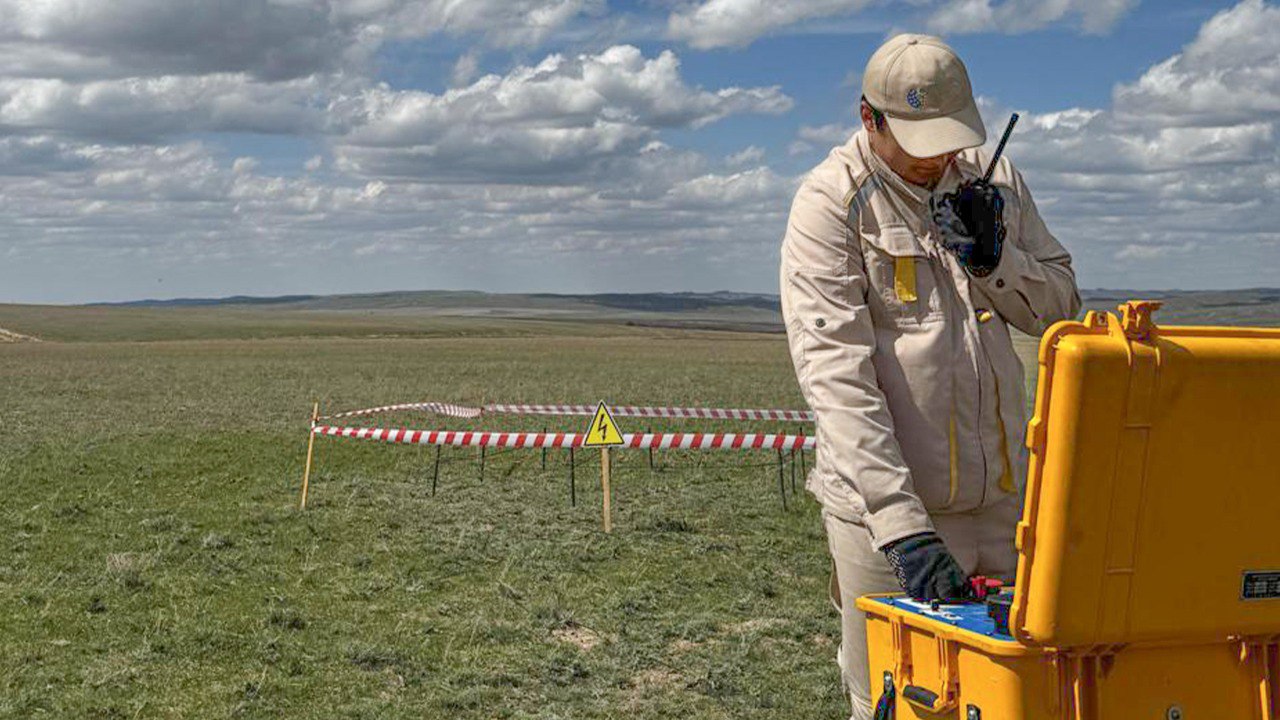
Extensive research was conducted in 1Q 2025, including aerial photo interpretation, field mapping, drilling, water and radiation sample analysis, as well as geochemical and laboratory studies.
The estimated forecasted resources from the newly identified deposits include:
-
2.6 million tonnes of rare earth elements,
-
1.1 billion tonnes of lignite (brown coal),
-
3.7 million tonnes of copper and nickel,
-
19 tonnes of gold.
For the 2024–2026 period, 22.83 billion tenge ($49.6 million) has been allocated for geological exploration, with 7.636 billion tenge ($16.6 million) scheduled for investment in 2025. Regional mapping projects at a scale of 1:200,000 are also underway.
Investment plays a crucial role in the sector. Between 2018 and 2024, a total of 424 billion tenge ($921.7 million) was invested in geological exploration. In 2025, this figure is expected to rise to 106 billion tenge ($230.4 million). A simplified licensing regime for subsoil exploration, which does not require specific work volume commitments but mandates regular reporting, is helping to make the market more accessible to investors.



