


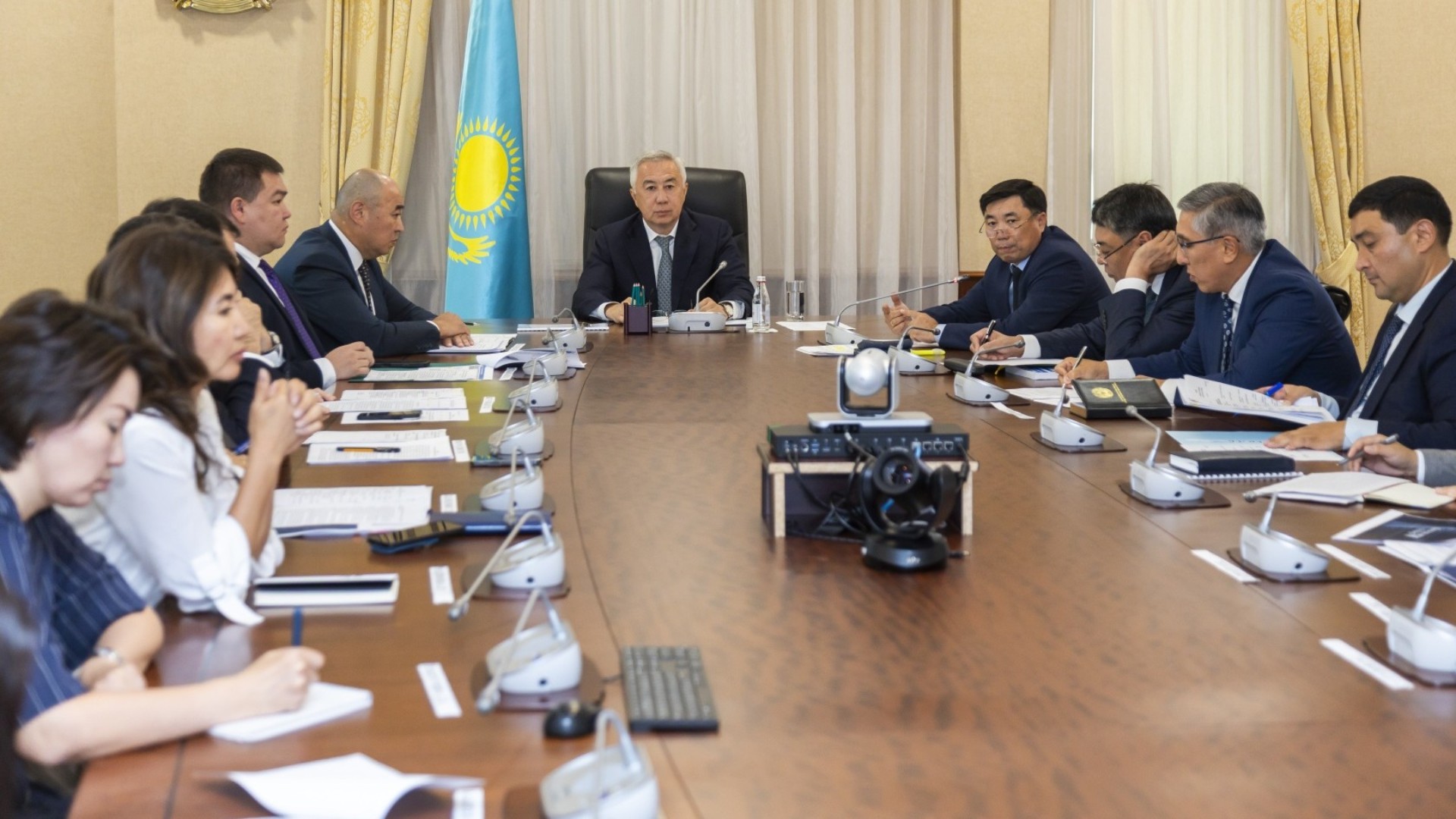

BAKU, Azerbaijan, August 11. The 24th meeting of the Project Office for the implementation of the Tax Code, chaired by Deputy Prime Minister and Minister of National Economy of Kazakhstan Serik Zhumangarin, reviewed VAT application in the healthcare sector and changes to tax rates for subsoil users.
This was reflected in the statement, published by the official information resource of the Prime Minister of the Republic of Kazakhstan.
"The new Tax Code provides for a gradual change in the VAT rate for certain healthcare services. Medical services and medications provided under the guaranteed volume of free medical care (GVFMC) and compulsory social health insurance (OSMS) are exempt from VAT. This includes over 3,000 medications," the statement says.
VAT is also not applied to medical services related to the treatment, diagnosis, prevention and rehabilitation of rare and socially significant diseases. In addition, imports of pharmaceutical substances used for the production of medicines within the GVFMC and CSHI systems are exempt from the tax. A reduced VAT rate has been introduced for wholesale and retail sales of medicines and medical devices: it is set at 5% from January 2026 and will increase to 10% from January 1, 2027.
During the meeting, healthcare industry representatives raised the issue of introducing a unified VAT rate for medicines and medical devices. The National Chamber of Entrepreneurs "Atameken" proposed setting a single VAT rate of 5% for all medicines and medical devices, while exempting medical services from VAT.
Participants also discussed the impact of existing tax mechanisms on the cost of medical services, medicines and medical devices. Following the discussion, it was agreed to conduct an additional analysis of the potential consequences of changing VAT rates, taking into account the impact on the budget, the healthcare sector and access to medical care and medicines.
Another issue discussed at the meeting was Article 778 of the Tax Code, which provides for the introduction of new mineral extraction tax rates from January 1, 2027, as part of a tax reform.
Kazakhstan’s Vice Minister of Energy Kaiyrkhan Tutkyshbayev said that the tax reform was initially planned to be synchronized with the launch of common markets for oil and petroleum products within the Eurasian Economic Union (EAEU).
The reform provides for the consolidation of the existing tax burden, including rent tax, mineral extraction tax and export customs duty. At the same time, the export customs duty on oil approved by the Ministry of Trade for exports remains in place.
A representative of the State Revenue Committee explained that the tax rates stipulated by the Tax Code were calculated taking into account the abolition of the rent tax and export customs duty. According to him, simultaneous application of the export customs duty is not envisaged under the methodology. Participants noted the need to align the provisions of the Tax Code with the updated timeline for the launch of the EAEU common market for oil and petroleum products following the postponement of its implementation.



