


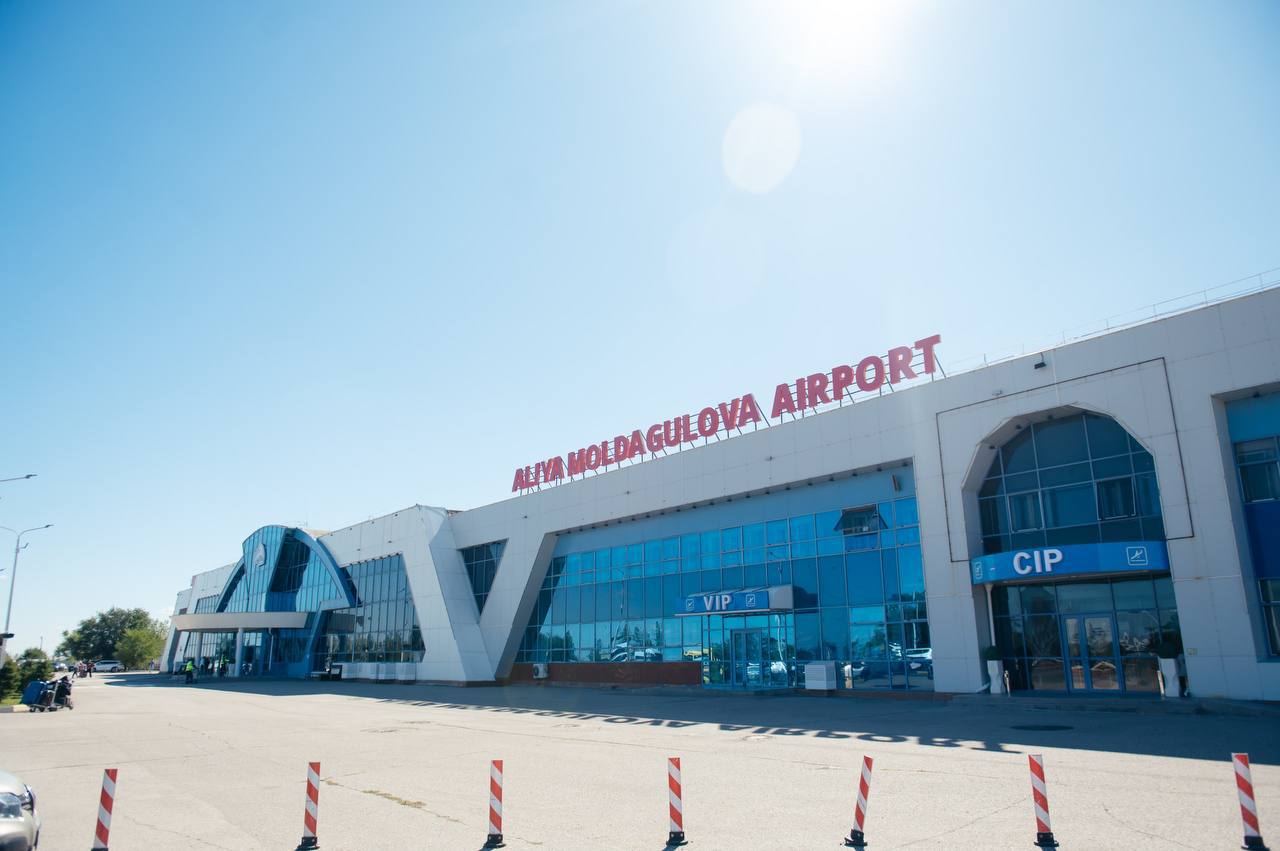

ASTANA, Kazakhstan, September 10. At Kazakh Aktobe airport, the subsidiary of KazMunayGas—KMG-Aero—has begun the practical implementation of a project to construct a new fuel storage and refueling facility (FSRF), and at this stage, engineering and geological work is underway, Trend reports via KazMunayGas.
The purpose of this work is to study the soil characteristics and groundwater levels in detail to ensure the maximum safety and durability of the future industrial facilities. Once the engineering and geological work is completed, the main construction phase will begin.
The project is being carried out in accordance with the objectives set by the president of Kazakhstan and will be a key milestone in transforming Aktobe Airport into a modern international hub.
“The new refueling complex will allow aircraft to be refueled not only with RT and TS-1 fuel types, but also with Jet A-1 aviation fuel, which is in high demand on the international market. Transitioning to this standard is essential for integrating Kazakhstan into the global air transport network and is also a prerequisite for the future use of environmentally friendly fuel (SAF),” the statement reads.
The capital allocation initiative encompasses the execution of
dual launch phases. The initial stage will encompass the
establishment of a mobile refueling infrastructure with a
throughput capacity of up to 600 cubic meters, alongside the
procurement of a duo of fuel transport vehicles. The subsequent
phase encompasses the development of the primary infrastructure—a
fuel storage park engineered to accommodate 20,200 cubic meters,
complemented by a rail-integrated loading/unloading overpass,
alongside a centralized dispatch hub.
The aggregate capital allocation for the initiative is projected to
be around 5 billion tenge ($9.5 million). The execution of this
initiative is projected to generate in excess of 50 sustainable
employment opportunities. The initiative seeks to elevate Aktobe
Airport to a comprehensive aviation nexus, thereby bolstering
Kazakhstan’s strategic stature as a pivotal transit node within the
Central Asian corridor.



