


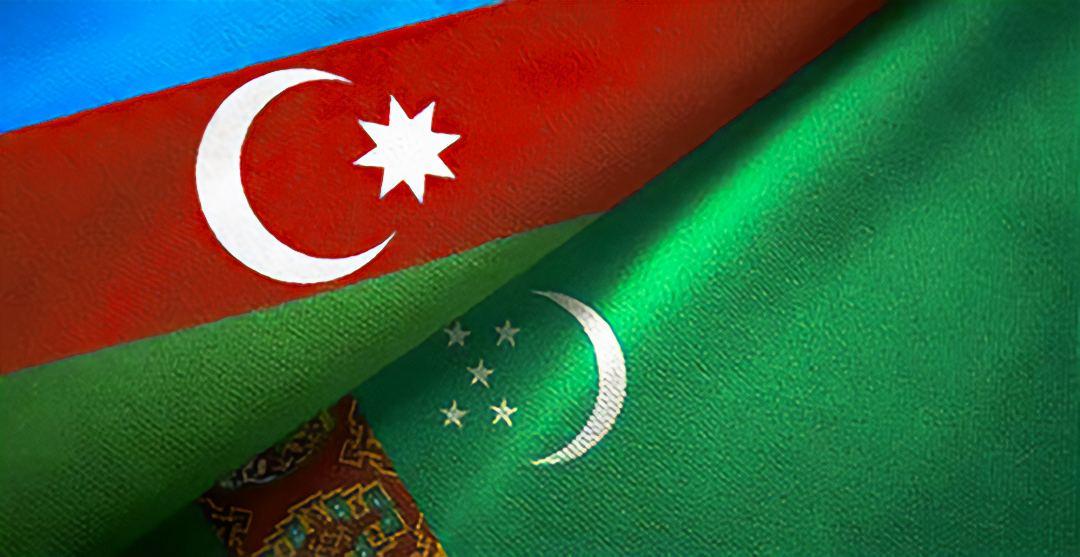

BAKU, Azerbaijan, June 24. June 22-23 President of Turkmenistan Serdar Berdimuhamedov paid a state visit to Azerbaijan, during which he held talks with President Ilham Aliyev in Baku, visited the cities of Fuzuli and Shusha, and took part in a ceremony for the exchange of signed bilateral documents. Following the visit, the sides signed a number of agreements in the fields of transport, maritime shipping, industry, investment, and other areas, and also confirmed interest in further expanding cooperation in energy, logistics, and the production sector. As part of the visit, Azerbaijan also handed over an oil tanker to Turkmenistan, which became an additional element of expanding cooperation in maritime transport in the Caspian Sea.
The list of signed documents reflects not new priorities of Turkmenistan, but the next stage of a policy that the country has been pursuing for several years. During this period, Ashgabat has actively developed the oil and gas sector, modernized transport infrastructure, and expanded production capacities in industry. As many of these projects approach completion, the focus is increasingly shifting toward their integration into international economic relations.
This is why energy, logistics, and industrial cooperation were at the center of talks between the Presidents of Azerbaijan and Turkmenistan - areas in which Baku can act not only as a partner for Ashgabat, but also as an important link connecting it with broader regional and global markets.
Energy sector
Energy was one of the key areas of negotiations for a reason. In recent months, Turkmenistan has been consistently expanding both its energy production capacity and its potential export capabilities. On April 17, the country launched the fourth phase of development of the giant Galkynysh gas field in cooperation with China’s state energy company CNPC.
At the same time, the Caspian oil segment is also developing. The state concern “Hazarnebit” and Malaysia’s PETRONAS have signed a production sharing agreement on offshore blocks in the Turkmen sector of the Caspian Sea, including Blocks 19 and 20, where hydrocarbon resources are being developed on the shelf. This strengthens the importance of the oil segment of the Caspian in the structure of future exports and directly increases the role of maritime logistics.
Against this background, the expansion of Caspian transport infrastructure also appears logical, including the transfer by Azerbaijan to Turkmenistan of an oil tanker that can be used for maritime transportation of hydrocarbons between the two shores of the sea. This opens additional opportunities for increasing offshore oil production.
At the same time, Turkmen authorities are increasingly openly discussing new export directions. In April, answering a question from Trend, Batyr Muradov, editor-in-chief of the Türkmen Dünýäsi newspaper, stated that Turkmenistan is considering gas supplies to Europe via Azerbaijan. Later, Foreign Minister Rashid Meredov also confirmed the country’s interest in developing energy cooperation with European partners. These statements fit into a broader strategy of diversifying export routes for Turkmen energy resources. Trend previously covered these processes in its article “Eurasia’s gas balance: How Galkynysh could reshape supply routes.”
Another important factor is Iran’s position. In an interview with Trend, Saeid Tavakkoli, Deputy Oil Minister of Iran and head of the National Iranian Gas Company, stated that Tehran is ready to ensure the transit of Turkmen gas through its territory to third countries. The swap mechanism for Turkmen gas supplies to Azerbaijan via Iran has already been implemented, where gas is delivered to northern regions of Iran and equivalent volumes are transferred to Azerbaijan. According to Tavakkoli, the development of gas transportation infrastructure could significantly increase the scale of such operations in the future.
In a broader context, this approach is also confirmed by Turkmenistan’s efforts to build a multi-vector export model. In particular, during contacts with the British business community in London in February, Turkmenistan expressed readiness to expand energy cooperation with the United Kingdom, including discussions on alternative gas supply routes and long-term contracts.
Thus, the energy agenda of the talks in Baku reflects a systemic process: Turkmenistan is simultaneously increasing production, developing Caspian oil resources, and forming new export routes, where Azerbaijan acts as a key transit link.
Transport sector
The transport sector has become one of the key pillars shaping Turkmenistan’s domestic and foreign economic policy. In recent years, the country has been strengthening its institutional and infrastructure base in logistics.
As part of this policy, the Ministry of Automobile Roads was established in February on the basis of a former state agency, marking a step toward centralizing road infrastructure management. At the same time, large-scale transport network modernization projects are being implemented. The key project is the Ashgabat-Turkmenabat high-speed highway, which is being commissioned in stages: the Ashgabat-Tejen section was opened in 2021, the Ashgabat-Mary section in 2024, and the final Mary-Turkmenabat segment was inaugurated on April 10, 2026, with the participation of the President.
A separate role is played by the development of maritime logistics in the Caspian Sea. In 2018, the Balkan Shipbuilding and Ship Repair Plant in Turkmenbashi was commissioned, becoming the core base for the country’s shipbuilding capacity.
On this basis, in May 2026, the new cargo vessel “Gadamly,” built with the participation of South Korean partners, was commissioned. The ship was officially put into service on May 9, 2026, during a ceremony attended by the President of Turkmenistan. It is designed for dry cargo and container transportation and will operate on Caspian routes, strengthening the country’s regional logistics capabilities.
Another vessel, “Menzil,” has already been announced, indicating a systematic approach to expanding the national merchant fleet. Trend previously covered these developments in its article “Baku-Turkmenbashi: Turkmenistan’s new vessel boosts stability of Trans-Caspian shipping.”
These steps show that Turkmenistan’s transport policy is aimed not only at improving internal connectivity but also at strengthening its role as a Caspian transit hub. In this context, cooperation with Azerbaijan becomes highly practical, as Caspian logistics forms a key link between Central Asia and international transport corridors. Trend previously highlighted this in the article “Turkmenistan pushes West via Georgia - with Azerbaijan as linchpin.”
Industrial sector
Turkmenistan’s industrial policy in recent years has been shifting toward deeper processing of natural resources and the development of export-oriented industries, particularly in the chemical and petrochemical sectors.
In this context, cooperation with international industrial companies plays a key role. In an exclusive interview to Trend, Mitsubishi Heavy Industries noted the significant potential of Turkmenistan’s chemical and petrochemical sectors, emphasizing that the development of gas processing could become one of the drivers of the country’s industrial growth. The company also cooperates with “Turkmenhimiya” under projects for ammonia and carbamide production, reflecting sustained interest in long-term industrial cooperation.
Thus, the industrial sector forms a second pillar of Turkmenistan’s economic transformation - alongside energy and transport - creating an internal base for expanding exports of finished products. In this context, industrial development is directly linked to the need for reliable logistics routes, where Azerbaijan acts as a key transit link.
At the same time, Turkmenistan is strengthening its orientation toward European markets as one of the main external vectors of industrial exports. In this context, contacts with European partners, including discussions on expanding textile exports via Germany and Slovakia, reflect the country’s efforts to integrate into more diversified logistics chains with access to the EU. These steps complement a broader strategy to create a “European window” for non-resource exports, where industrial goods are considered a key component of the future export structure. Trend previously analyzed these processes in the article “EU-Asia co-op: Slovakia and Turkmenistan set transcontinental connectivity.”
Overall, the visit of President Serdar Berdimuhamedov to Azerbaijan and the documents signed during it reflect not an expansion of the current agenda, but a shift to a more practical stage of cooperation in energy, transport, and industry.
Turkmenistan is strengthening its production and processing capacities, developing Caspian projects, and signaling interest in diversifying export routes, including the European direction via Azerbaijan. At the same time, a transport base for expanding transit is being formed, along with an industrial policy focused on deeper processing and export of finished goods.
In this context, Azerbaijan acts as a key partner ensuring the linkage of energy, transport, and industrial flows.



