


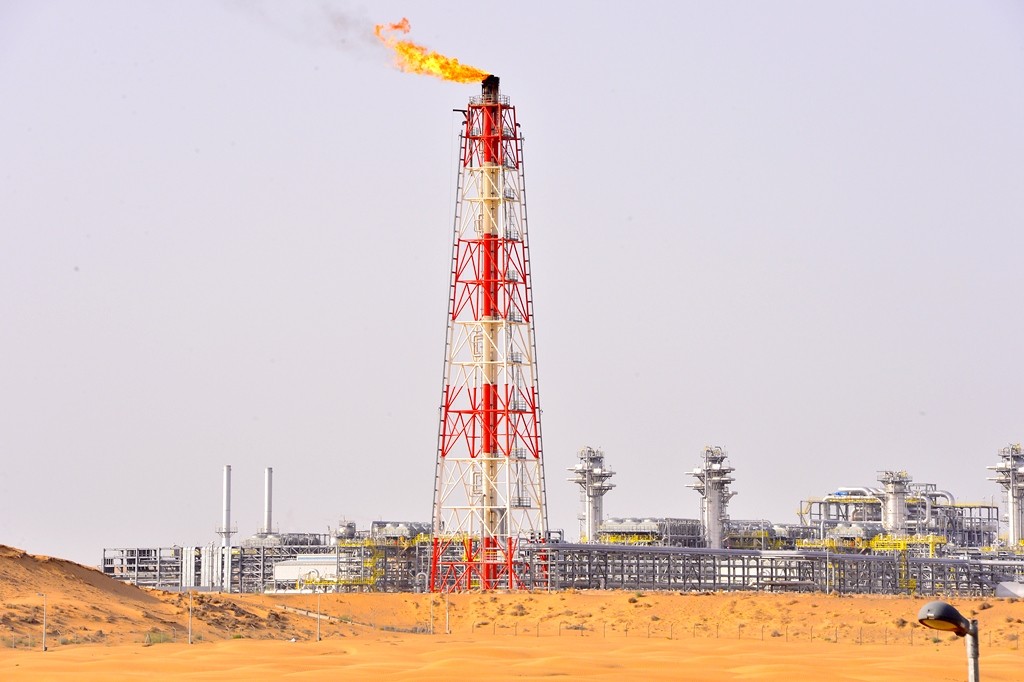

BAKU, Azerbaijan, April 24. The ceremony inaugurating the fourth-phase development of Turkmenistan’s largest gas field, Galkynysh, has transcended the scope of a conventional industrial project. It effectively marks a transition to a new stage in the evolution of Turkmenistan’s gas industry, one in which not only production but also the forthcoming transformation of the country’s export geography assumes central importance.
The fourth-phase project, valued at approximately $5 billion and undertaken with the participation of the China National Petroleum Corporation (CNPC), is expected to increase production by roughly 10 billion cubic meters of gas per year. For a field already ranked among the largest globally, with reserves estimated at 27 trillion cubic meters, this development further consolidates its position as a critical resource base for the country.
Currently, total production across Galkynysh and its associated phases is estimated at 30-35 billion cubic meters per year, with a significant proportion allocated to exports. With the commencement of the new phase, total output could rise to 40-45 billion cubic meters annually. However, production growth alone does not determine the ultimate trajectory of supplies; the configuration of export routes and the capacity of existing infrastructure are equally decisive.
China continues to serve as the primary destination for Turkmen gas exports, accounting for the overwhelming majority of external deliveries. Approximately 80-90% of Turkmen gas exports are transported to China via the Central Asia-China gas pipeline system, which links Turkmenistan with the PRC through Uzbekistan and Kazakhstan. In this context, China functions as the principal structural buyer of Turkmen gas, thereby ensuring the stability of the country’s export model.
Within this framework, the launch of the fourth phase of Galkynysh, which adds an estimated 10 billion cubic meters of annual production, directly reinforces the eastern export corridor. The total capacity of the Central Asian pipeline infrastructure toward China is currently estimated at approximately 55 billion cubic meters, with potential expansion to roughly 85 billion cubic meters through the addition of new lines.
Concurrently, the southern route is acquiring increasing practical significance. The Turkmenistan-Afghanistan-Pakistan-India (TAPI) gas pipeline project, with a planned capacity of around 33 billion cubic meters per year, identifies the Galkynysh field as its primary resource base. Preliminary estimates suggest that, if the TAPI project is successfully implemented, Turkmenistan could supply 13-14% of India’s total gas imports by 2030.
In 2026, the project has entered a phase of gradual progress on the Afghan segment: preparations and laying of individual pipeline sections toward the city of Herat are underway, along with the formation of the route through the western regions of the country. Officials of the participating states have declared their intention to extend the first section to Herat by the end of 2026.
At the same time, the relevance of TAPI is increasingly reinforced not only as an infrastructure project but also as a logistical solution in the context of growing instability in alternative maritime energy transport routes in South Asia and the Middle East - a reality demonstrated by the US-Israel war against Iran, which began in February 2026, and the subsequent blockade of the Strait of Hormuz, a key energy export chokepoint of the Persian Gulf.
Against this backdrop, attention is returning to the western export direction - the potential supply of Turkmen gas to Europe via Azerbaijan. In April 2026, Turkmen Foreign Minister Rashid Meredov, speaking at the Antalya Diplomacy Forum, emphasized that “one of the key priorities of the country’s energy policy is the supply of natural gas to Europe”. In the same month, the editor-in-chief of the newspaper Türkmen Dünýäsi, Batyr Muradov, told Trend that Turkmenistan is considering the possibility of exporting natural gas to Europe via Azerbaijan.
A few days after these statements, Deputy Chairman of the Cabinet of Ministers of Turkmenistan and Chairman of the State Concern “Turkmennebit” Guvanch Agadjanov held a meeting with Azerbaijan’s Ambassador to Turkmenistan, Gismet Gozalov. The meeting discussed prospects for cooperation between Baku and Ashgabat in the energy sector, particularly in oil and gas.
According to the supply mechanism of Turkmen gas along this route, the natural gas first enters Azerbaijan, then passes through the Trans-Anatolian Natural Gas Pipeline (TANAP), and finally reaches Europe via the Trans Adriatic Pipeline (TAP).
Formally, this infrastructure already exists, but at present it is designed to transport only Azerbaijani gas. A number of structural changes are needed to expand the pipelines’ capacity.
For example, TAP, which serves as the final link in the supply chain to Southern Europe, currently operates at a capacity of about 10 billion cubic meters per year, with the technical potential to expand to approximately 20 billion cubic meters with additional investments in compressor capacity. TANAP, in turn, has a higher capacity - over 30 billion cubic meters per year - but its utilization also depends on agreed-upon supply volumes and demand from end markets.
Both pipelines are operating at more than half of their capacity. In the case of TAP, this figure reaches about 90%. With the necessary investments and the implementation of solutions such as adding additional interconnectors (branches) to the TAP line, the modernization of the gas pipelines could nearly double their capacity. This key factor depends largely on the availability of investments, as well as long-term gas import contracts from European buyers.
Once gas reaches the EU border via Türkiye, it enters the wider European energy system, where planning and coordination are carried out by the European Network of Transmission System Operators for Gas (ENTSOG) - an association of European gas transmission operators coordinating their interaction under EU legislation and managing gas transport.
Within its Ten-Year Network Development Plan (TYNDP), ENTSOG analyzes various supply and demand scenarios, including potential additional volumes from the southern direction. However, these are not treated as guaranteed flows but rather as conditional system development scenarios.
An additional component of the European gas architecture is the rapidly expanding LNG infrastructure. Major regasification capacities are already established in France, Poland, and Greece. The Dunkerque terminal in France has a capacity of around 13 billion cubic meters per year, Poland’s Świnoujście terminal - around 7.5 billion cubic meters after expansion, and Greece’s Revithoussa terminal - more than 5 billion cubic meters of annual regasification capacity. In total, Europe’s LNG terminal system provides regasification capacity exceeding 200 billion cubic meters per year, covering a significant share of regional demand and forming an alternative to pipeline supplies.
Against this backdrop, Türkiye is becoming increasingly important, already possessing four LNG terminals, including FSRU (floating storage and regasification units), and gradually strengthening its position as a potential energy hub between the Caspian region, the Middle East, and Europe.
If the expansion of pipeline capacities toward Europe, including the Southern Gas Corridor, proceeds more slowly than expected or faces capacity constraints, Türkiye theoretically gains additional room for maneuver through strengthened LNG infrastructure - including expansion of existing terminals or the launch of new gas liquefaction and re-export projects. This adds another potential layer of diversification for Turkmen gas export routes to Europe - an institutional dimension where investment decisions and infrastructure development speed become decisive factors.
As a result, potential additional volumes of Turkmen gas are embedded in a complex system of access to Eurasian markets. This requires the alignment of multiple factors, including infrastructure development and long-term contractual commitments.
At the regional level, gas transmission systems in Central Asia - involving Turkmenistan, Kazakhstan, and Uzbekistan - are historically interconnected but function without a unified coordination mechanism. With growing production and potential expansion of export routes, the issue of synchronizing flows in the region is likely to gain increasing importance.
Naturally, with growing gas export volumes, maintaining the uninterrupted operation of the gas transportation network along the entire supply route to end consumers becomes increasingly important for Ashgabat. This emerging need for infrastructure transformation may open the way for Turkmenistan to offer its gas transmission network to neighboring countries as an alternative export route for energy resources. In particular, Kazakhstan could potentially redirect its export flows through Turkmenistan to new destinations if necessary.
Thus, for Turkmenistan, the launch of the fourth phase of Galkynysh means not only an increase in export potential but also a strengthening of its role in the broader energy system of Eurasia. Rising supplies have the potential to reinforce the country’s macroeconomic base and expand opportunities for financing long-term state programs, such as the “Social and Economic Development and Investment Program 2026,” the “Digital Economy Development Program in Turkmenistan for 2026-2028,” and the “National Socio-Economic Development Program of Turkmenistan 2022-2052.”
In this context, Turkmenistan is increasingly emerging not just as a raw materials exporter, but as a potential strategic hub through which energy flows between different parts of Eurasia could be routed.



