


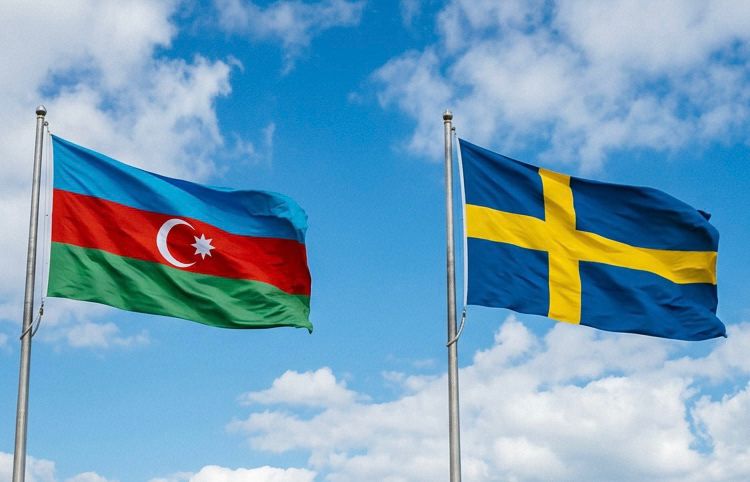

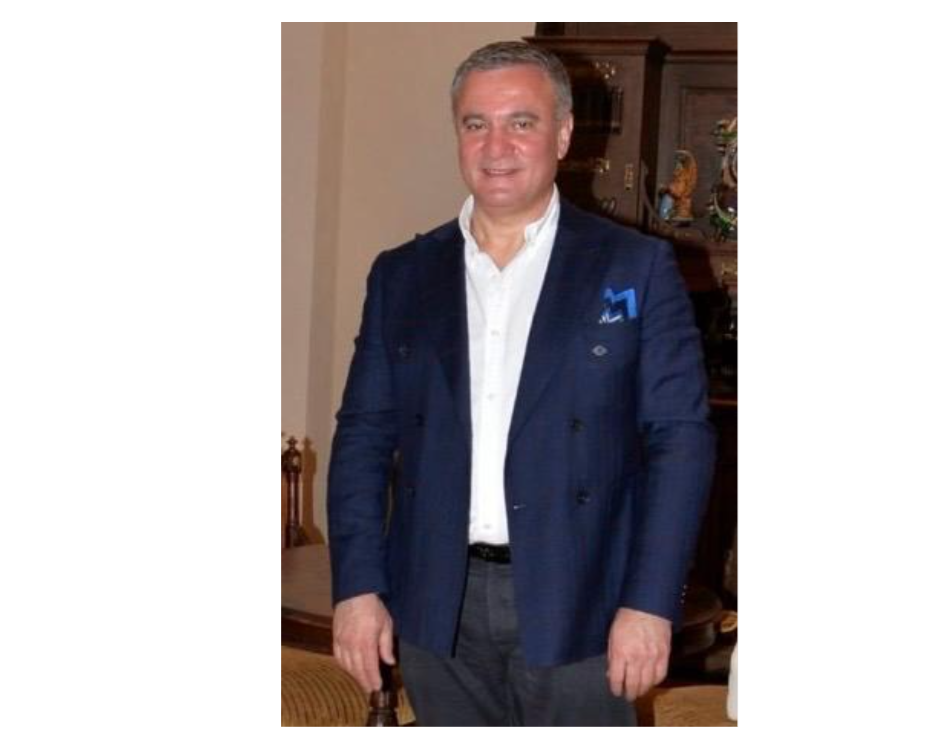
BAKU, Azerbaijan, April 23. There is strong potential for Azerbaijan to serve not only as a domestic market, but as a primary regional base for Swedish business expansion into the Caucasus and Central Asia, Executive Director of Swedish-Azerbaijani Chamber of Commerce Emil Mirzayev said in an exclusive interview with Trend.
He noted that at this stage, Swedish-Azerbaijani business cooperation is increasingly shaped through direct and continuous engagement with the Swedish business ecosystem.
"As a Chamber, we are actively involved in business networks, industry platforms, and professional communities across Sweden, where we present Azerbaijan not only as a market, but as a strategic partner positioned at the intersection of Europe and wider regional growth corridors. This hands-on engagement has resulted in a growing and tangible interest from Swedish and broader Nordic companies. In recent years, we have seen a shift from general awareness toward more structured dialogue, including early-stage project discussions and sector-specific cooperation, particularly in areas such as sustainable energy, infrastructure, environmental technologies, and industrial solutions.
At the same time, companies are approaching market entry in a careful and structured manner, with a strong emphasis on long-term stability, transparency, and predictable operating conditions. This is a natural and necessary part of entering a developing but promising market. In this context, the role of the Chamber becomes increasingly important — not only as a networking platform, but as a facilitator of trust, structure, and informed decision-making," noted the executive director.
He pointed out that while a number of Swedish companies are already active in Azerbaijan, in several cases their operations are managed through regional structures or partners based outside the country.
"This reflects the current stage of market development. At the same time, we see clear potential for further localization, including stronger in-country presence, more direct engagement, and deeper integration into the local business environment. In parallel, our ongoing dialogue with stakeholders in Azerbaijan has highlighted another important dimension — the need for further development of local service and technical support infrastructure, particularly in sectors involving advanced equipment and industrial solutions. While products and technologies are being introduced to the market, there is a growing demand for localized after-sales services, maintenance capabilities, and technical expertise on the ground. Strengthening this component would significantly enhance operational efficiency and long-term sustainability of projects.
In addition, based on our practical experience of working with companies from both sides, we see that consistency, transparency, and a high level of business professionalism play a critical role in building sustainable partnerships. Establishing trust requires alignment between stated intentions and actual execution, and this is an area where structured dialogue and facilitation remain essential," said Mirzayev.
The executive director noted that looking ahead, the Chamber sees the strongest growth potential in sectors linked to the green transition, smart infrastructure, and resource management.
"At the same time, Azerbaijan’s evolving role in regional connectivity — including transport and logistics routes linking Europe and Asia — creates additional opportunities where Swedish and Nordic expertise can contribute in a meaningful and long-term way. Overall, our focus is not only on identifying promising sectors, but on building a solid and sustainable foundation for long-term economic cooperation between Swedish, Nordic, and Azerbaijani businesses," he added.
Mirzayev went on to add that the Chamber is currently engaged in facilitating a number of concrete initiatives and structured discussions between Swedish, Nordic, and Azerbaijani stakeholders across several sectors.
"At present, we are in active dialogue with several companies — including three that are exploring entry into the Azerbaijani market — as well as with a research-oriented institution interested in developing cooperation with Azerbaijan. These discussions are focused on structuring market entry, building long-term partnerships, and ensuring alignment with international and European business standards. This process is comprehensive and requires careful coordination, particularly in areas related to legal frameworks, compliance, and operational setup.
In parallel, we are also working with companies that are already present in Azerbaijan but operate through regional structures outside the country. In this context, we see additional potential in further strengthening their local presence, including the development of more localized distribution models and deeper integration into the domestic market. While many of these initiatives are still in active development and cannot yet be disclosed publicly, they reflect a growing and increasingly structured pipeline of cooperation," said the executive director.
He noted that in addition to facilitating incoming interest, the Chamber also supports Azerbaijani companies in accessing the Swedish market.
"In one recent case, we provided comprehensive guidance and documentation support to an Azerbaijani company entering a new sector in Sweden. This was done as part of our broader mission to strengthen bilateral economic ties, without a direct commercial objective, but with a focus on long-term positioning and representation.
Our role goes beyond introductions — we are increasingly
positioning the Chamber as a coordinating platform that helps align
expectations, structure cooperation, and support companies
throughout the process of entering and operating in a new
market.
Overall, the projects we are currently involved in reflect a shift
toward more concrete, structured, and long-term business engagement
between Sweden, the wider Nordic region, and Azerbaijan," said
Mirzayev.
He pointed out that the question of priority industries is closely linked to the diversity of companies themselves, as Swedish and Nordic businesses approach international expansion with different models, scales, and strategic objectives.
"Some companies are large industrial players with long-term investment horizons, while others operate through regional structures or represent broader international groups. There are also highly specialized companies, including those in medical technologies and advanced engineering, which require a more tailored and structured approach to market entry.
From our experience, interest spans across several key sectors, including sustainable energy, infrastructure, environmental technologies, healthcare, and smart urban solutions. However, beyond sectors themselves, what is equally important is the format of engagement. Some companies seek local partnerships, others explore representative offices, while some prefer project-based entry strategies before committing to a long-term presence. In practice, long-term cooperation and investment often begin with smaller-scale engagements. These initial steps play a crucial role in building trust, testing the market, and creating a foundation for larger and more strategic projects over time," he explained.
Mirzayev noted that a defining characteristic of Swedish industry is its strong focus on quality, innovation, and long-term sustainability.
"This applies across multiple sectors — from healthcare and construction materials to environmental solutions and transport systems. While such solutions may require a higher initial investment, there is a growing recognition of their long-term value in terms of durability, efficiency, and lifecycle performance. At the same time, it is important to underline that successful market entry is not only about sectors, but also about structure, trust, and risk management. A key priority is to reduce entry risks and create conditions where companies feel confident to invest and expand.
In our ongoing dialogue with companies, we consistently see a strong focus on detailed questions related to legal frameworks, operational structure, and long-term predictability. Companies are not only evaluating opportunities, but also carefully assessing how the market is organized and how reliably they can operate within it. This is why it is not only about entering the market, but about entering it in a structured, well-prepared, and sustainable way. In this context, we see strong potential in further strengthening structured frameworks that support investors, reduce uncertainty, and enable companies to gradually build confidence in the market — moving from initial projects toward long-term investments," said the executive director.
In parallel, as Mirzayev noted, the Chamber also sees significant potential for expanding cooperation in research and innovation.
"Azerbaijan, together with the wider region — including the Caucasus and Central Asia — represents a dynamic and growing space for collaboration, attracting increasing interest from European and Nordic stakeholders. We believe there is strong potential for Azerbaijan to serve not only as a domestic market, but as a primary regional base for expansion into the Caucasus and Central Asia. Its geographic position and economic connectivity create opportunities for companies to establish a presence that can serve multiple markets from a single strategic location. From our perspective, the priority is therefore not limited to specific industries alone, but lies in creating the right structures, partnerships, and long-term frameworks that allow Swedish and Nordic companies to operate effectively, sustainably, and with a regional outlook," he explained.
He also spoke about the planned joint events between Swedish and Azerbaijani business.
"At this stage, we are actively working on a number of initiatives aimed at strengthening business interaction between Sweden and Azerbaijan. Our focus is primarily on developing practical and results-oriented formats, particularly B2B meetings and targeted business dialogues, which we see as the most effective way to build sustainable partnerships. We are currently in ongoing discussions with various business platforms, networks, and partners regarding the organization of business forums, delegation visits, and sector-specific engagements. While many of these initiatives are still in the preparation phase, there is clear momentum and growing interest from both sides. Our approach is to ensure that such activities are not only formal events, but structured platforms that lead to real business outcomes — including partnerships, project discussions, and long-term cooperation," Mirzayev added.
Looking ahead, the executive director noted that the Chamber sees 2026 as an important period for further expanding these efforts, with a focus on creating more consistent and structured interaction between Swedish, Nordic, and Azerbaijani companies.
"For 2026, our strategic focus is centered around the continued development of a practical and reliable platform for business cooperation between Sweden, the broader Nordic region, and Azerbaijan. One of our key priorities is to expand the Chamber’s network by engaging companies that are genuinely interested in long-term cooperation. This includes not only Swedish businesses, but also companies from across the Nordic region, as well as partners in Azerbaijan who are ready to operate in a more structured and internationally aligned environment. At the same time, we place strong emphasis on developing formats that lead to real interaction — particularly B2B meetings, sector-focused dialogues, and targeted engagements that can gradually evolve into concrete projects. Our goal is to ensure that these platforms are not only formal, but also effective in generating meaningful business connections," he said.
Mirzayev noted that another important direction is supporting companies throughout the process of market entry and expansion.
"This includes helping to navigate structure, align expectations, and reduce uncertainty — all of which are essential factors in building long-term cooperation. From our experience, attracting investment is closely linked to trust. Sustainable business engagement does not happen instantly — it develops step by step, often beginning with smaller initiatives and growing into larger, more stable partnerships over time. In this context, we see our role as contributing to a more structured and transparent environment, where companies can gradually build confidence and make informed decisions," the executive director concluded.
Looking ahead, we also see Azerbaijan not only as a national
market, but as part of a wider regional context — including the
Caucasus and Central Asia — which offers additional opportunities
for companies that take a long-term and structured approach.
Overall, our objective is to continue developing the Chamber as a
practical and reliable platform that supports real business
interaction, strengthens trust between partners, and contributes to
the steady and long-term growth of economic relations between
Sweden, the Nordic region, and Azerbaijan.



