


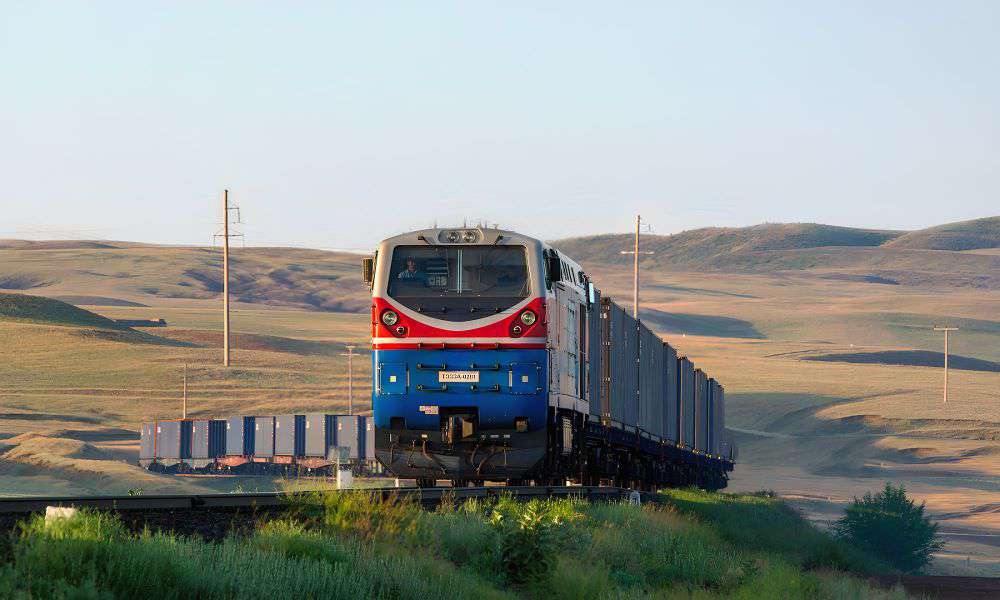

BAKU, Azerbaijan, April 23. The next stage of the Middle Corridor’s development will be determined not only by transit volumes but also by the depth of its logistics infrastructure, Deputy Director General of the Georgian transport company Royal Express, Lasha Amashukeli, wrote on his social media account, Trend reports.
“When we talk about the Middle Corridor, we often highlight its rapid development, and that is absolutely true. Freight volumes reached approximately 5.2 million tons in 2025, whereas in 2019 the figure was around 1 million tons. That’s a fivefold increase in just a few years. Yes, we all want this growth to continue. But such growth will not happen at the current pace alone. It requires very specific support, not only from the government but also from the private sector. Most importantly, the right investments in infrastructure are needed. Because a corridor is not just about roads and railways. A true corridor is built on the infrastructure located along the corridor,” he said.
The company representative particularly emphasized the advantages of warehouses along the Middle Corridor: “Today I want to focus on an often-overlooked but very important element: warehouses. Warehouses are not just storage facilities; they are key elements that ensure the flow of goods. They determine the speed at which goods move, the efficiency of their management, and the competitiveness of the corridor.
If we are serious about expanding this route, then warehouse infrastructure must become one of the top priorities alongside ports, railways, and highways. Because without sufficient and properly distributed warehouse infrastructure, cargo will move, but inefficiently, uncompetitively, and not on a large scale. This is a clear signal to both governments and investors: the next stage of the Middle Corridor’s development will be determined not only by transit but also by the depth of its logistics infrastructure.”
The Middle Corridor is a transport and trade route connecting Asia and Europe that passes through several countries in the region. It serves as an alternative to the traditional Northern and Southern Corridors.
The route begins in China and reaches Europe via Central Asian countries such as Kazakhstan, Uzbekistan, and Turkmenistan, as well as the Caspian Sea, Azerbaijan, Georgia, and Türkiye. The Middle Corridor offers a land route to the eastern regions of Asia, including China, connecting Europe and bypassing longer sea routes.



