


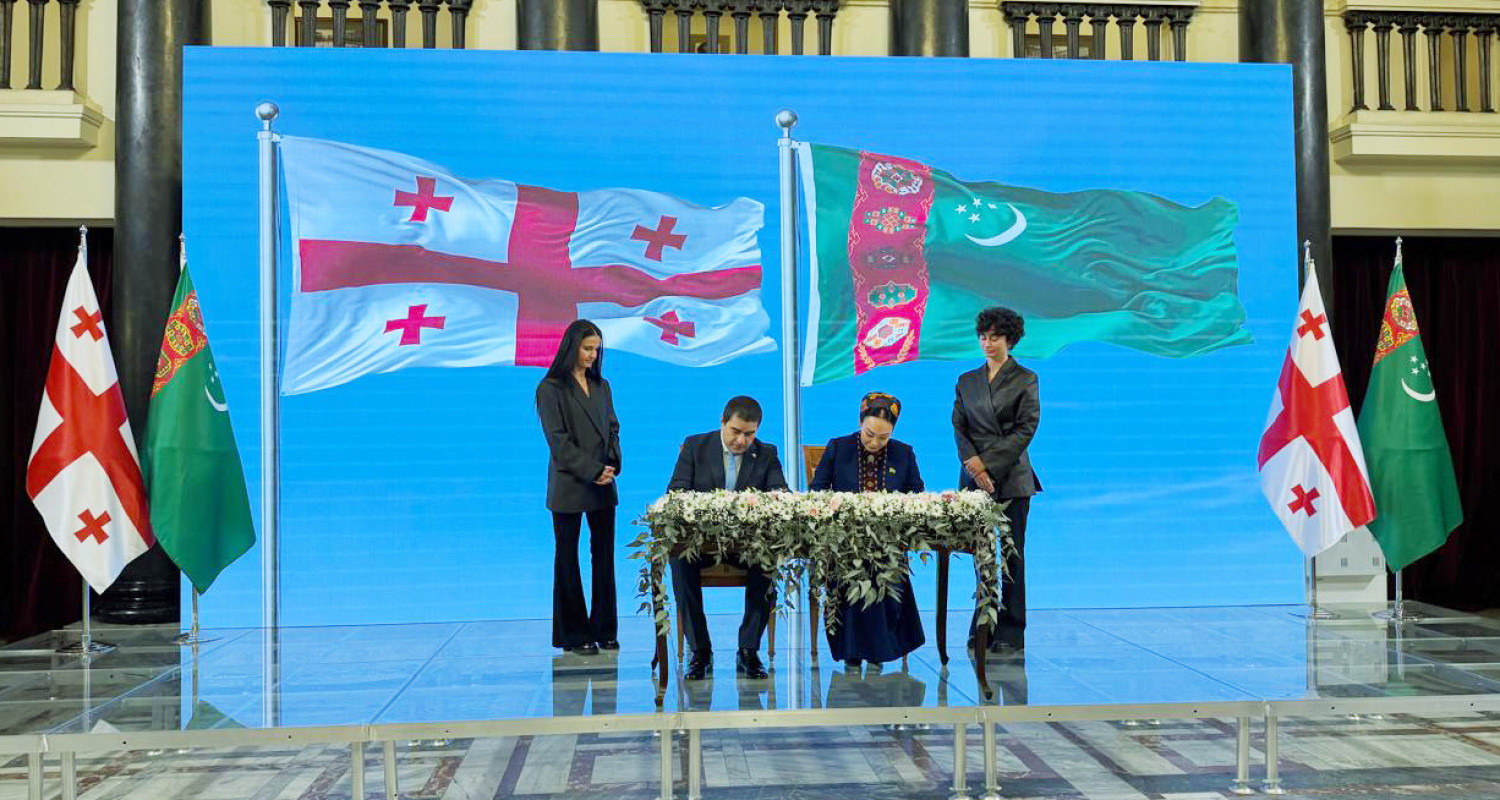

BAKU, Azerbaijan, February 27. The recent visit of Turkmenistan's Chairperson of the Mejlis (Parliament), Dunyagozel Gulmanova, to Georgia represents a significant milestone in the diplomatic relations between the two nations. During her visit on February 24, Gulmanova engaged in discussions with Georgian Prime Minister Irakli Kobakhidze and President Mikheil Kavelashvili. The talks centered on enhancing cooperation in key areas such as transport, energy, and communications, both bilaterally and within the framework of international organizations.
One of the major outcomes of the visit was the signing of a parliamentary cooperation agreement between the two countries. The agreement, formalized with the Speaker of the Georgian Parliament, Shalva Papuashvili, outlines provisions for the exchange of expertise, the establishment of joint committees, and greater coordination on regional matters. Kobakhidze emphasized the potential for a strategic partnership, while Gulmanova reaffirmed Turkmenistan's commitment to furthering diplomatic dialogue. This visit continues a series of bilateral engagements, including 2025 ministerial discussions on transport corridors, and marks a rare instance of active diplomacy from Ashgabat, which has maintained a policy of neutrality since 1995.
Historically, Turkmenistan has traditionally focused on internal affairs, while Georgia - on EU integration. However, geographic proximity - the countries are separated only by the Caspian Sea - creates a foundation for cooperation. Notably, local features such as the vast Karakum Desert, which occupies 70% of Turkmenistan’s territory, complement Georgia’s strategic Black Sea ports, including Poti and Batumi. This geographical synergy creates opportunities for resource exports and positions Tbilisi and Ashgabat as prospective partners in the broader integration of Eurasian spaces.
Both countries actively engage in regional cooperation platforms. A prime example of this is the Lapis Lazuli Corridor, launched in 2017, which connects Afghanistan, Turkmenistan, Azerbaijan, Georgia, and Türkiye. This corridor links the Afghan city of Herat to Turkmenbashi, crosses the Caspian Sea to Baku, Tbilisi, and Poti, and ultimately reaches Istanbul, significantly reducing transit times and costs while enhancing regional connectivity.
The countries are also involved in TRACECA (Transport Corridor Europe-Caucasus-Asia), which brings together 14 states to develop multimodal links, as well as the Middle Corridor, integrated into China’s Belt and Road Initiative. Turkmenistan is not a full member of the Shanghai Cooperation Organization (SCO) but participates in CAREC (Central Asia Regional Economic Cooperation) as an observer. In 2026, an agreement between Azerbaijan, Georgia, Romania, and Turkmenistan on the Caspian-Black Sea route strengthened integration in energy and logistics.



