


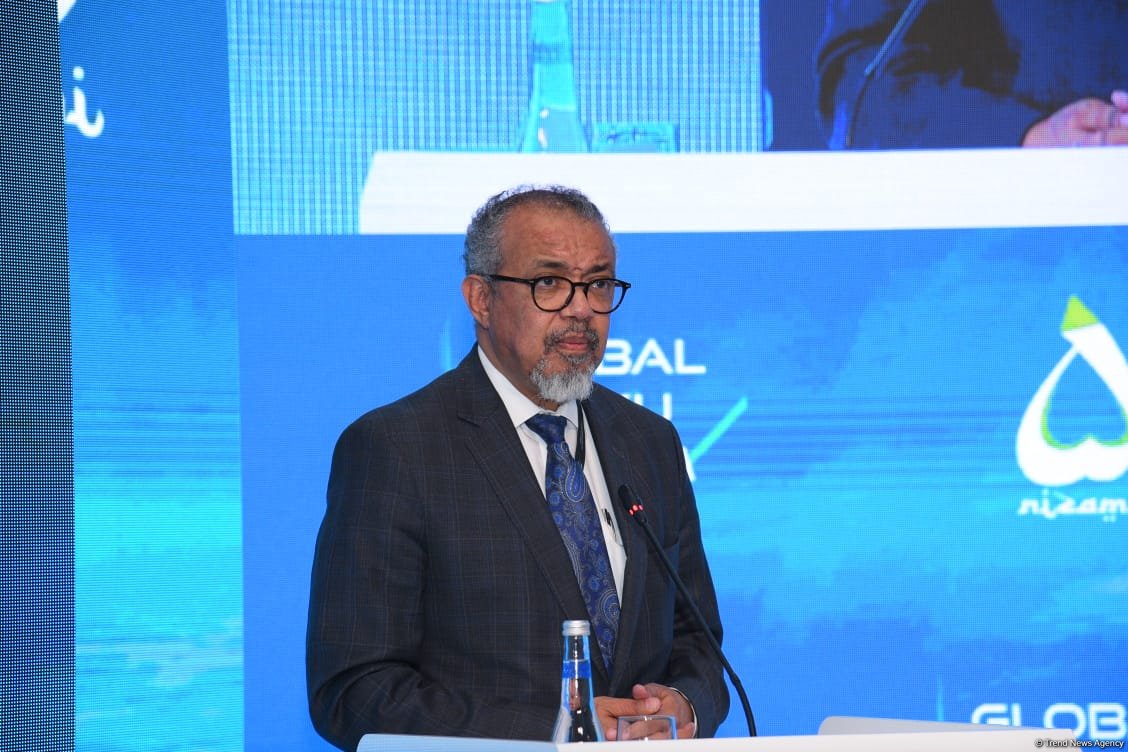

BAKU, Azerbaijan, March 12. Following the escalation of the conflict in the Middle East, more than 1,800 people have been killed in Iran, Lebanon and Israel, while at least 12,500 others have been injured, Director-General of the World Health Organization (WHO) Tedros Adhanom Ghebreyesus said, Trend reports.
According to him, the death toll in Iran has exceeded 1,300 people, while more than 9,000 have been injured.
In Lebanon, at least 570 people have been killed and more than 1,400 injured. In Israel, 15 people have been killed and 2,142 others have been injured.
The WHO chief also noted an increase in attacks on healthcare facilities. According to him, since February 28, 18 attacks on healthcare facilities have been recorded in Iran, 25 in Lebanon and two in Israel.
Ghebreyesus stressed that such strikes not only cause casualties but also deprive the population of access to vital medical care.
Since no concrete agreement was reached in negotiations between the United States (U.S.) and Iran over the nuclear program, the U.S. and Israel began military airstrikes against Iran on February 28. In response, Iran launched missile and drone attacks on Israel and U.S. military facilities located in countries across the region, starting the same day.
On the first day of the air strikes against Iran, Iran’s Supreme Leader Ayatollah Seyyed Ali Khamenei and several high-ranking military officials were killed. On March 8, Iran’s Assembly of Experts elected Seyyed Mojtaba Khamenei, the son of Ayatollah Seyyed Ali Khamenei, as Iran’s third Supreme Leader by majority vote.
Between March 1 and March 5, the confrontation expanded further, affecting several countries across the Middle East.
According to reports, the U.S. side suffered losses of 8 dead and more than 140 wounded.
As a result of the conflict, the region’s energy infrastructure and maritime transportation have also come under serious risk. Due to heightened security tensions around the Strait of Hormuz, global oil prices have surged sharply, and several countries have urged their citizens to leave the region.



