


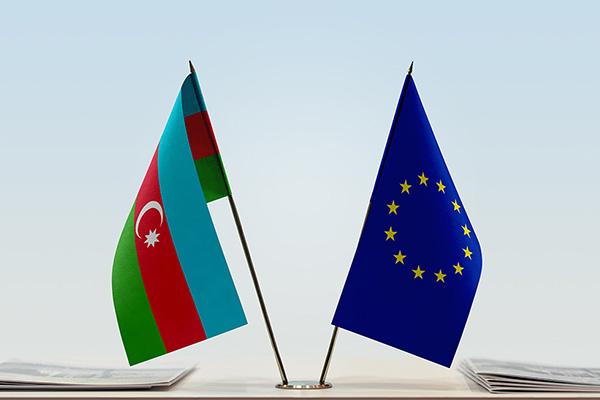
BAKU, Azerbaijan, March 11. Europe’s search for reliable energy partners increasingly leads to one place: Azerbaijan. That reality will be in focus on March 11, when the President of the European Council, António Costa, arrives in Baku for his first official visit to Azerbaijan since taking office.
The trip, announced on March 6, is a bilateral visit and comes at a time when Europe is reassessing its energy and geopolitical priorities - with Azerbaijan emerging as one of the most important partners in that process.
For the European Union, cooperation with Azerbaijan is built on a long-standing foundation. The two sides have worked under the Partnership and Cooperation Agreement since 1999, and over the years the EU has become Azerbaijan’s largest trading partner and a major investor in the country’s economy. However, recent geopolitical developments have elevated this relationship to a new strategic level, particularly in the energy sector.
After the disruption of Russian gas supplies following the war in Ukraine, the EU moved quickly to diversify its energy sources. Azerbaijan emerged as one of the most reliable alternatives. Through the Southern Gas Corridor - a 3,500-kilometer network connecting the Caspian region with European markets - Azerbaijani gas now flows directly to multiple European countries.
The growth of this cooperation is reflected in the numbers. Azerbaijani gas exports to the EU stood at about 8.1 billion cubic meters in 2021. By 2024 they had reached roughly 12.9 billion cubic meters, and in 2025 supplies remained at around 12.5–12.8 billion cubic meters - more than 50% higher than in 2021. Today Azerbaijani gas accounts for around 4 percent of total EU gas imports and reaches 10 EU member states, including Italy, Greece, Bulgaria, Romania, Hungary, Germany, and Austria. Overall, Azerbaijani pipeline gas is now delivered to 16 countries.
The infrastructure behind this supply includes the Trans-Anatolian Natural Gas Pipeline and the Trans Adriatic Pipeline. Since commercial deliveries through TAP began, Azerbaijan has earned roughly €24 billion from natural gas exports to European buyers, demonstrating the scale of the partnership.
Exports are expected to grow further. Under the 2022 strategic energy partnership signed in Baku between President of the European Commission Ursula von der Leyen and President Ilham Aliyev, the two sides aim to increase gas supplies to at least 20 billion cubic meters (bcm) per year by 2027. Achieving this target will require further infrastructure expansion and new production projects, several of which are already planned for the coming years.
Costa’s visit is expected to focus on these expanding areas of cooperation. According to official statements, discussions will center on deepening the Strategic Energy Partnership, including progress toward the 20 bcm supply target, as well as cooperation in renewable energy, green hydrogen, electricity interconnectors, and transport connectivity through the Middle Corridor. The agenda also includes broader geopolitical discussions, particularly the rapidly evolving situation in the Middle East. Analysts expect the visit to reaffirm the EU–Azerbaijan partnership and highlight Azerbaijan’s role as a stable energy supplier during a period of global uncertainty.
A major factor behind this growing partnership has been the leadership of President Ilham Aliyev. Over the past two decades, President Ilham Aliyev has pursued a pragmatic and balanced foreign policy that strengthened cooperation with Europe while maintaining diversified international partnerships. His direct role in advancing major energy projects - including the Southern Gas Corridor - has helped position Azerbaijan as a key contributor to Europe’s energy security.
President Ilham Aliyev’s role has also contributed to stability and long-term strategic planning as the foundation of Azerbaijan’s international cooperation. Under his leadership, the country has maintained uninterrupted energy deliveries while expanding cooperation with Europe into new areas such as renewable energy and regional connectivity.
Against this backdrop, Costa’s visit reflects a broader reality: Azerbaijan is no longer just a regional energy producer. It is becoming an essential partner for Europe’s energy security, economic connectivity, and long-term transition toward a more diversified and resilient energy system.



