


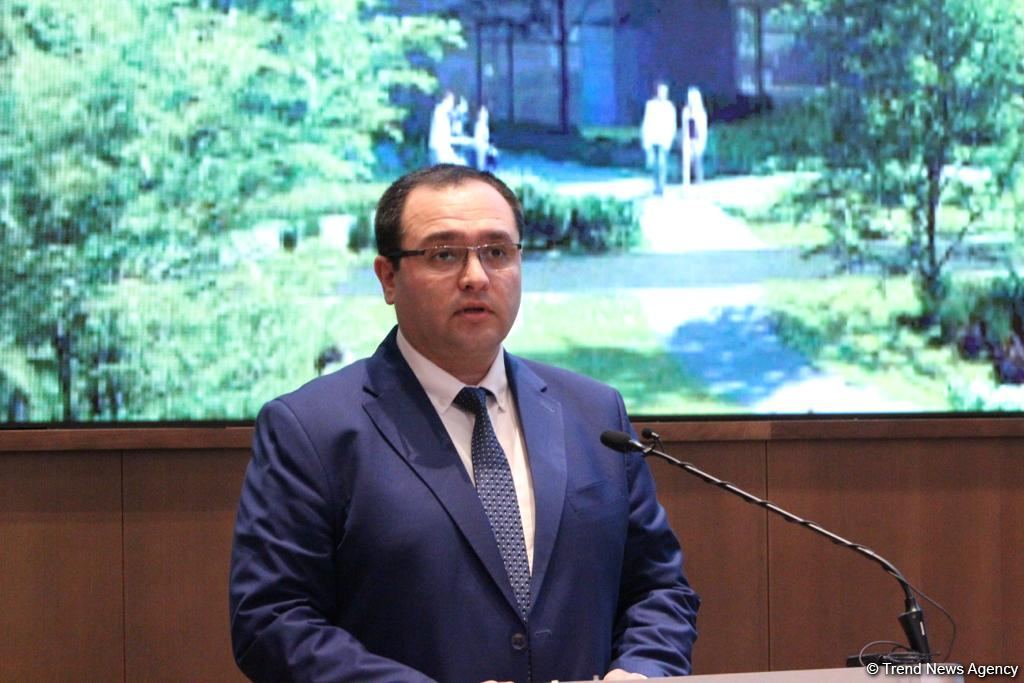

BAKU, Azerbaijan, March 11. The Ministry of Agriculture is already implementing the second stage of a large-scale digital transformation in the agricultural sector, which has identified more than 30 artificial intelligence modules to improve the accuracy and informativeness of decision-making in the industry, the Minister of Agriculture Majnun Mammadov said, Trend reports.
He made the remark at a public hearing of the Azerbaijani Parliament Committee on Agricultural Policy on “The use of artificial intelligence in agriculture: results and prospects.”
The minister noted that the Electronic Agricultural Information System, created in 2020, has not only significantly facilitated farmers' access to public services but also seriously increased the transparency, efficiency, and effectiveness of state support mechanisms. A new stage in this transformation is the project “Artificial Intelligence in Agriculture”:
"As part of the project, more than 30 artificial intelligence modules were identified to improve the accuracy and informativeness of decision-making in the agricultural sector. These modules, combining data on soil, climate, satellite data, field observations, and other sources of information, support the decision-making process both in strategic agricultural management by the state and on farms. The systems generate analytical data on important issues such as plant development, disease and pest risks, soil properties, irrigation needs, and yield forecasts. This data is processed on a unified digital platform and delivered to farmers via mobile applications and other communication channels,'' Mammadov emphasized.
Furthermore, Mammadov stressed that in this way, the agricultural management model is gradually shifting from a traditional empirical approach to a data- and forecasting-based decision-making model.
“On the one hand, this approach allows for more effective planning of state agricultural policy, and on the other, it helps farmers make more accurate and timely decisions in their daily activities,” he concluded.



