


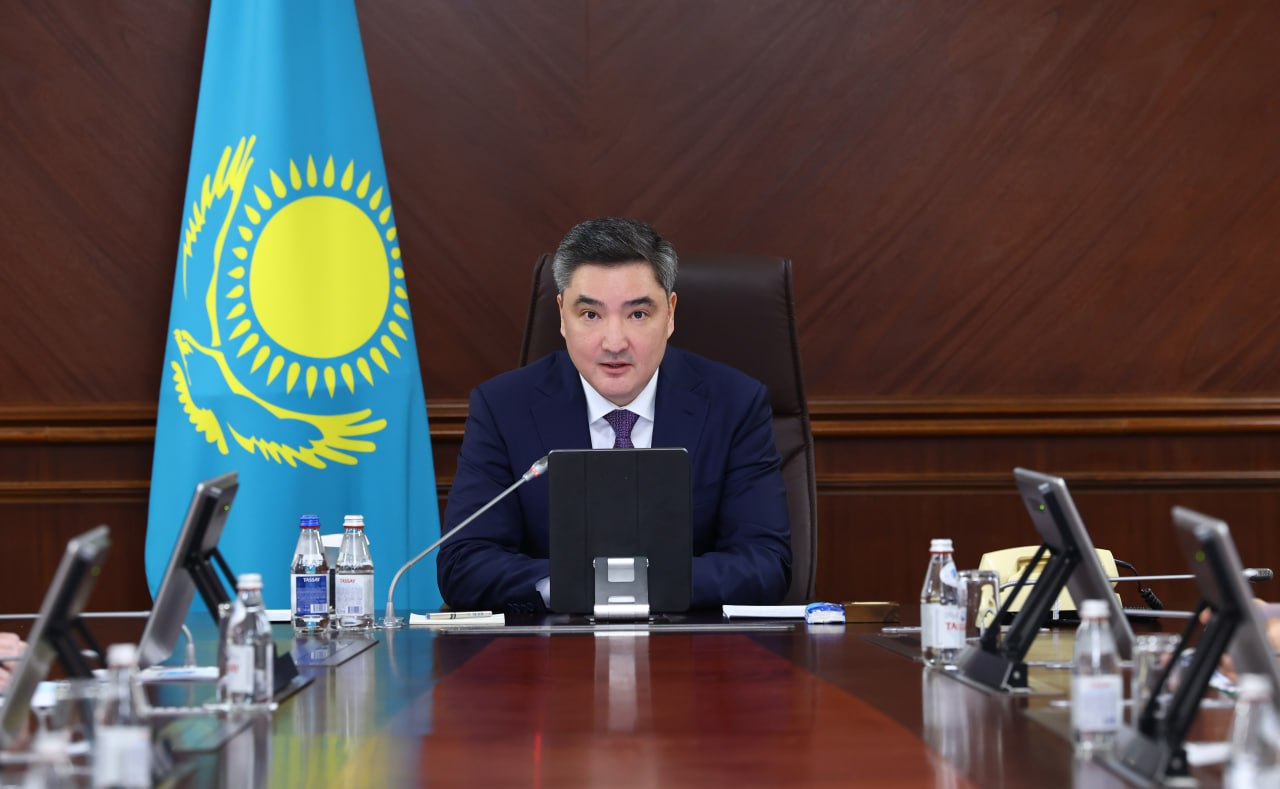

BAKU, Azerbaijan, September 8. Kazakhstan’s Prime Minister Olzhas Bektenov has instructed the government to overhaul the existing vocational training system in line with digitalization, artificial intelligence development and rapid technological modernization, the government press service said.
The issue of new approaches to training specialists in working professions was discussed at a government meeting chaired by Bektenov.
“In the new Constitution, one of the fundamental principles is the promotion of the values of hard work, progress and knowledge. In this regard, the Head of State has set the Government the task of forming a new educational model that takes into account digitalization, the development of artificial intelligence and rapid technological modernization,” Bektenov said.
He noted that Kazakhstan currently has 763 colleges with 556,000 students. Some 138,000 students at 552 colleges are covered by dual education programs with the participation of more than 11,600 enterprises. In 2026, more than 3,000 educational programs across 160 specialties were updated.
According to the Ministry of Labor and Social Protection of the Population, Kazakhstan’s economy will require 2.9 million workers by 2035, including 1.8 million specialists in working professions. The highest demand is expected in industry, construction, agriculture, transport and logistics, energy, trade and services.
Bektenov emphasized that the quality of specialist training directly affects the sustainability of the economy, adding that the education system should quickly adapt to changes in production.
“The Head of State always emphasizes that every sector of the economy needs specialists of a new type who are capable of increasing labor productivity through the use of modern technologies. Working professions require particular attention. Under modern conditions, a specialist at any production facility must be able to professionally work with digital control systems and apply new artificial intelligence technologies and tools to solve practical tasks. It is precisely for these purposes that the existing personnel training system needs to be rebuilt,” Bektenov said.



