


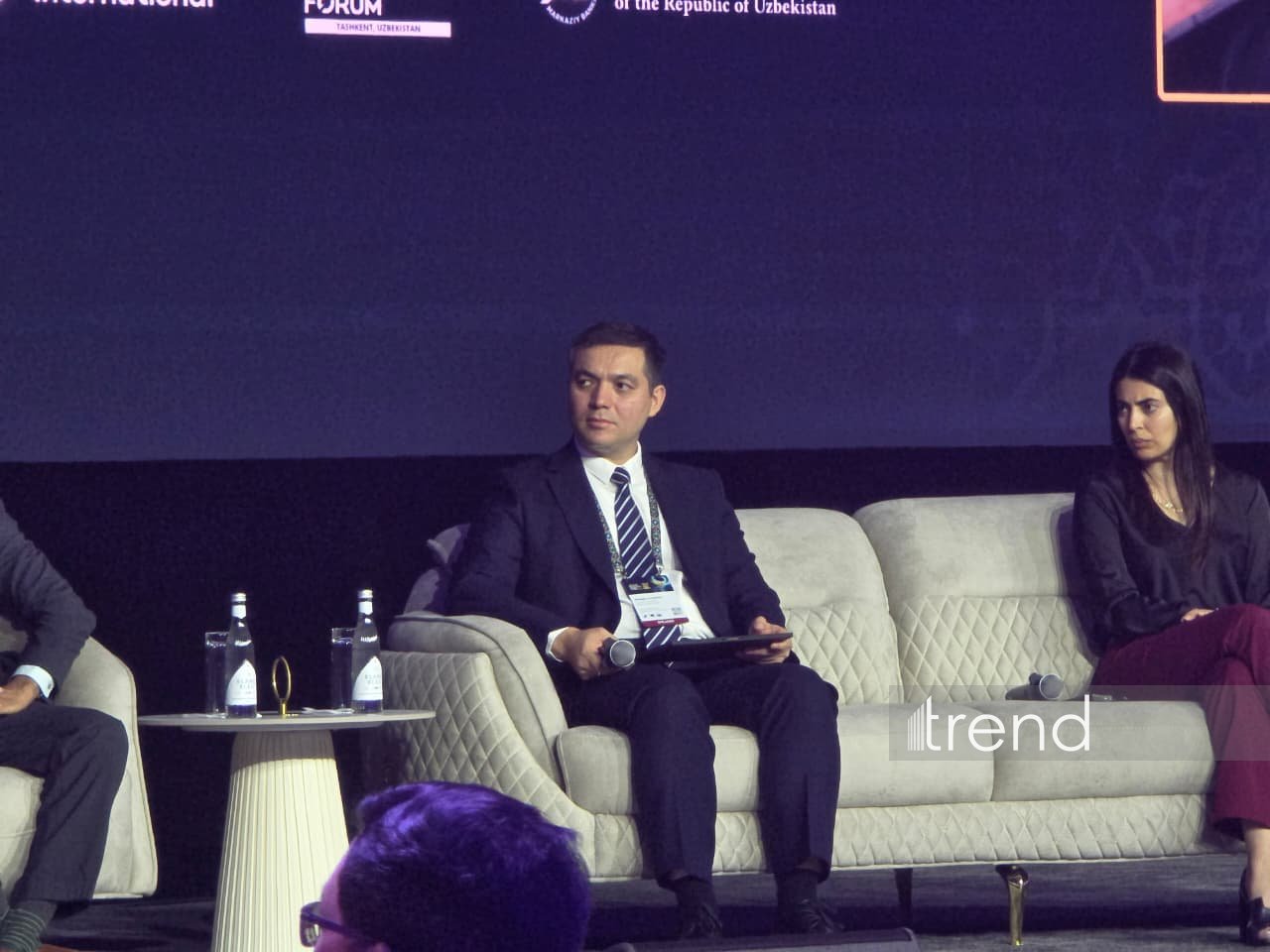

TASHKENT, Uzbekistan, August 25. Data and measurement of stablecoin activity will be among the key factors for the Central Bank of Uzbekistan in developing approaches to digital assets, Director of the Monetary Policy Department of the Central Bank of Uzbekistan Samigjon Inogamov said, Trend’s special correspondent reports from Tashkent.
Inogamov made the remarks while speaking at the Silk Road Finance & Technology Forum.
According to him, the Central Bank has already addressed part of the risks associated with stable assets through the existing reserve framework.
“The relevant reserves are held under the framework established by the regulation. So we have substantially addressed that part of the risk,” Inogamov said.
He noted that another important issue is transaction data, as tokenized assets can move between wallets without necessarily passing through traditional banking accounts.
“That means the transaction may not appear in the statistics which we use in our daily work, and it may create some difficulties to analyze what reason it was used for — payment or storing — and we cannot analyze the direction and the nature of the money,” he said.
Inogamov also highlighted the importance of understanding the economic purpose behind transactions involving stable assets.
“A token used to pay a supplier and a token held for a year may look similar in transaction flow, but for monetary policy that is different. The first one is primarily a payment, and the second is a saving or asset allocation decision,” he said.
According to Inogamov, distinguishing between these types of activity is important for monetary policy analysis.
“So for us the main issue is the data and measurement of stable assets,” he said.
He added that the regulatory sandbox serves not only as a mechanism for supporting financial innovation, but also as a tool for the Central Bank to better understand emerging digital financial instruments.
“Our sandbox is not only an instrument to encourage innovation, but for the Central Bank it is also an instrument of measurement, and will help us to understand this issue,” Inogamov concluded.



