


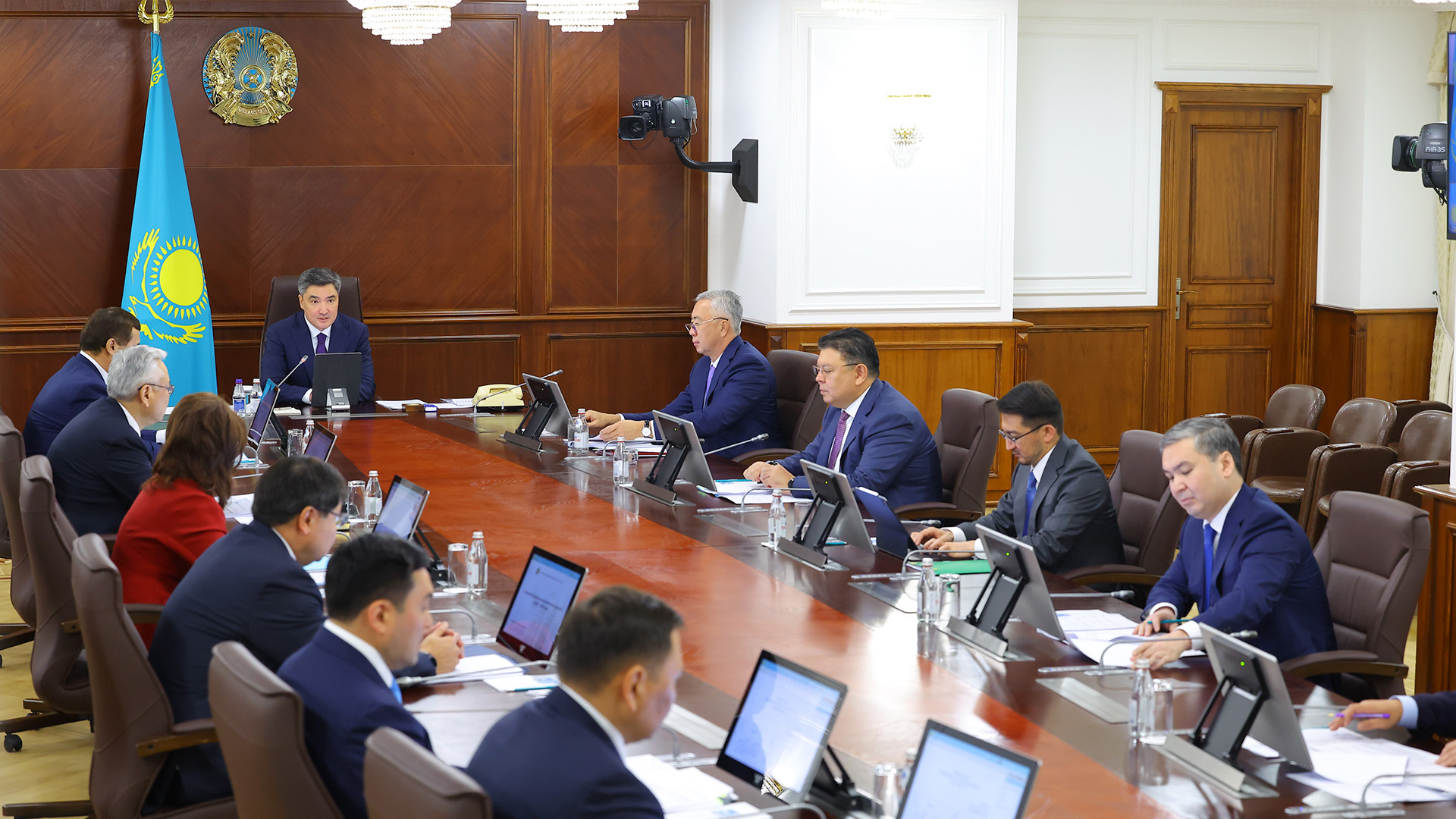

BAKU, Azerbaijan, August 25. Kazakhstan's Government has approved the socio-economic development forecast and draft national budget for 2027-2029.
This was announced in a statement released by the press office of the Kazakh Prime Minister.
According to the information, the priorities include maintaining macroeconomic stability, meeting social obligations, stimulating economic growth, and accelerating the construction of infrastructure and social facilities.
The forecast notes that Kazakhstan's average annual real GDP growth is expected to exceed 5% in 2027-2029. Nominal GDP is projected to increase from 199.3 trillion tenge (about $420 billion) in 2027 to 245 trillion tenge (about $516 billion) in 2029.
Meanwhile, Prime Minister Olzhas Bektenov noted that the achievement of economic growth targets and the efficient use of budget funds remain under the constant control of President Kassym-Jomart Tokayev.
Kazakhstan's economy grew by 4.1% in January-July 2026, and GDP growth of at least 5% is targeted for the full year.
"The Head of State keeps under constant control the achievement of approved economic growth targets and ensures the efficient use of budget funds. The forecast takes into account the current economic situation, external development conditions, assessments by international financial institutions of global economic growth and conditions in external markets," Bektenov said.
As part of the implementation of the President's instructions, accelerated construction of infrastructure and social facilities has been identified as one of the main priorities of the 2027-2029 budget.
Particular attention will also be paid to the efficient use of budget funds and financial discipline.
State bodies have been instructed to ensure the achievement of the targeted socio-economic development indicators, while budget program administrators are to improve the efficiency of spending, strengthen financial discipline and direct resources toward fulfilling state obligations, developing the economy and regions, and building human capital.
The Ministries of Finance and National Economy, together with the Government Office, have been instructed to submit the draft law to the Kurultai. Coordination of the work has been assigned to Deputy Prime Minister and Minister of National Economy Serik Zhumangarin.



