


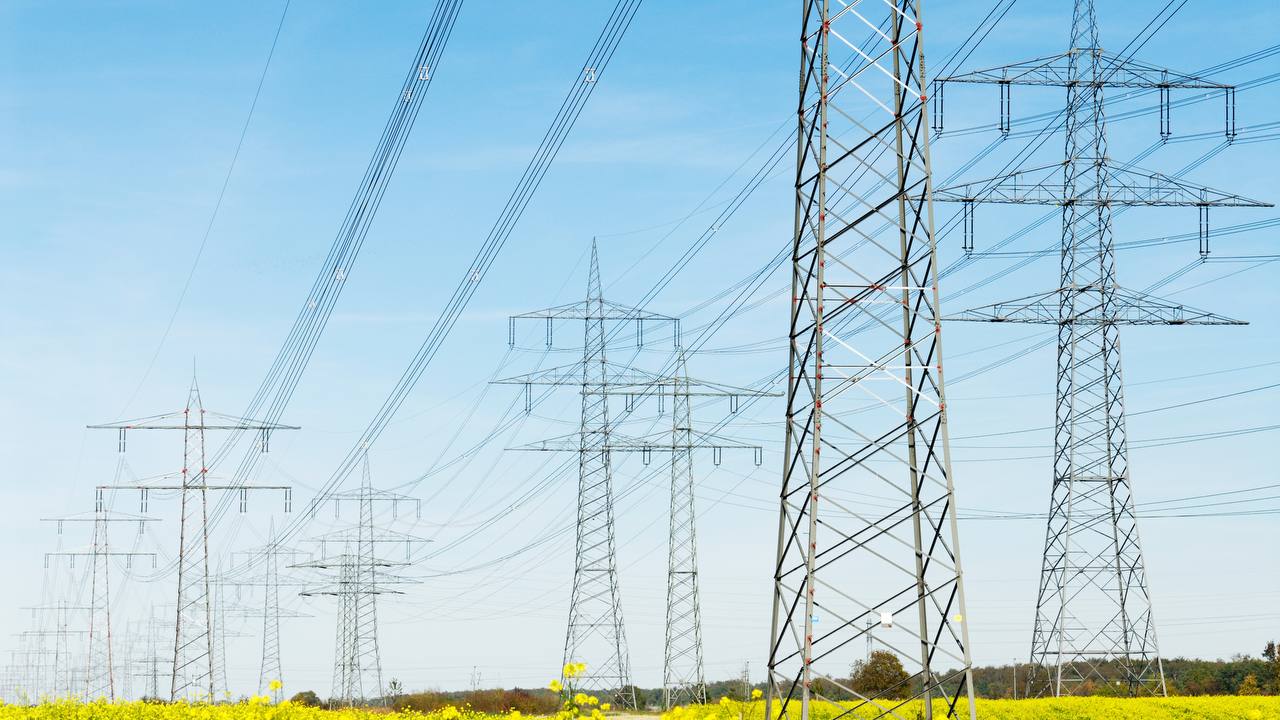

BAKU, Azerbaijan, August 2. Kazakhstan has allocated 384 billion tenge (about $809.8 million) for power plant repairs in 2026, up 9% compared to the previous year, as part of efforts to strengthen the country's energy infrastructure ahead of the upcoming heating season, according to the Kazakh government's press service.
As reported, preparations for the 2025–2026 heating season are carried out with increased funding from both state and private investment sources.
In 2025, owners of energy facilities invested 348 billion tenge (about $733.9 million) in power plant repairs, 6% more than in 2024, while 129 billion tenge was allocated for the modernization of heating networks, representing a 16% year-on-year increase.
As part of last year's repair campaign, major overhauls were completed on 10 power generating units, 63 boilers, and 39 turbines. In addition, around 17,000 kilometers of power transmission lines and 420 substations were upgraded, while 323 kilometers of worn-out heating networks were replaced.
"The work carried out has improved the reliability of the country's energy infrastructure and reduced equipment wear. Wear at power plants declined to 53%, heating networks to 50%, and electricity grid facilities to 66.2%," the government said.
The government noted that during the coldest period in December last year, Kazakhstan's power system successfully handled a peak load of 17.3 GW. As a result, the number of heating disruptions in residential buildings fell threefold, from 65 to 21 cases nationwide. Technological failures at power plants decreased by 15%, while disruptions on electricity networks declined by 12%. Authorities reviewed each incident to prevent similar occurrences in the future.
The condition of combined heat and power (CHP) plants also improved. Five CHP plants were upgraded from the critical "red" risk category to the more stable "yellow" category, while another three moved from the "yellow" to the "green" category.
The government also reported that fuel reserves exceeded planned levels, with more than 8 million tons of coal stockpiled for households and social facilities against a target of 7.5 million tons.
According to the government, funding for repair works is generated through electricity tariffs, with each power plant independently determining the most critical facilities requiring priority maintenance.
At the same time, five thermal power plants remain under special monitoring in the highest-risk "red" category. These include the CHP plants in Semey, Uralsk, Taraz, Aktau CHP-2, and Temirtau GRES-1. By the end of 2026, the government aims to reduce the average wear of power plant equipment to 52%.
For 2026, Kazakhstan plans major overhauls of nine power generating units, 55 boilers, and 51 turbines. According to the government, repair works are progressing on schedule, although hidden defects have been identified at several facilities during inspections.
To date, two power generating units have been fully repaired, while work continues on two others. Major repairs have been completed on 13 boilers, with another 27 currently under repair. Eight turbines have been commissioned after overhaul, while repairs are ongoing at 16 additional units.
In parallel, routine maintenance is being carried out on more than 500 auxiliary equipment units across the country.
The government's increased spending on energy infrastructure comes as regional development institutions continue to emphasize the long-term economic and social benefits of modernizing the power sector.
A source from the Eurasian Development Bank (EDB) Analytical Department told Trend that the bank sees tangible benefits for local communities in Central Asia, as part of infrastructure projects financed jointly with the Green Climate Fund (GCF) and the World Bank,
"The EDB's approach to ensuring measurable community benefits from large infrastructure projects is rooted in two decades of on-the-ground presence across all five Central Asian states. In practice, this means the Bank structures investments not just for macroeconomic impact, but for tangible outcomes at the local level," the source stated.
EDB highlighted its 2025 project portfolio, totaling $782 million across five key investments, as examples of this strategy.
"The Bank's 2025 project commitments - totalling $782 million across five investments - include the reconstruction of Almaty's thermal power plant with a transition from coal to gas, the reconstruction of the Astrakhan-Mangyshlak water supply pipeline, a large wind farm in Kazakhstan, the Kulanak hydropower plant, and a solar plant in Kyrgyzstan's Issyk-Kul region. Each of these directly affects the energy costs, water access, and air quality of the communities around them," the source explained.



