



BAKU, Azerbaijan, October 24. Hellenic Cables, an international cable manufacturer headquartered in Athens, Greece, is interested in participating in the implementation of the Caspian–Black Sea–Europe Green Energy Corridor project and supplying cables for it.
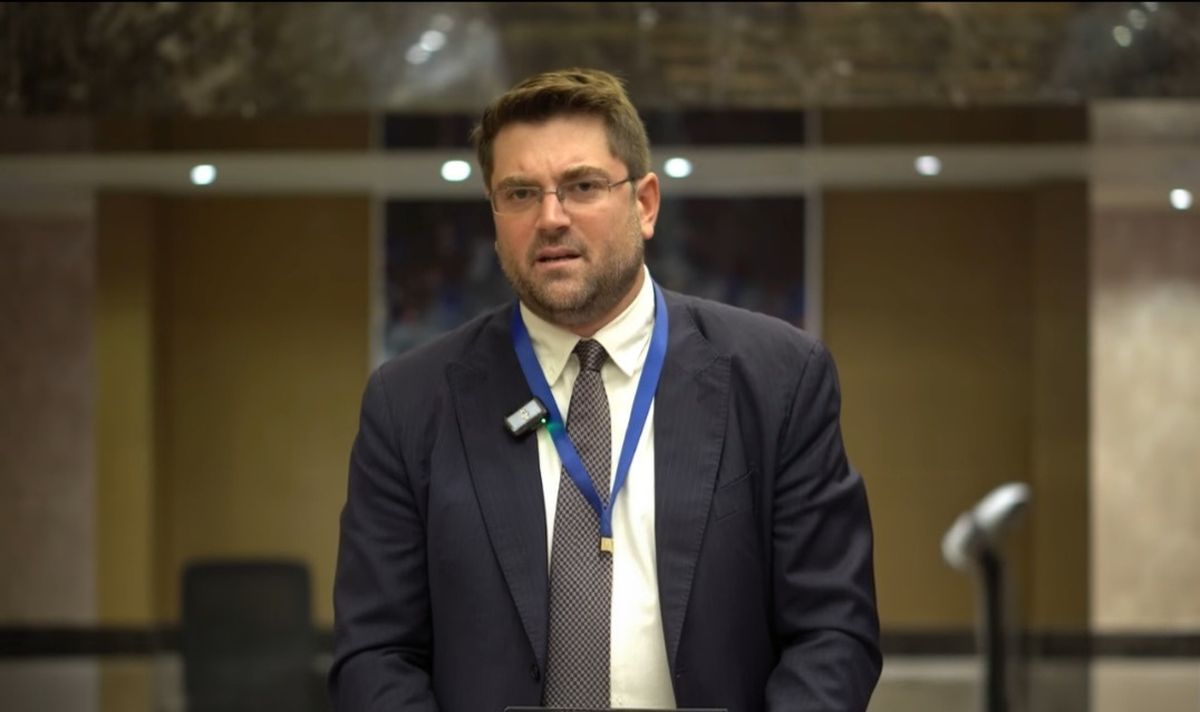
This was announced by the company’s Business Development Director, Timoleon Manolopoulos, in a video posted on the Azerbaijani Ministry of Energy’s social media accounts, in which he shared his views on the forum “Green Energy Corridor: From Feasibility Study to Implementation.”
He noted that Hellenic Cables possesses sufficient production capacity, technological capabilities, and experience in executing complex subsea cable projects to meet the requirements of the initiative.
Hellenic Cables is one of Europe’s leading cable manufacturers, providing cable systems for energy transmission and distribution, telecommunications, and other sectors. According to Manolopoulos, the company has been operating since the 1950s and holds extensive experience in delivering complex subsea and underground cable projects.
"Projects involving the interconnection of energy systems with a high degree of complexity represent one of the core areas of our activity. The Green Energy Corridor project is a highly significant, yet complex, initiative. Its timely implementation requires large-scale production capacity, advanced technologies, and a high level of professional expertise in executing complex projects," he remarked.
The company representative said that Hellenic Cables has doubled its submarine cable production capacity and is capable of manufacturing a significant volume of cable to meet the project's requirements. He also emphasized that the company's technological capabilities align with the demands posed by the project's complex operating conditions.
"With our production capacity, technological capabilities, and experience in executing complex projects, we are very keen to support this initiative," Manolopoulos noted.
Hellenic Cables operates five production facilities across three countries and employs 3,300 people. The company's products are exported to 50 markets worldwide. Since 2012, more than 800 million euro have been invested in the company. Its core business areas include the production of cables for power transmission and distribution, renewable energy, offshore wind, telecommunications, data networks, construction, and industrial sectors.
Prospects for Green Energy Corridor project
At a forum held in Baku, the results of the feasibility study for the Caspian–Black Sea–Europe Green Energy Corridor project were presented for the first time to international investors, financial institutions, and business partners. Discussions covered the project's investment attractiveness, business model, financing opportunities, and the establishment of new partnerships. Furthermore, accelerating preparations for reaching a final investment decision in 2029 was a key focus.
The forum featured representatives from government agencies of Azerbaijan and partner countries, the European Union, international financial institutions, investment funds, energy companies, electricity off-takers, transmission system operators, cable manufacturers, technology suppliers, as well as engineering and insurance firms.
The event was attended by representatives from the World Bank, the European Investment Bank, the European Bank for Reconstruction and Development, the Asian Development Bank, the Black Sea Trade and Development Bank, and the Islamic Development Bank, as well as companies including Brookfield Asset Management, ACWA Power, Masdar, SOCAR Green, China Datang, State Grid Corporation of China, PowerChina, Siemens Energy, ABB, Hitachi Energy, TotalEnergies, Prysmian, NKT, and Orient Cable.
Speaking at the opening of the forum, Azerbaijan’s Minister of Energy, Parviz Shahbazov, stressed the strategic importance of the project in terms of strengthening regional energy security, diversifying energy supplies, and facilitating the green transition.
The minister noted that the feasibility study for the project, which was initiated through a strategic partnership agreement signed in Bucharest in 2022 between Azerbaijan, Georgia, Romania, and Hungary, was completed this July. The results of the study indicate that the project is technically feasible and economically attractive.
Shahbazov pointed out that the project holds a special place in Azerbaijan’s strategy to become a regional hub for the production, transmission, and export of green energy. The reaffirmed political support for the project during the recent visit of European Commission President Ursula von der Leyen to Baku was also highlighted. Strengthening the project’s investment prospects through efforts to include the project in the draft TYNDP 2026 (Ten-Year Network Development Plan) for the European electricity grid, as well as the attainment of "Project of Mutual Interest" (PMI) status, was noted.
The Green Energy Corridor, envisioned to span approximately 3,000 kilometers, is planned to be commissioned in phases starting from 2032, with a target transmission capacity of 4 GW. According to the feasibility study, the project could facilitate the development of at least 8 GW of renewable energy generation capacity in the region, enable the transmission of approximately 20 billion kilowatt-hours of electricity to Europe annually from 2040 onwards, and contribute to a reduction in carbon emissions by up to 3.6 million tons.
One of the primary technical challenges of the project involves the planned installation of subsea power cables at depths of up to 2,200 meters in the Black Sea. Consequently, the necessity of employing advanced technological solutions to carry out operations at such depths has been emphasized.
The consideration of a hybrid business model combining regulated and commercial components to ensure the project’s commercial sustainability was pointed out. This model is intended to be based on long-term power purchase agreements, the participation of private capital, and the development of cross-border electricity trade.
The minister of energy said that the involvement of international financial institutions and private investors, a robust business model, and long-term commercial agreements are essential prerequisites for reaching a final investment decision.
"Our goal is to transform the Green Energy Corridor into a regional infrastructure project characterized by a clear business model, a sustainable financial structure, and attractive terms for investors. Azerbaijan’s strategic location, extensive experience in international energy projects, and reliable relationships with partner countries provide a solid foundation for achieving this objective," noted Shahbazov.
At the conclusion of the forum, the development of a partnership roadmap and the next steps toward reaching a Final Investment Decision (FID) for the Green Energy Corridor project were agreed upon.


