


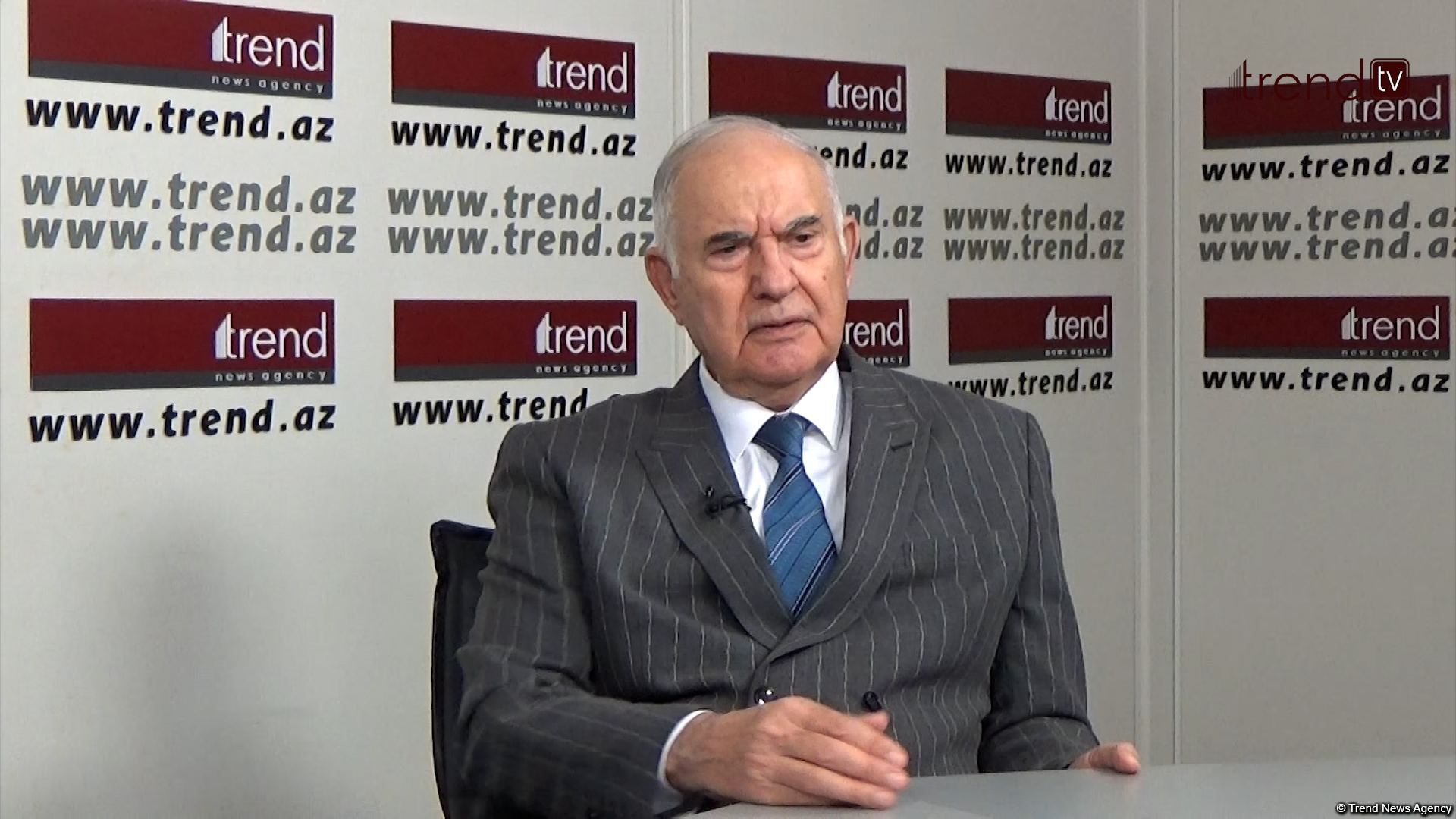

BAKU, Azerbaijan, August 25. Azerbaijani President Ilham Aliyev’s state visit to Uzbekistan can be regarded as a historic stage in the development of relations between the two countries. The results of the visit show that ties between Baku and Tashkent are no longer limited to bilateral cooperation and are gaining broader regional and geopolitical significance, analyst Azer Garayev told Trend.
According to him, the dynamics of relations between Azerbaijan and Uzbekistan in recent years, intensive political dialogue at the level of the heads of state, and the expansion of cooperation into new areas are among the main factors determining the historic significance of President Ilham Aliyev’s latest visit.
“Azerbaijan-Uzbekistan relations are based on common history, culture and national and spiritual values. However, we are now seeing this historical affinity transformed into concrete political, economic and geostrategic cooperation. President Ilham Aliyev’s visit to Uzbekistan should also be viewed as the beginning of a new stage in this process. The decisions adopted and documents signed during the visit determine the long-term prospects of relations,” the political analyst said.
Eternal friendship treaty strengthens political and legal foundation of relations
Garayev noted that the “Treaty on Eternal Friendship,” signed on August 23, further strengthens the political and legal foundations of the special relationship that has developed between Azerbaijan and Uzbekistan.
In his view, the significance of the document is not limited to formalizing the existing friendly relations between the two countries. The treaty demonstrates the long-term nature of mutual trust, strategic partnership and allied relations.
“The Treaty on Eternal Friendship shows the strategic perspective from which Baku and Tashkent view their relations. This is not about situational interests, but about long-term political trust. Azerbaijan and Uzbekistan already view each other as reliable partners on regional issues. This, in turn, creates opportunities to further strengthen the institutional foundations of relations,” he emphasized.
The political analyst said that deepening political dialogue between the two countries also creates favorable conditions for expanding cooperation in the economic, transport, energy, industrial, tourism, education, cultural and humanitarian spheres.
Baku-Tashkent ties increase geopolitical weight of Turkic world
Garayev believes that the strengthening of Azerbaijan-Uzbekistan relations extends beyond the bilateral framework and provides additional momentum to integration processes across the Turkic world.
“Azerbaijan is a state with significant political and economic potential in the South Caucasus, while Uzbekistan has considerable political and economic potential in Central Asia. The strategic rapprochement between these two countries contributes to stronger political coordination within the Turkic world on both shores of the Caspian Sea. Strengthening the Baku-Tashkent axis is important for developing cooperation within the Organization of Turkic States, expanding ties between Central Asia and the South Caucasus, and forming a common economic space,” the political analyst said.
According to him, growing cooperation between Azerbaijan and Uzbekistan also contributes to the Turkic world becoming a more coordinated and influential geopolitical actor in the international relations system.
Economy demonstrates new quality of relations
The political analyst emphasized that economic cooperation is one of the most important indicators of the qualitative changes taking place in Azerbaijan-Uzbekistan relations.
In his view, alongside expanding mutual trade, joint investments, industrial cooperation, transport and logistics projects, and cooperation in the energy sector are creating a more sustainable economic foundation for bilateral relations.
“If political relations are complemented by economic projects, this significantly increases the sustainability of the partnership. Azerbaijan and Uzbekistan are currently developing precisely such a model. Increasing mutual investments, establishing joint production facilities, making more active use of the Middle Corridor’s potential and expanding cargo transportation across the Caspian Sea serve the economic interests of both countries,” Azer Garayev said.
He added that diversifying economic ties could not only facilitate access of Azerbaijani and Uzbek businesses to each other’s markets, but also expand opportunities for the two countries to jointly enter third-country markets.
Tourism can further strengthen ties between peoples
According to Azer Garayev, tourism is another area with significant development potential between Azerbaijan and Uzbekistan. The fact that both countries possess rich historical and cultural heritage, ancient cities and important monuments of Turkic-Islamic civilization creates favorable opportunities for expanding mutual tourist flows.
The political analyst noted that Baku, Shusha and other tourism destinations are attractive to Uzbek citizens, while Samarkand, Bukhara, Khiva and Tashkent are of particular interest to Azerbaijani tourists. The inclusion of a program to visit Bukhara’s historical and cultural monuments during President Ilham Aliyev’s state visit was also one of the indications of the importance attached to the two countries’ shared cultural heritage and tourism potential.
“Tourism is not only a sector that generates economic revenue. For historically and culturally close countries such as Azerbaijan and Uzbekistan, tourism also means increasing direct contacts between peoples. Expanding mutual tourist flows, developing joint tourism routes, and jointly promoting cultural and historical sites could become important areas of future cooperation,” the political analyst said.
In his view, the development of transport connectivity and intensification of economic ties will provide additional momentum to the tourism sector. In this regard, tourism could become one of the important areas contributing to further strengthening the social and humanitarian foundations of Azerbaijan-Uzbekistan relations.
Education cooperation becoming a strategic investment
Garayev said education occupies a special place in Azerbaijan-Uzbekistan relations. According to him, expanding student and faculty exchanges, establishing direct cooperation between higher education institutions, and implementing joint scientific projects could make an important contribution to the long-term rapprochement between the two countries.
The political analyst described the participation of the presidents of Azerbaijan and Uzbekistan in the opening ceremony of the Nizami Ganjavi National Pedagogical University in Tashkent during President Ilham Aliyev’s visit as one of the signs that educational ties have reached a new stage. The new campus project envisages the establishment of educational buildings for 20,000 people and student dormitories for 5,000 people. At the same time, cooperation between the Mirza Ulugbek School in Fuzuli and Uzbekistan is expanding at the level of teachers and students.
“These projects have very important symbolic and strategic dimensions. The operation of educational institutions named after Mirza Ulugbek in Fuzuli and Nizami Ganjavi in Tashkent represents a practical model for passing our shared cultural heritage on to future generations. Relations established in the field of education produce results that last longer than today’s political ties. This cooperation serves to form a new generation of specialists and intellectuals who will know Azerbaijan and Uzbekistan more closely in the future,” Azer Garayev said.
According to Garayev, the next stage could include increasing student exchanges, developing joint educational programs, promoting dual-degree programs between universities, and expanding scientific research and academic exchanges.
Political rapprochement complemented by people-to-people ties
According to the political analyst, the expansion of educational, tourism, cultural and humanitarian ties alongside political and economic relations in recent years demonstrates that the Azerbaijan-Uzbekistan partnership is taking on a more comprehensive character.
“The new stage shows that Baku and Tashkent do not intend merely to preserve existing cooperation, but are forming a common strategic agenda for the coming decades. The signing of the Treaty on Eternal Friendship, the expansion of economic cooperation, the deepening of educational and tourism ties, as well as stronger coordination within the Turkic world are the main directions of this process. In this regard, President Ilham Aliyev’s visit to Uzbekistan can be regarded as the political foundation of a new historic stage in Azerbaijan-Uzbekistan relations,” Azer Garayev concluded.



