


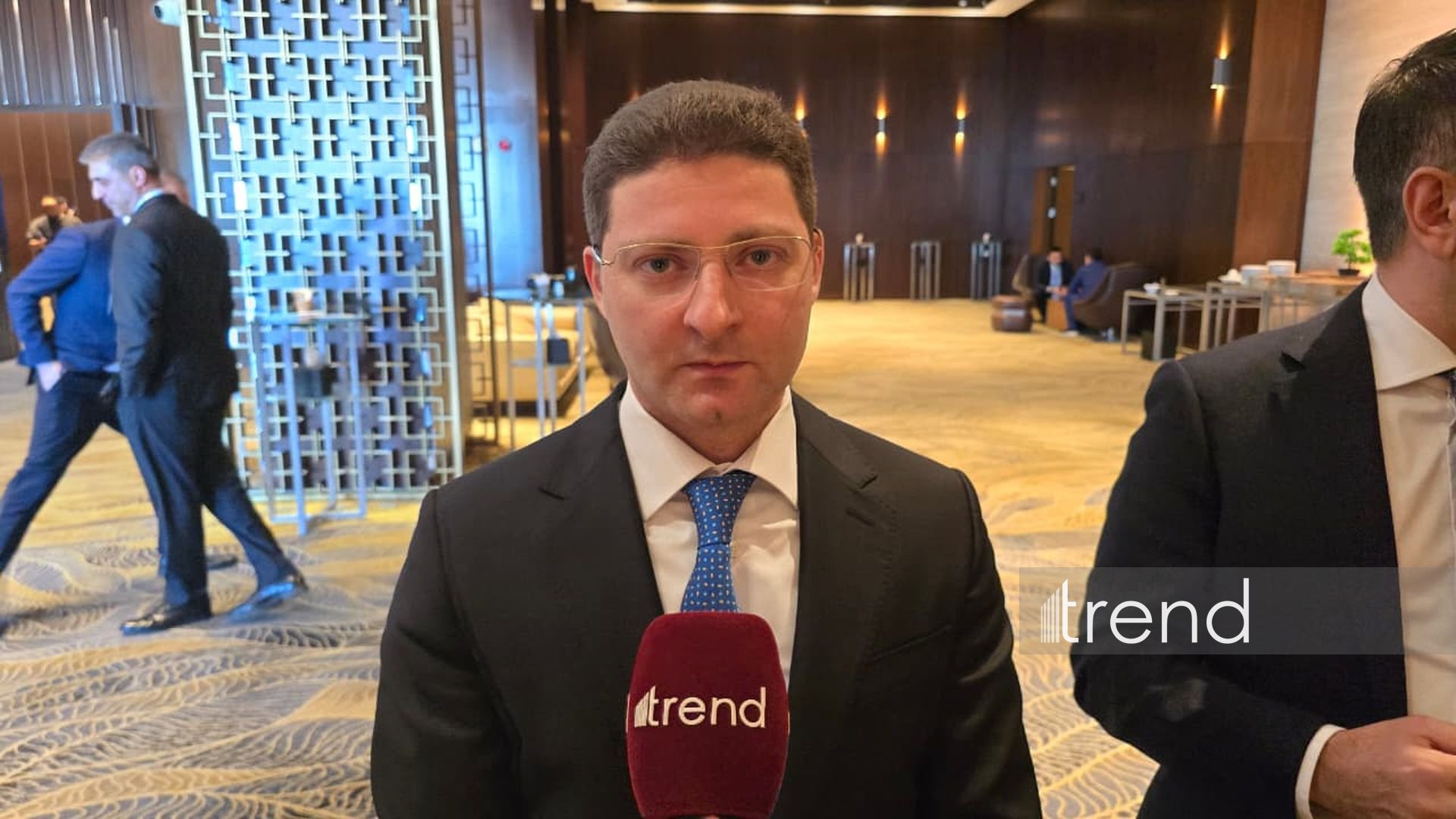

BAKU, Azerbaijan, October 13. The Central Bank of Azerbaijan (CBA) is drafting amendments to legislation to foster the development of the financial technology (fintech) sector in Azerbaijan, facilitate the creation of new products and services, and expand the operational capabilities of companies, Deputy Chairman of the CBA, Vusal Khalilov, told reporters on the sidelines of the Baku Fintech Sector Trade Mission Program on Tuesday, Trend's correspondent reports from the event.
He noted that while the financial sector has traditionally prioritized the development of payment systems and products, the creation of other financial products and services is now also a key focus. Legislative changes in this area aim to enable banks and fintech companies to introduce new services.
"Traditionally, our main priority has been payment systems and products. Recently, however, we have also been placing great emphasis on the creation of other products and services. The legislative changes encourage the development of products and services beyond just payments. The goal is to provide citizens with new services through both banks and fintechs," Khalilov explained.
According to the deputy chairman, work is underway, in collaboration with representatives of the financial sector, to improve the legislative framework. Specifically, draft amendments to relevant laws and regulations have been prepared in cooperation with the Azerbaijan Fintech Association and the Azerbaijan Banks Association.
He noted that the initial drafts were well-received by representatives of the sector.
"The proposed changes are expected to enable fintech companies to create new products and services, as well as expand the range of services they offer to customers.
We maintain an ongoing, extensive dialogue with the fintech sector. In this context, we are specifically discussing issues related to integration with the instant payment system," he emphasized.
Touching upon the development of the instant payment system, Khalilov noted that the daily volume of transactions within the system has currently reached one million.
According to him, one of the system's key advantages is its low operating costs. This allows for a significant reduction in payment-related expenses for both banks and customers.
"Service fees vary depending on the type of payment; however, the overall costs associated with the instant payment system are very low, creating cost-effective opportunities for both banks and customers," the deputy chairman pointed out.
He added that amendments to the law "On payment services and payment systems" are also planned. The development of these amendments will take into account the needs of the financial market, risk management, and the development of the real sector.
According to Khalilov, key objectives include not only mitigating risks but also expanding the capacity of fintech companies to offer new services, fostering innovation in the financial sector, and increasing citizens' access to modern financial services.



