


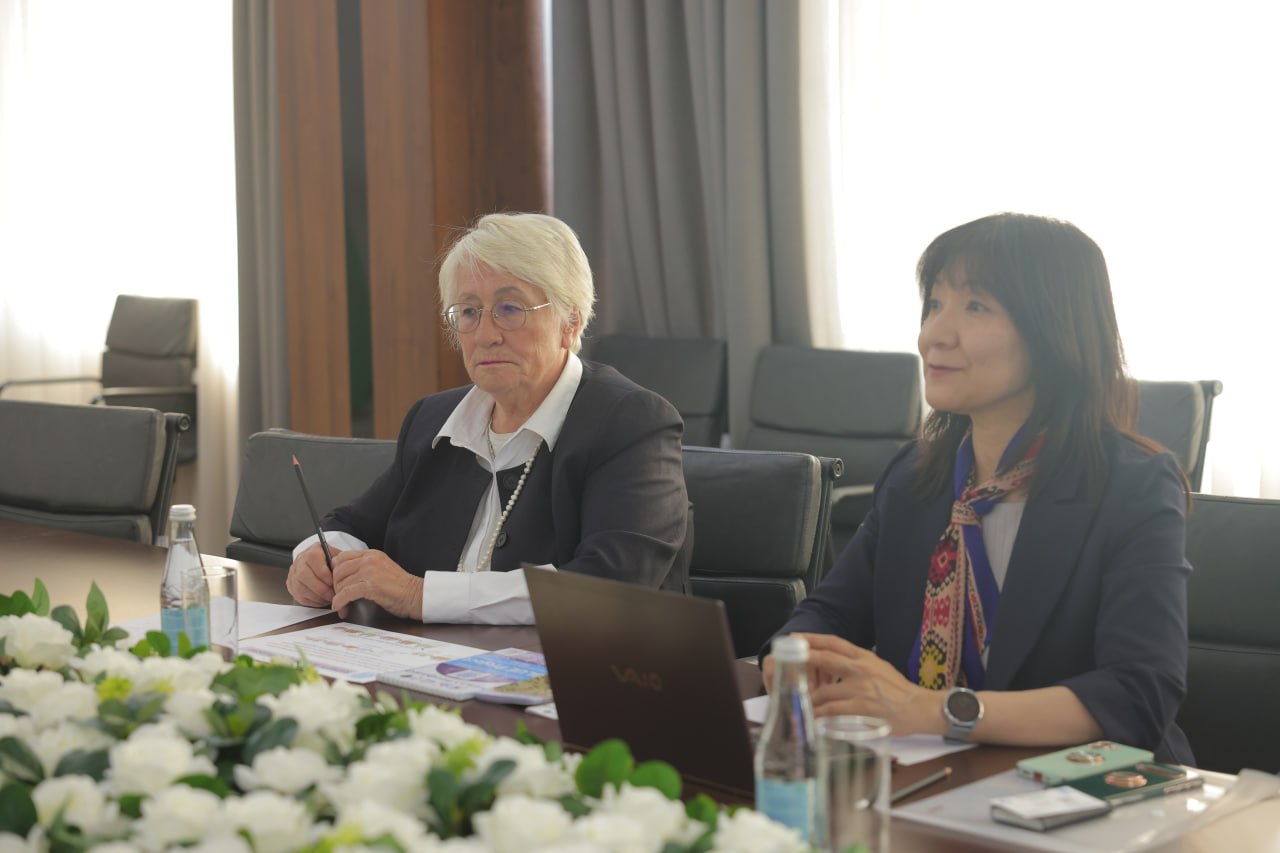

BAKU, Azerbaijan, September 29. Uzbekistan and the Japan International Cooperation Agency (JICA) are assessing the economic potential of growing amaranth and other crops on saline agricultural land in Karakalpakstan as part of efforts to restore soil productivity and improve farming efficiency on Sept. 28.
This was reflected in the statement by Uzbekistan’s Ministry of Agriculture, following a meeting between officials from the ministry and JICA representatives to review progress under the BLUE PROJECT, which focuses on developing agricultural solutions for saline soils in the Karakalpakstan region.
The project has supported research into Bio-Saline Agriculture technologies, including the development of approaches for farming on salt-affected land. Research has also focused on registering new crop varieties and assessing the potential for growing Amaranthus, commonly known as amaranth.
The next stage will focus on determining whether these crops are economically viable for farmers and local communities. The assessment will examine production costs, expected revenues and the potential economic benefits for agricultural producers and residents.
“The economic assessment will help determine whether amaranth and other promising crops can provide a viable option for farmers and local communities in saline areas,” the Ministry of Agriculture said.
If the research confirms the economic feasibility of growing the crops, the project team plans to work with Uzbekistan’s National Agricultural Knowledge and Innovation System (AKIS) to introduce the technologies into agricultural practice and expand their use.
The initiative is focused on addressing challenges associated with saline soils, which can limit agricultural productivity and reduce the range of crops that can be grown effectively. Developing suitable cultivation technologies could provide farmers with additional options for using affected agricultural land.
The cooperation with JICA also combines scientific research with an economic assessment, allowing the project partners to evaluate not only the agronomic performance of new crops but also their potential costs and returns before considering wider implementation.



