


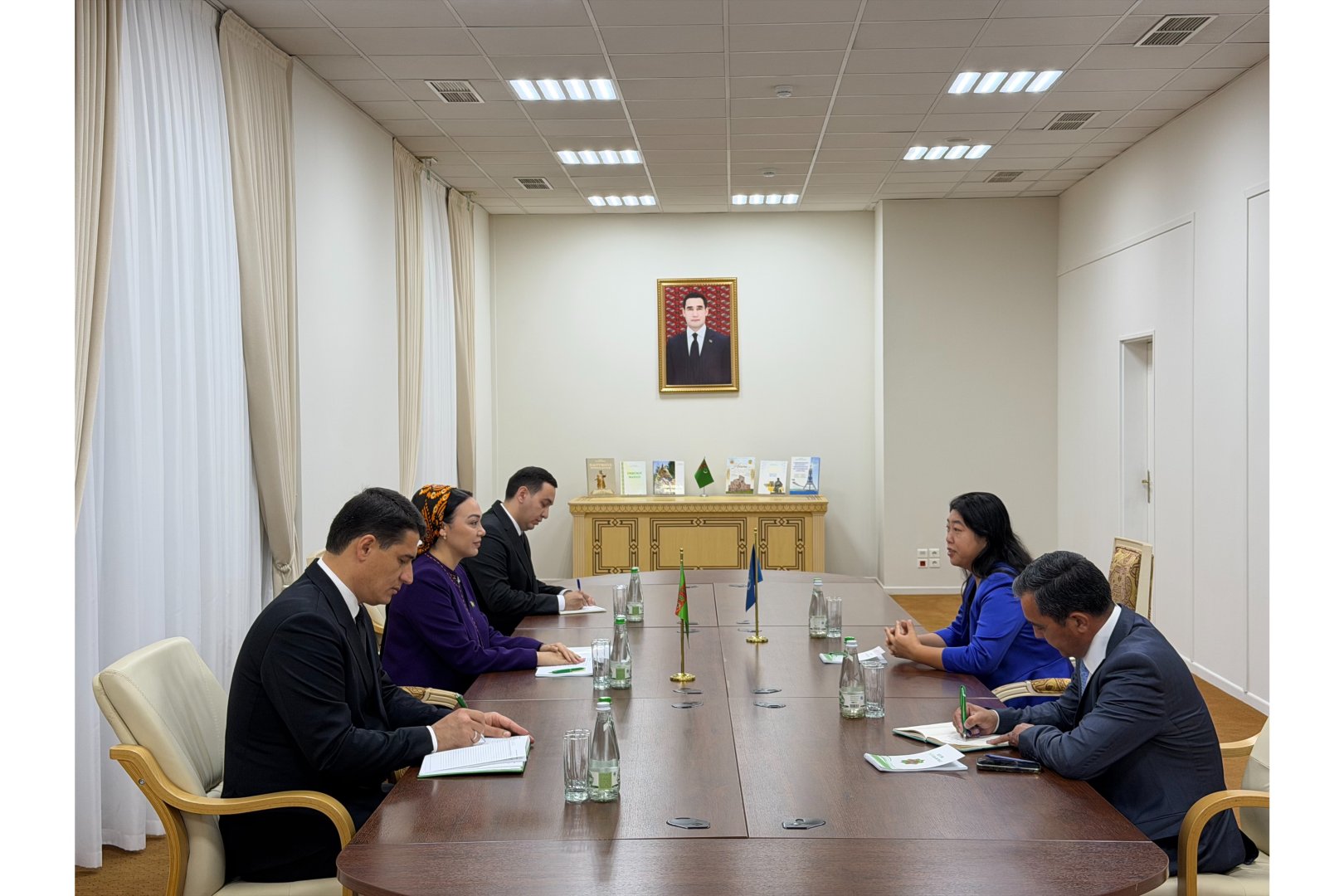

BAKU, Azerbaijan, Aug. 1. Turkmenistan and the United Nations discussed cooperation on energy and transport issues.
This was reflected in a statement published by the Mejlis (Parliament) of Turkmenistan following a meeting between Speaker Dunyagozel Gulmanova and newly appointed UN Resident Coordinator in Turkmenistan Xiaojun Grace Wang.
"The meeting also highlighted the importance of Turkmenistan's initiatives aimed at ensuring energy security, developing transport corridors and protecting the environment," the statement said.
According to the press release, the sides discussed cooperation between Turkmenistan and the UN and its specialized agencies. They also reviewed the role of legislative support for the country's development programs and sustainable development agenda.
The participants noted the contribution of joint seminars and meetings organized by the Mejlis together with the United Nations Development Programme (UNDP), the United Nations Children's Fund (UNICEF) and the United Nations Population Fund (UNFPA). The events focused on improving legislation in areas including climate change, environmental protection and the sustainable use of water resources, the report says.
The meeting concluded with both sides reaffirming the strong partnership between Turkmenistan and the United Nations and their commitment to further expanding cooperation.
Meanwhile, the United Nations in Turkmenistan serves as a development partner, endorsing national priorities aligned with the Sustainable Development Goals through the UN Sustainable Development Cooperation Framework (2021-2025/2026-2030). The Country Team, led by the UN Resident Coordinator, collaborates with the government on health, education, economic, and social reforms. Key focuses include people-centered governance, inclusive economic growth, and quality services. Major UN agencies involved are UNDP, WHO, UNICEF, and UNODC.
Additionally, the UN Regional Centre for Preventive Diplomacy for Central Asia addresses regional security. Key projects encompass legal aid strengthening, violence protection for women and children, trade improvement, water resource management, and pandemic preparedness, supported by significant government financial contributions.



