


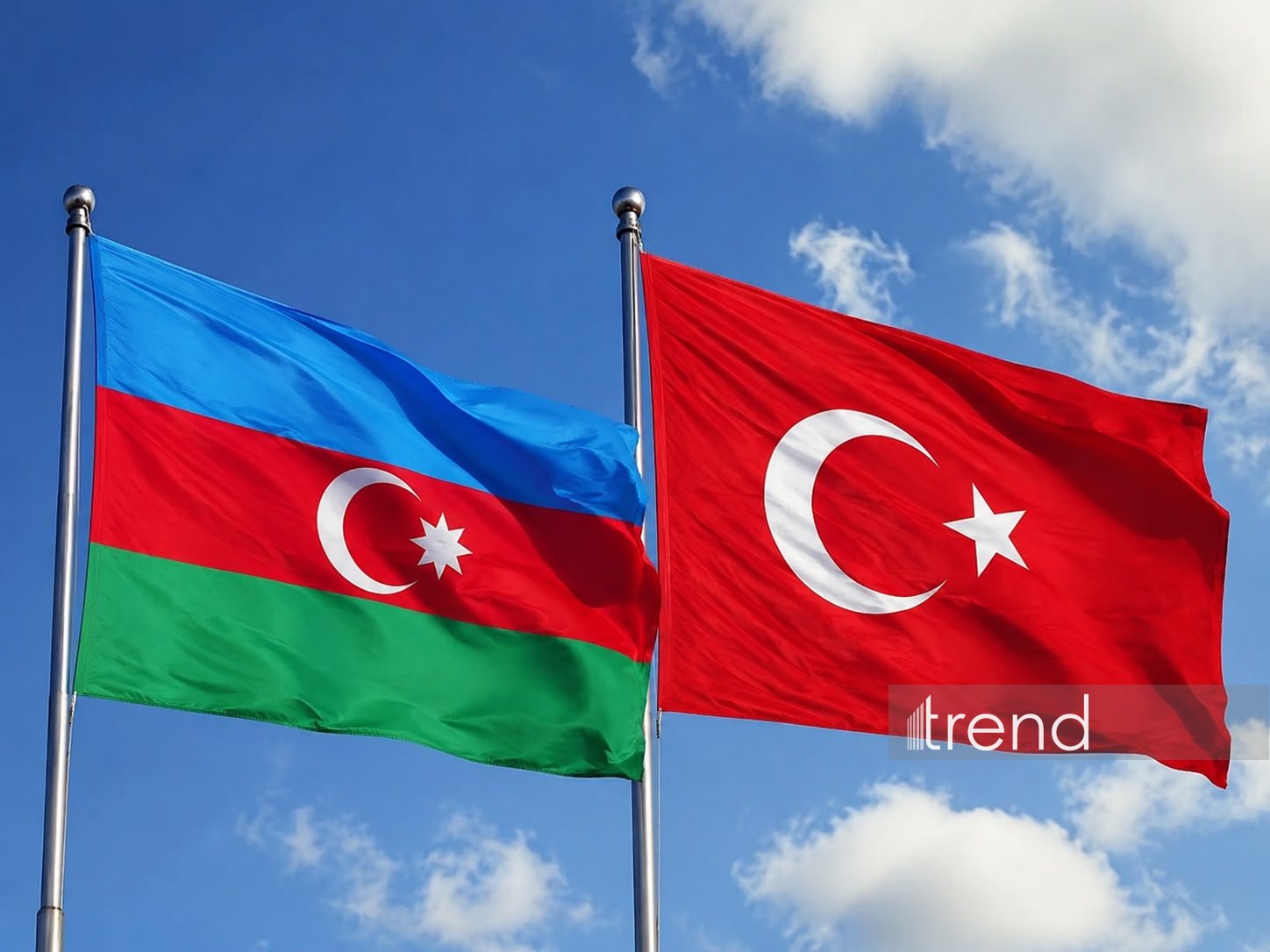

BAKU, Azerbaijan, October 13. Relations between Azerbaijan and Türkiye are based on a shared history, culture, language, mutual trust, and strategic partnership. Over the years, these ties have stood the test of time, giving rise to a model of political, economic, and military cooperation that serves the interests of both countries. Türkiye will always be a friendly and brotherly country to Azerbaijan. However, brotherly relations do not give anyone the right to tell Azerbaijan what to do, judge its domestic decisions, or interfere in its state policy.
Recent remarks by Oktay Saral, chief adviser to Turkish President Recep Tayyip Erdoğan, and some Turkish political and public figures regarding school uniform rules in Azerbaijan raise serious questions in this regard. Saral claimed on social media that the right to education of students wearing hijabs in Azerbaijan was being restricted and called on the country to reverse its decision. Yet the issue concerns the rules governing Azerbaijan’s education system, the operating principles of state schools, and the legal framework established by the country itself.
It is unacceptable for a senior adviser to the Turkish president to speak in such a tone about another sovereign state’s domestic education policy. Representatives of Türkiye’s ruling Justice and Development Party (AKP) who have commented on the same issue should also remember that Azerbaijan is not a country that adjusts its decisions to the expectations of foreign political centers.
Türkiye is not Azerbaijan’s big brother; it is a brotherly country. There is an important difference between the two concepts. Brotherhood requires equality, mutual respect, and understanding of each other’s choices. The claim to be a “big backer,” by contrast, can turn relations into a framework in which one side assumes the right to guide the other, evaluate its decisions, and intervene when it sees fit. Azerbaijan-Türkiye relations have never been based on such an approach, and they should not be.
Azerbaijan’s attitude toward Türkiye, the value it places on cooperation with the country, and its efforts to protect shared interests should be beyond doubt. The two countries have implemented major projects in politics, the economy, energy, transport, and defense. Azerbaijan has fulfilled its commitments and remained faithful to agreements and the principles of partnership. It is wrong to use the notion that Azerbaijan owes Türkiye some kind of moral debt as a basis for trying to influence its independent decisions.
Historical roots, a shared language and culture, and mutual support in difficult times are values that unite the two countries. But these values must not be turned into instruments of political influence. Azerbaijan’s friendly attitude toward Türkiye and its commitment to strategic partnership do not mean that it must surrender its sovereignty. Gratitude cannot be treated as an obligation that limits the right to make independent decisions.
Azerbaijan pursues an independent foreign policy and asserts its own position in international and regional affairs. There are ample examples of this. Baku maintains relations with countries from different geopolitical camps, provides a platform for dialogue between parties in conflict, and makes decisions based on its national interests. This policy is no coincidence; it is one of the fundamental principles of Azerbaijan’s state strategy.
The country’s independence is measured not only by its refusal to submit to the decisions of other states. Independence also means making decisions on domestic matters itself and implementing them in accordance with its own laws and national interests. Azerbaijan cannot abandon this principle in its relations with Türkiye or with any other partner.
The issue of school uniforms should also be considered within this framework. Dress codes in state schools fall under Azerbaijan’s legislation and education policy. Turning the issue into a religious confrontation, portraying Azerbaijan as a country that restricts religious freedoms, and attempting to exert political pressure from abroad distort the essence of the matter.
Azerbaijan is a secular state. Representatives of different religions and ethnic groups live in the country, where religious beliefs and cultural differences are respected. Multiculturalism is an important feature of Azerbaijan’s public life, and this approach will continue to be upheld. However, freedom of religion and the state’s right to establish common rules for its education system should not be presented as mutually exclusive concepts.
A school is not merely a place where knowledge is imparted. It is also where children develop their worldview and learn social interaction and civic responsibility. Protecting equal educational opportunities for girls and boys and ensuring that children are not subjected to religious or ideological pressure are equally important. Rather than turning girls’ access to education into an instrument in religious disputes, the focus should be on safeguarding their right to education and their future opportunities.
Azerbaijan’s school uniform rules can be criticized. However, such discussions should take place within the country’s legal system and domestic public debate. No foreign official should assume the role of decision-maker on what rules must apply in Azerbaijan’s schools. Friendship and partnership are measured precisely by mutual respect on such sensitive issues.
At a time when Türkiye itself faces economic, social, and political challenges, and debates over religious values and the principles of secular life remain part of its domestic agenda, statements of this kind about Azerbaijan raise additional questions. Of course, Türkiye’s domestic problems do not determine Azerbaijan’s decisions. By the same token, Türkiye’s political agenda cannot dictate the direction of Azerbaijan’s domestic policy.
The key question is this: if strengthening the strategic partnership between Azerbaijan and Türkiye serves the interests of both sides, whom do statements that heighten tensions around a sensitive Azerbaijani social issue and risk deepening domestic divisions actually serve, and to what end? Such an approach does not contribute to relations between the two countries. On the contrary, it may cast a shadow over mutual trust.
Türkiye’s importance to Azerbaijan is not in dispute. Equally undeniable is Azerbaijan’s importance to Türkiye as a strategic partner. The strength of these relations lies not in one side’s ability to influence the other, but in equal cooperation between independent states. Azerbaijan-Türkiye brotherhood should rest on shared interests and mutual respect, not on claims by either country to political superiority over the other.
Azerbaijan has never placed its state decisions under the patronage of another country. It has established its own position in international relations, made independent decisions amid complex regional developments, and defended its national interests. In this context, treating Azerbaijan’s friendly attitude toward Türkiye as grounds for interfering in its domestic affairs is wrong both politically and morally.
President Ilham Aliyev’s remarks at the 8th Congress of the New Azerbaijan Party clearly express Azerbaijan’s position on statehood. Comparing the reliance of various countries on foreign patrons with Azerbaijan’s independent path, the president said: “Today, wars are going on in various places. Everyone has a big backer behind them, so to speak – some even have several. But we stood alone. All those big backers were against us.”
The president went on to emphasize the fundamental principle of Azerbaijan’s foreign policy: “We need no one's help or patronage. When we needed help, no one helped us.”
Azerbaijan has no “big backer.” It makes its own decisions and determines its own path. Türkiye is a friend and brother to this independent state. That is precisely why brotherhood in relations between the two countries must remain a matter of mutual respect, while sovereignty must remain the unchanging foundation of all political relations.



