


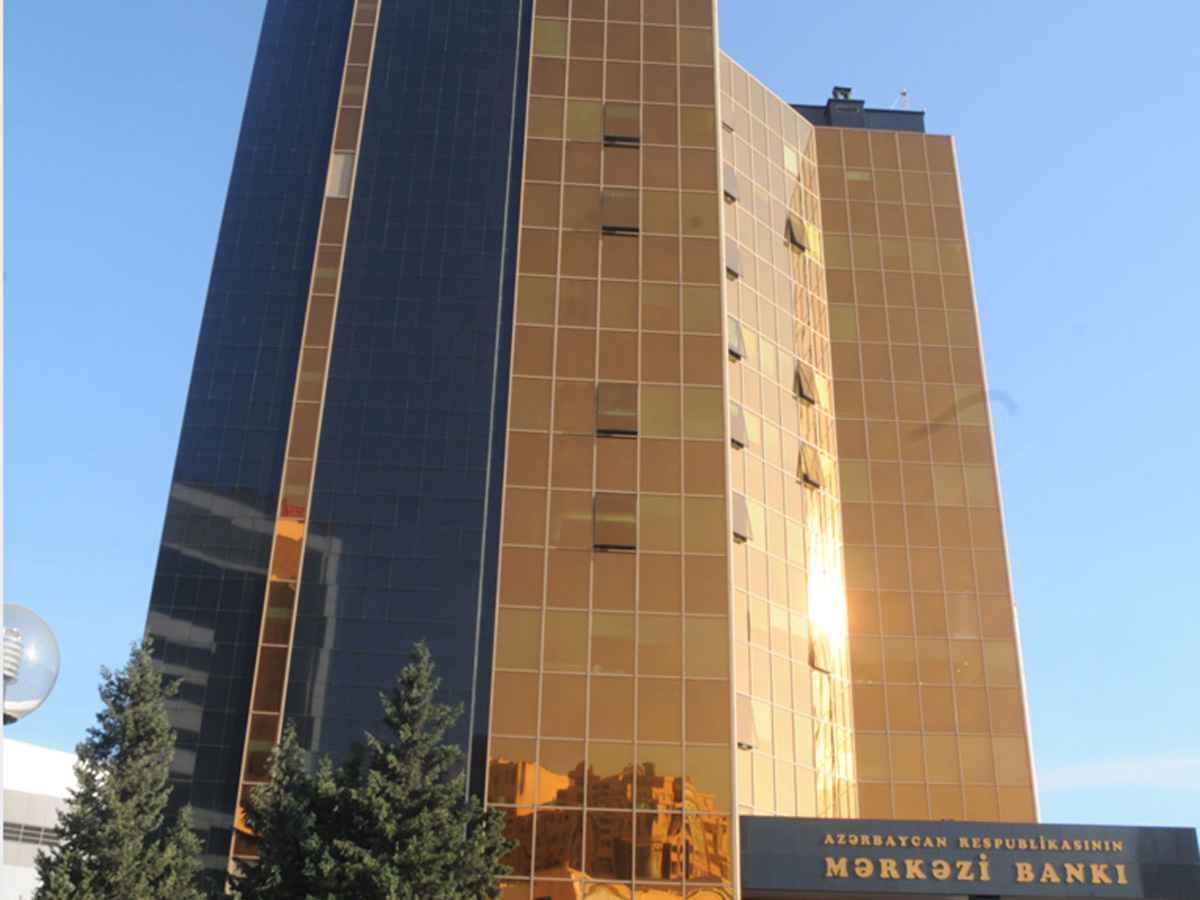

BAKU, Azerbaijan, March 1. Based on forecasts updated in January, annual inflation in Azerbaijan in 2025-2026 will remain within the target range (4±2%). Still, in the medium term special attention should be paid to the impact of budget expenditures and loan investments on inflation, Trend reports via CBA.
Meanwhile, it was noted that the CBA's inflation forecast for 2025 is 5.5 percent. The nominal effective exchange rate (NEER) is expected to have a downward impact on inflation by 2.21 percentage points. The January forecast for 2025 was revised to 0.3 percentage points lower than last October's forecast. One of the main reasons for this was the upward adjustment of the nominal effective exchange rate forecast.
According to January estimates, the NEER is expected to appreciate by 8.2 percent by the end of 2025 (the October forecast was 7.9 percent). “The downward impact of this revision on the inflation forecast is estimated at 0.08 percentage points. Another reason is the downward revision to the forecast of the Agricultural Producer Price Index (APPI). Thus, the Index is expected to rise by 4.2 percent by the end of this year (the October forecast was 6.8 percent). This adjustment will have a downward impact of 1.25 percentage points on the inflation forecast. The January inflation forecast for 2026 is 3.8 percent.
The projected annual inflation for 2026 is expected to be affected by government consumption upwardly by 0.33 percentage points, household consumption by 1.33 percentage points, the Index by 2.21 percentage points, trading partner inflation by 1.95 percentage points, and the NEOC and other factors downwardly by 1.59 and 0.43 percentage points, respectively.
The implementation of inflation forecasts will depend on changes in several external and internal risk factors. External risks are mainly associated with inflationary processes in the partner countries. In the context of high geopolitical tensions and global fragmentation, factors on important trade routes may lead to a re-rise in commodity prices. At the same time, global climate change could affect crop yields and global food production.
On the other hand, the main domestic risks that could increase inflation are predominantly related to local cost factors (in particular, the higher-than-expected indirect impact of changes in regulated prices) and excessive growth in aggregate demand. Based on preliminary estimates, the increase in government budget expenditures in 2025 will not cause significant inflationary pressures. However, in the medium term, special attention should be paid to the impact of budget expenditures and loan investments on inflation.
Inflation expectations change in different directions by sector. Based on the December 2024 Real Sector Monitor, the services and construction sectors recorded relatively high price expectations by sector for the coming 3-month period. Trade expectations in other sectors continued to remain in negative territory. The non-oil and gas industry sector witnessed volatility during the year, with expectations moving from a negative zone to a positive zone.
In the industrial sector, the price index in December amounted to 4.87 (corresponding period of last year -5.29), in trade 3.92 (corresponding period of last year -28.25), in construction 16.22 (corresponding period of last year 4.8), and services 21.01 (corresponding period of last year 21.21).



