


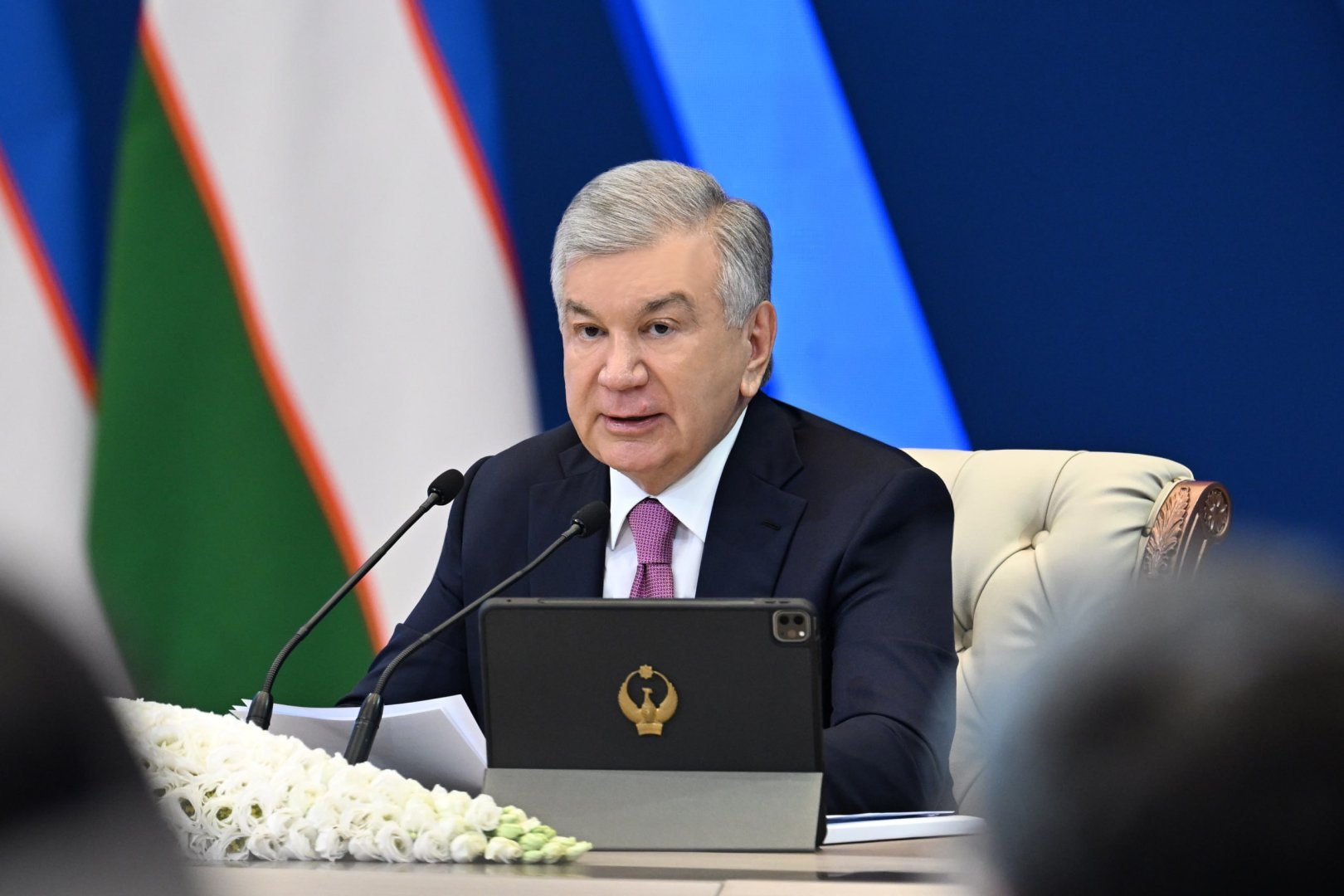

BAKU, Azerbaijan, October 16. Uzbekistan will develop and publicly release its first National Energy Master Plan through 2050 to guide investment in power generation, transmission infrastructure and energy storage, President Shavkat Mirziyoyev said during a meeting with investors in the fuel and energy sector in Tashkent on October 16.
This was reported on the official channel of the press secretary to the President of the Republic of Uzbekistan, Sherzod Asadov.
A map of grid connection opportunities is scheduled to be presented by March 1, 2027, followed by the full master plan by July 1, 2027.
The documents will identify regions where electricity demand is expected to grow, the infrastructure required to meet that demand and locations where new generation capacity would operate most efficiently. The framework is intended to help investors develop long-term investment plans based on projected energy needs and grid capacity.
The president also announced plans to enable renewable energy producers to generate additional revenue through energy certificates and carbon credits. Mechanisms will be introduced to ensure a fair distribution of the resulting benefits between the government and investors, while fully accounting for Uzbekistan’s international environmental commitments and existing agreements.
Mirziyoyev emphasized that expanding power generation must go hand in hand with developing the transmission and distribution networks needed to deliver electricity to consumers. Generation, transmission and energy storage systems must operate as an integrated system, he said.
Parts of the Fergana Valley, including Fergana, Andijan and Namangan regions, currently rely on electricity generated in other parts of the country to meet some of their demand. The launch of new industrial zones and large enterprises is expected to increase pressure on the regional power grid.
Artificial intelligence (AI) infrastructure and data centers are also emerging as sources of rapidly growing electricity demand. Under the proposed approach, suitable sites for such facilities will be identified in advance based on land availability, grid connection capacity and access to renewable energy sources.
Each major data center will be planned with integrated primary and backup power supplies, energy storage and cooling systems. Investors are also expected to adopt solutions that use electricity and water efficiently.
The planned master plan is intended to align energy infrastructure development with projected demand, improve grid reliability, and provide greater predictability for long-term investment decisions.



