


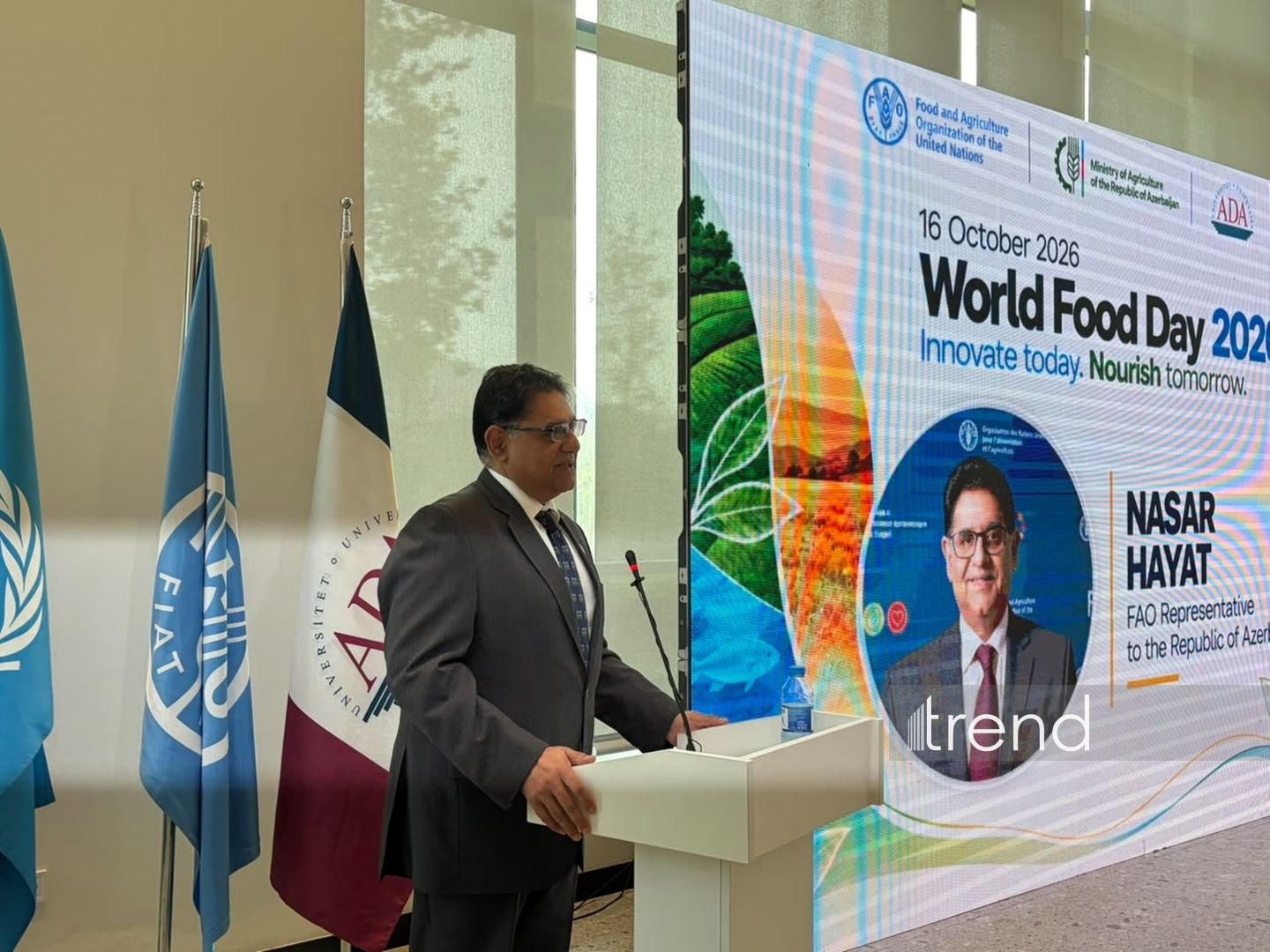

BAKU, Azerbaijan, October 16. Innovative solutions can help farmers in Azerbaijan use water resources more efficiently, reduce crop losses, and increase their incomes, FAO Representative in Azerbaijan Nasar Hayat said at the World Food Day 2026 event on Friday, Trend's correspondent reports from the event.
The event was jointly organized by ADA University, Azerbaijan's Ministry of Agriculture, and the United Nations Food and Agriculture Organization (FAO).
Hayat said that more efficient irrigation management, timely weather information, improved farming practices, and digital links with buyers offer important opportunities for agricultural development.
"Innovation does not always mean a complex or expensive solution. A simple solution that saves water, reduces losses, or helps farmers earn more is also an innovation. The key criterion is whether it works on the farm," Hayat emphasized.
Speaking about the role of young people in this process, the FAO representative cited KendMart, a digital platform developed by 14-year-old Azerbaijani student Leyla Heydarova. He said the platform was designed to connect local farmers directly with consumers and help small farms find customers.
Hayat also highlighted the role of universities, including ADA University, stressing the importance of linking education and scientific research to farmers' practical needs. He said combining modern scientific knowledge with the experience farmers have accumulated over generations helps preserve agrobiodiversity, improve production, and strengthen resilience.
The FAO representative also emphasized the importance of expanding access to finance, training, technology, and markets for rural women, small-scale farmers, and young people.
He noted that 645 million people worldwide faced hunger in 2025, while approximately one-third of the global population could not afford a healthy diet. In this context, ensuring that existing solutions are accessible and useful to those who need them remains a key challenge.
Hayat said FAO remained committed to working with the Azerbaijani government and its partners to translate the organization's priorities of better production, better nutrition, a better environment, and a better life into practical action.



