


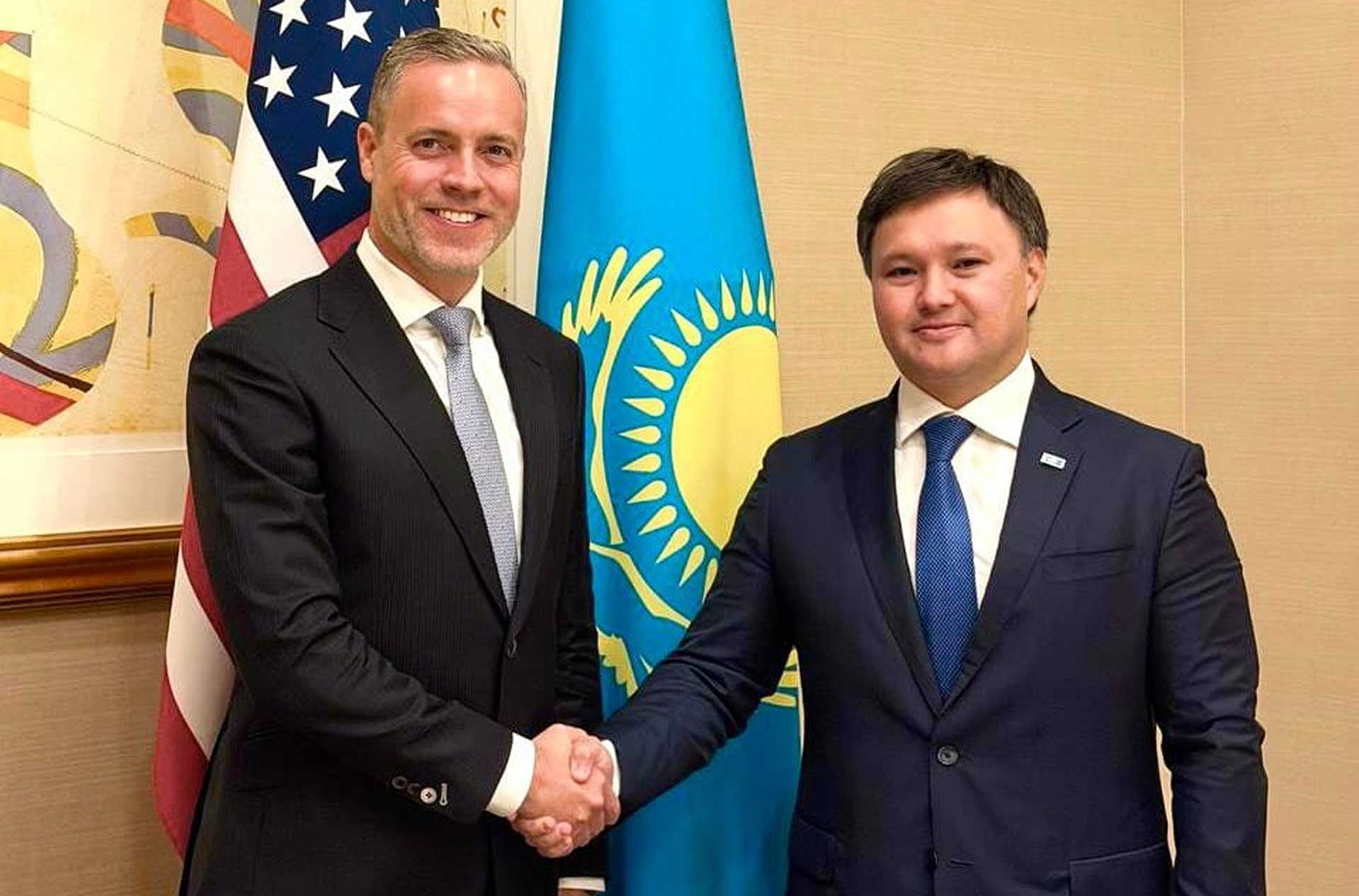

BAKU, Azerbaijan, November 10. Kazakhstan’s national oil and gas company KazMunayGas and US-based ExxonMobil have reviewed the progress of the Tengiz and North Caspian projects, as well as prospects for expanding investment and technological cooperation, KazMunayGas reported today, November 10.
The meeting was held in Washington between KazMunayGas Chairman of the Management Board Askhat Khassenov and ExxonMobil Senior Vice President Peter Larden.
According to the report, the sides also reviewed potential cooperation in geological exploration, transportation, advanced technology deployment and improving operational efficiency in the oil and gas industry.
"KazMunayGas is interested in further strengthening its strategic partnership with ExxonMobil, taking into account the company's extensive experience and technological expertise. We are ready to continue working with our American colleagues on ongoing projects and future initiatives to ensure the sustainable development of Kazakhstan's oil and gas sector," Khassenov said.
Following the meeting, the parties confirmed their intention to expand cooperation across key areas.
For reference, ExxonMobil has been one of Kazakhstan's key strategic partners in the oil and gas sector since entering the country in 1993, when it joined the Tengizchevroil consortium to develop the giant Tengiz field. Over the following decades, the company expanded its presence by acquiring a 16.81% stake in the North Caspian Production Sharing Agreement, which includes the Kashagan field, one of the world's largest offshore oil discoveries in recent history. ExxonMobil is also a shareholder in the Caspian Pipeline Consortium (CPC), the principal export route for most of Kazakhstan's crude oil to international markets.
The partnership has evolved beyond production to include large-scale expansion projects and discussions on future upstream investment. Following the completion of the Future Growth Project at Tengiz, which lifted production capacity to record levels, Kazakhstan and ExxonMobil have increasingly focused on geological exploration, production efficiency and potential new developments at Kashagan.


