


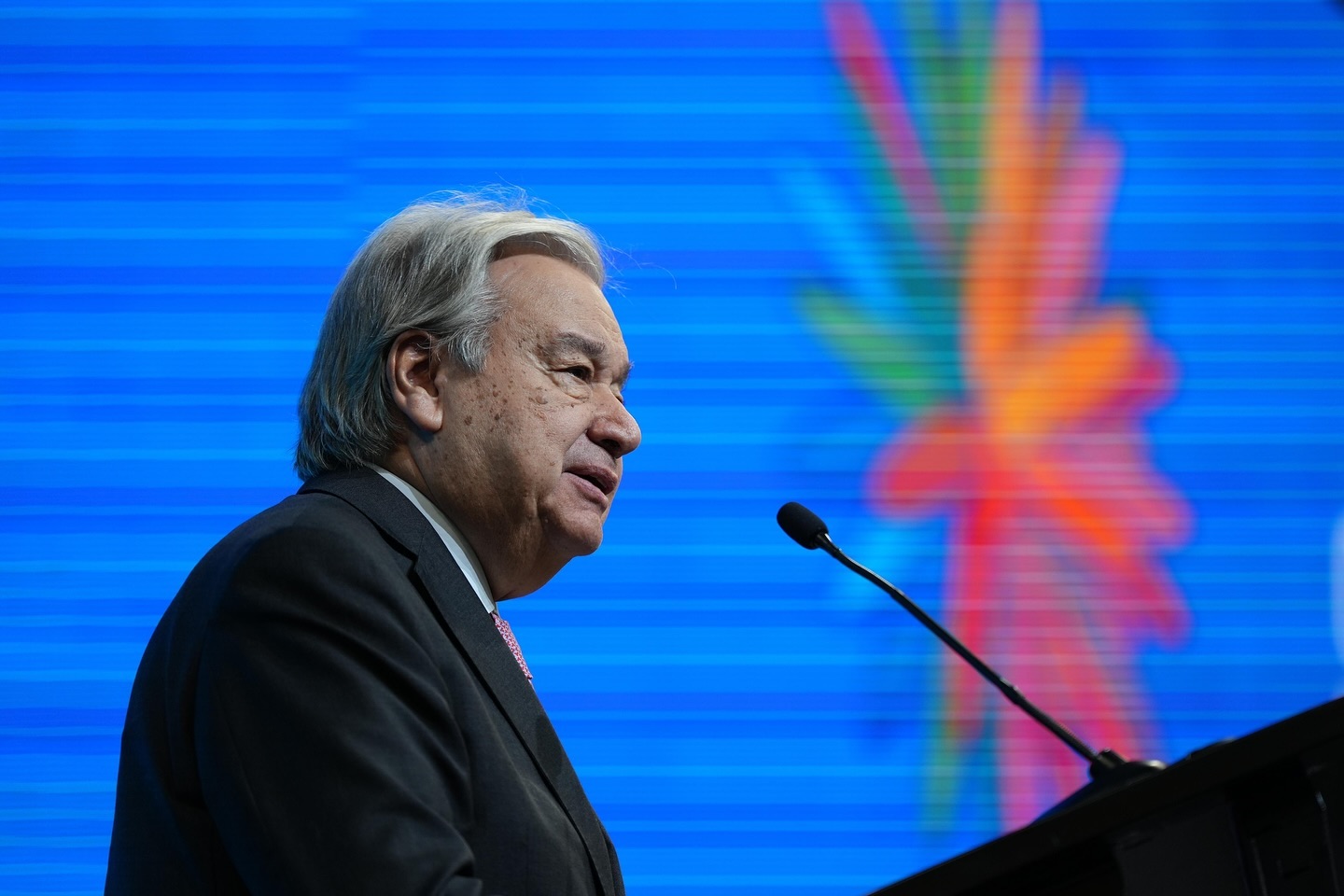

BAKU, Azerbaijan, July 21. UN Secretary-General António Guterres has called for broader international cooperation in artificial intelligence governance, emphasizing that AI development should benefit all countries and contribute to reducing global inequalities.
This is mentioned in the statement, published by the UN, following the World Artificial Intelligence Conference Meteorological Forum in Shanghai.
Speaking at the event, Guterres said artificial intelligence could become one of humanity’s greatest opportunities in the 21st century, while also warning about the risks associated with unequal access to technology. "Artificial intelligence can be humanity's greatest opportunity in the 21st century. It could also become one of its greatest risks," the UN chief said.
Guterres welcomed the establishment of the World Artificial Intelligence Cooperation Organization (WICO), describing it as a continuation of efforts to promote international cooperation in AI governance. He stressed that technologies shaping the future of humanity should involve all countries in decision-making processes. "Technology that will shape the future of humanity must be shaped by all humanity. It cannot be governed by a handful of countries, or a handful of companies. Every nation needs a seat at the table," Guterres said. The UN secretary-general highlighted AI’s potential contribution to sustainable development, noting that the technology could support advances in healthcare, education, agriculture, industrial development and job creation.
At the same time, he warned that unequal access to digital infrastructure, computing capacity and technical expertise could deepen existing global disparities. "AI risks pushing the world towards even greater inequalities – greater divides in income, in opportunity, in security, greater gaps between North and South. We cannot let that happen," Guterres said.
He outlined three key priorities for ensuring that all countries benefit from AI development: expanding capacity-building opportunities, strengthening safety standards, and ensuring environmental sustainability.
According to Guterres, developing countries should receive support in building their own AI capabilities, including access to computing resources, training and technologies adapted to local needs.
He also called for international approaches to AI safety, including common standards for risk assessment and accountability, while emphasizing the importance of protecting human rights. "Humans must keep control over every life-and-death decision. And no AI system should be put in a child's hand before it has been proven safe," he said.
Addressing environmental concerns, Guterres urged major AI companies to disclose the full environmental impact of their systems and transition to renewable energy sources. The UN chief noted that AI governance should become a platform for partnership and solidarity, ensuring that technological transformation creates opportunities for all nations rather than widening existing divides.



