


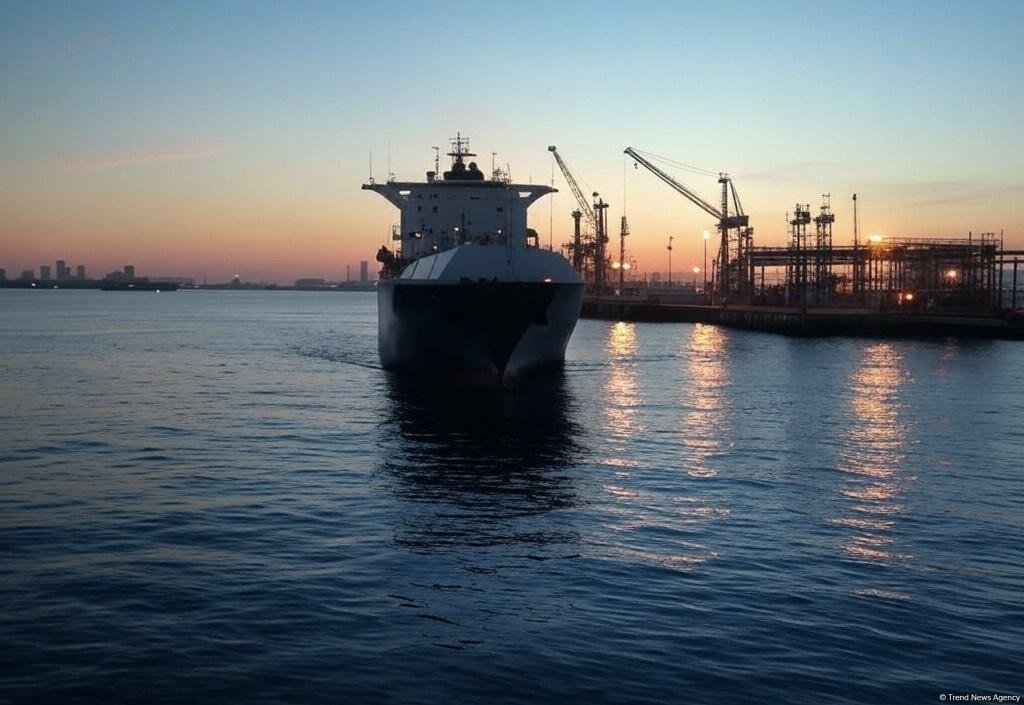

BAKU, Azerbaijan, October 9. The United States is on track to significantly increase its liquefied natural gas (LNG) export capacity over 2025 and 2026, according to the latest outlook from the U.S. Energy Information Administration (EIA), Trend reports.
The EIA forecasts that more than 5 billion cubic feet per day (Bcf/d) of LNG export capacity will be added over the two-year period. In 2025, Plaquemines LNG Phases 1 and 2 and three trains of Corpus Christi LNG Stage 3 are expected to enter service. Plaquemines Phase 1 shipped its first cargo in December 2024, while Phase 2 began production in July 2025, ahead of the previously projected 2026 startup. By year-end, all blocks at Plaquemines are expected to begin exports, adding 2.6 Bcf/d of nominal LNG export capacity and 3.2 Bcf/d of peak capacity, driving the bulk of the year-over-year increase in U.S. LNG shipments.
Corpus Christi LNG Stage 3 will see three of its seven trains start operations in 2025, adding 0.6 Bcf/d of nominal capacity (0.7 Bcf/d peak). In 2026, the remaining four trains at Corpus Christi, along with two of three trains from Golden Pass LNG, are expected to start up. The Corpus Christi additions will provide 0.8 Bcf/d of nominal capacity (0.9 Bcf/d peak), while Golden Pass LNG is forecast to add 1.4 Bcf/d of baseload capacity (1.6 Bcf/d peak) as its first cargo ships in the first half of 2026 and a second train comes online later in the year.
Overall, the EIA projects that U.S. LNG exports will average more than 16 Bcf/d in 2026, up from less than 12 Bcf/d in 2024, marking a significant expansion in the country’s role as a global LNG supplier.


