


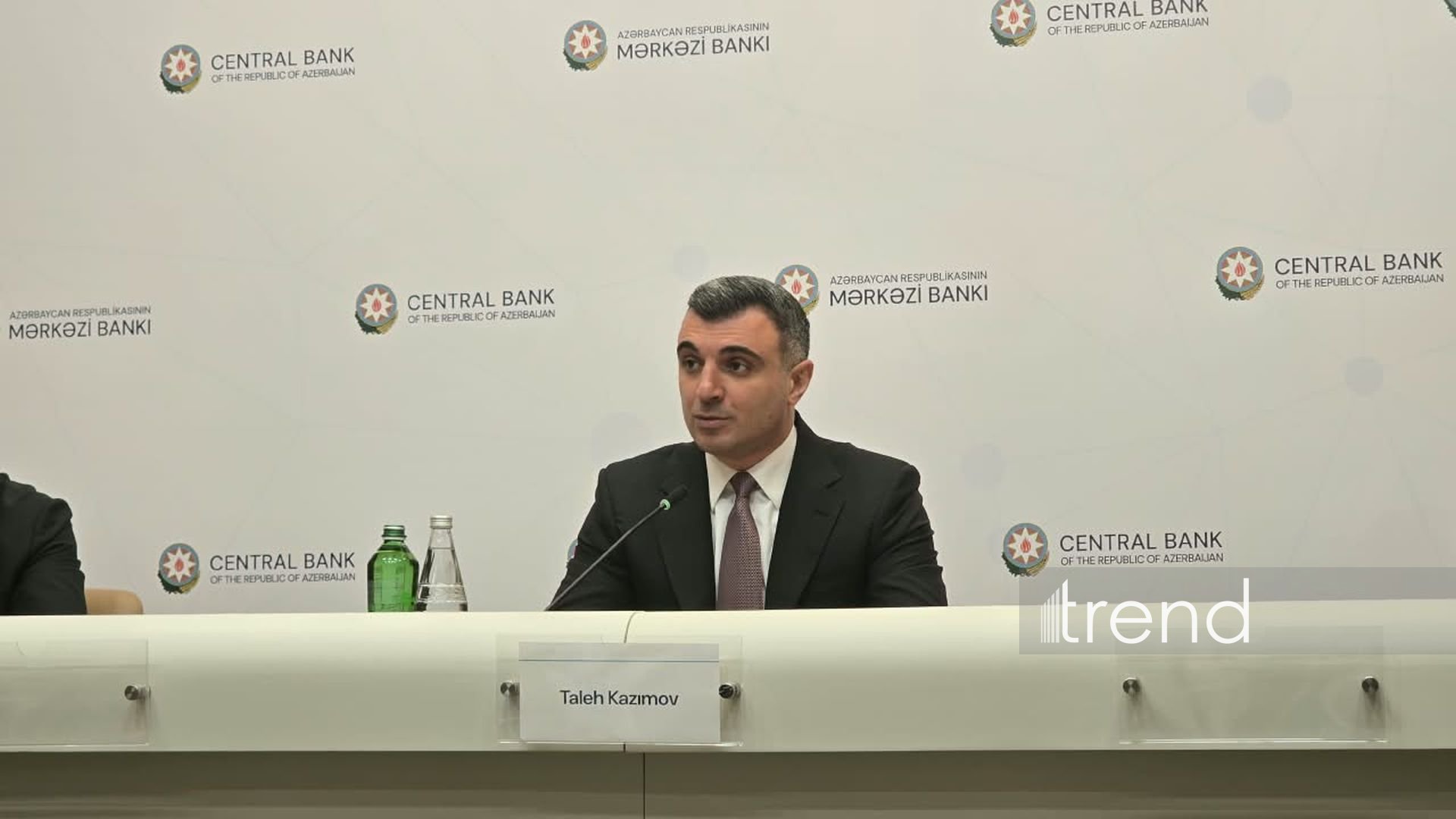

BAKU, Azerbaijan, October 29. Demand is declining in Azerbaijan’s foreign exchange market, while household bank deposits are rising, a trend attributed to an increase in household savings in manats and the effectiveness of the Central Bank’s monetary policy, governor of the Central Bank of Azerbaijan (CBA) Taleh Kazimov said, Trend's correspondent reports from the event.
According to him, the country’s foreign exchange reserves have increased by approximately $3.9 billion since the beginning of the year. Of this amount, $3.6 billion was attributable to the Central Bank’s foreign exchange interventions to purchase foreign currency, while the remainder was due to other factors.
Kazimov noted that the decline in demand for foreign currency in October may be linked to several reasons. At the same time, in recent years, the Central Bank of Azerbaijan (CBA) has observed a positive trend in the public’s attitude toward the manat. This is reflected both in a decline in the level of dollarization of bank deposits and in the fact that, in the cash foreign exchange market, the public is increasingly acting as a seller of foreign currency.
“Some experts and our colleagues believe that the public is selling dollars from their savings and buying manats to cover daily expenses. We are also monitoring this process. Our observations show that during periods when the public sells dollars, the volume of bank deposits also continues to grow rapidly,” he said.
The Governor of the Central Bank of Azerbaijan (CBA) stated that during the first nine months of this year, demand deposits held by individuals increased by 2.1 billion manat ($1.24 billion), while time deposits held by individuals increased by 1.4 billion manat ($820 million). Thus, the total increase in deposits across these two categories amounted to 3.5 billion manat ($2.06 billion).
According to him, statistical data show that nominal household income rose by 9.6%, while real income, as calculated by the CBA, increased by 3.7%.
“If the population had no income, we would see a decline in deposits, since people’s ability to save would be limited. However, both incomes and deposits are currently growing,” Kazimov noted.
He added that the growth in deposits is driven by both an increase in the number of depositors and an increase in the amount of funds they deposit. A significant portion of the growth in deposits comes from deposits of up to 30,000 manat ($17,649).
According to Kazimov, the decline in demand in the foreign exchange market is linked not only to changes in the banking sector but also to the public’s growing interest in the manat, as well as to the results of the monetary policy pursued by the Central Bank.
The CBA governor also stated that demand in the foreign exchange market is influenced by economic growth in the non-oil and gas sector, which stood at 2.6%.


