



BAKU, Azerbaijan, October 29. The Caspian-Black Sea-Europe Green Energy Corridor could become a source of sustainable export revenues, reads a report prepared by the Eurasian Development Bank, the ENERGY Coordination and Dispatch Centre, and the UN Economic and Social Commission for Asia and the Pacific (ESCAP).
The report, titled “Energy Without Borders: Architecture of Energy Connectivity in Central Asia,” describes the corridor as a strategic option and one of the most challenging external energy routes. The corridor should be viewed as a long-term strategic option for green energy exports, the report said.
“It could enhance the investment appeal of renewable energy, provide access to export markets, encourage the certification of green electricity and support the technological modernisation of power grids. With the domestic grid infrastructure and market framework developed ahead of demand, the corridor could become a source of sustainable export revenues. If domestic infrastructure development lags, competition for transmission capacity, flexibility and investment could emerge,” the report said.
The report also highlights the need for common rules for green energy certification, a registry to track the origin of electricity, audit reports, and rules governing additionality and the reconciliation of volumes.
“Without these mechanisms, it will be more difficult to verify the green status of electricity supplies for buyers, European regulators and international financial institutions,” the report said.
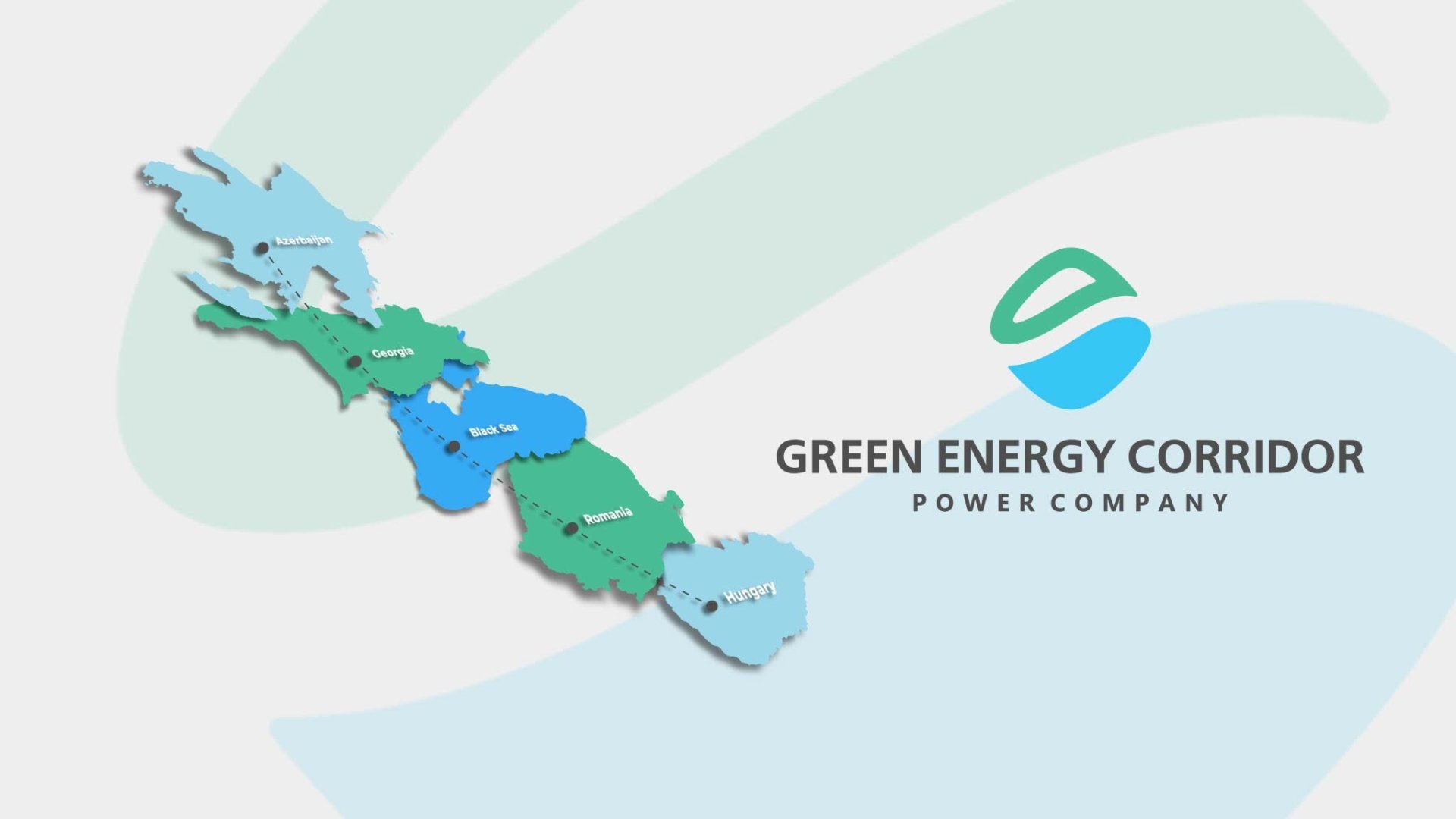
The Caspian-Black Sea-Europe Green Energy Corridor is a cross-border electricity transmission project involving Azerbaijan, Georgia, Romania and Hungary. It was established under a strategic partnership agreement signed in Bucharest on Dec. 17, 2022, with the participation of the European Commission. It envisages a transmission corridor with a total capacity of 3.9 gigawatts (GW), comprising three lines, each with a capacity of 1.3 GW.
The project is being developed by Green Energy Corridor Power Company (GECO), a Bucharest-registered joint venture owned by the national transmission system operators of the four countries. Azerbaijan's AzerEnerji, Georgia's Georgian State Electrosystem, Romania's Transelectrica and Hungary's MVM each hold a 25% stake in the company.
It is included in the European Network of Transmission System Operators for Electricity's (ENTSO-E) Ten-Year Network Development Plan (TYNDP) for 2026 under project numbers 1248 and 1244.
Total investment in the project is estimated at €22 billion, including €14.3 billion for electricity transmission infrastructure and €7.8 billion for renewable energy generation capacity.
The corridor is expected to reach its full transmission capacity by 2040. The results of the feasibility study were presented in Baku on Oct. 22, 2026.


