


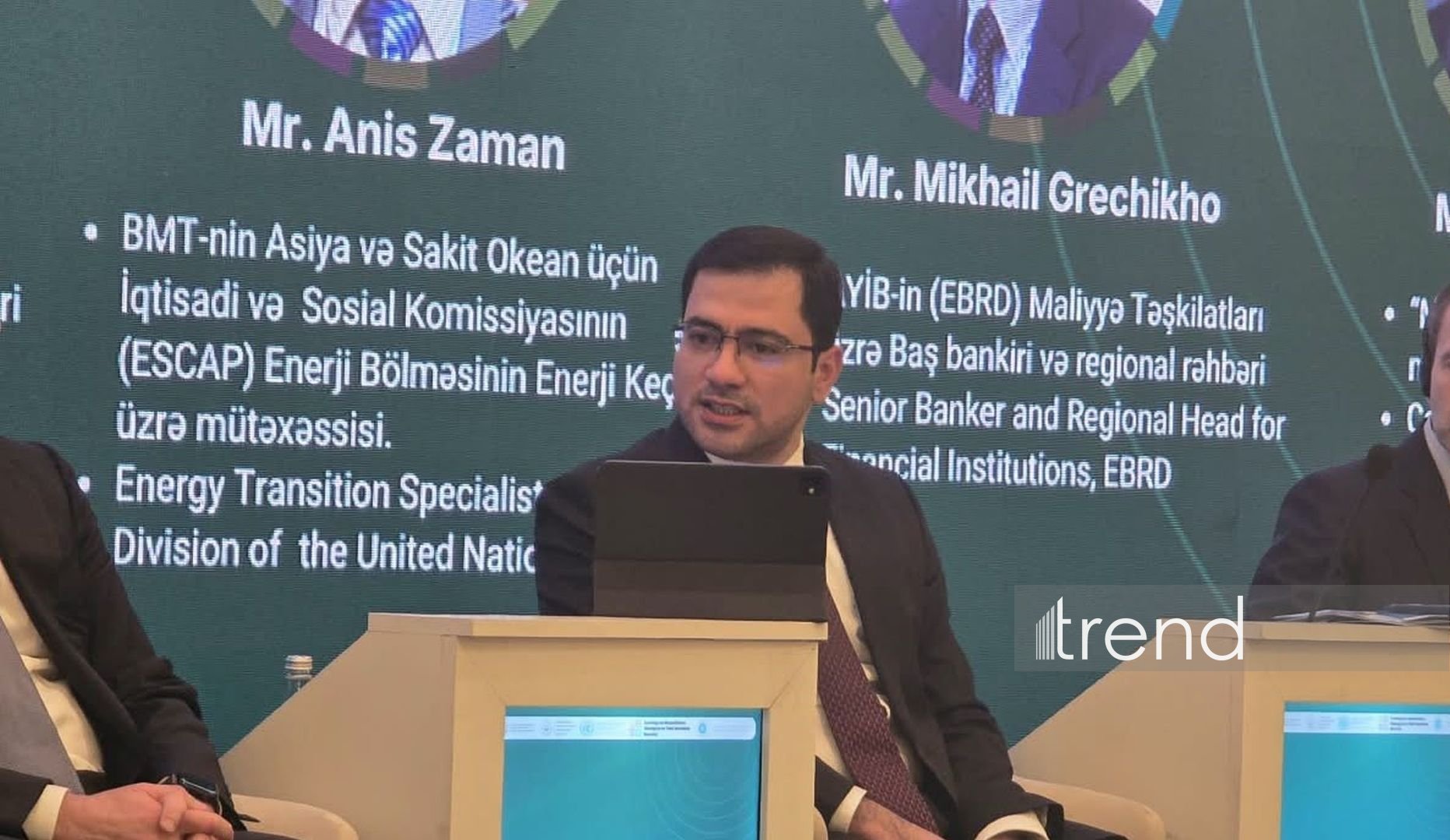

BAKU, Azerbaijan, October 28. The implementation of measures across five key areas is envisaged to reduce greenhouse gas emissions in the oil and gas sector by 2060 within the framework of Azerbaijan's "Long-term Low-Carbon Development Strategy," Chief of Staff of the Ministry of Ecology and Natural Resources, Farman Gurbanli, said during the 9th Sustainable Development Goals (SDG) Dialogue held in Baku on Wednesday, Trend’s correspondent reports from the event.
Gurbanli noted that several key areas have been identified for combating climate change and achieving the targets set for 2060.
"Accelerating the transition to 'green energy,' improving water and waste management, enhancing resilience to climate change, and strengthening transparency are among these key areas," he explained.
The ministry’s representative emphasized that increasing the potential of natural carbon sinks, particularly forests, also holds a significant place in the strategy.
According to him, while the role of forests in mitigating the impacts of climate change may be limited compared to other areas, efforts to develop this sector and expand forest potential are ongoing.
Gurbanli remarked that the energy sector plays a particularly important role in reaching the established climate targets.
"The energy sector is, in fact, one of the major sources of greenhouse gas emissions." "Therefore, successful initiatives have already been launched in the oil and gas sector, with the aim of implementing comprehensive measures based on existing technological capabilities," he added.
He pointed out that the first approach to reducing emissions in the oil and gas sector by 2060 involves increasing energy efficiency in operations. More efficient energy use will facilitate a reduction in emissions resulting from combustion processes. These measures are also intended to contribute to the promotion of affordable and clean energy, one of the SDGs.
The second approach entails the electrification of equipment and ensuring that it operates on electricity derived from renewable energy sources. It's envisaged to increase the number of electric vehicles in the transport and public transit sectors, as well as expand the use of renewable energy sources for charging these vehicles in the future.
The third area of focus is the reduction of direct methane releases into the atmosphere. To achieve this, plans are in place to improve operational processes and implement more efficient technologies. Within this framework, it is also intended to partially reduce flaring, a process currently carried out for safety reasons.
The fourth area involves the timely detection and elimination of leaks from equipment and pipelines. These measures aim to decrease the volume of greenhouse gases released into the atmosphere due to such leaks.
The fifth area concerns the development of programs for emissions offsetting. This includes contributing to emissions reduction and the sequestration of atmospheric greenhouse gases through initiatives such as reforestation and investments in renewable energy projects.
Gurbanli emphasized that the comprehensive implementation of these measures will facilitate emissions reductions across key sectors, including energy, oil and gas, transport, industry, buildings, waste management, agriculture, and forestry.


