


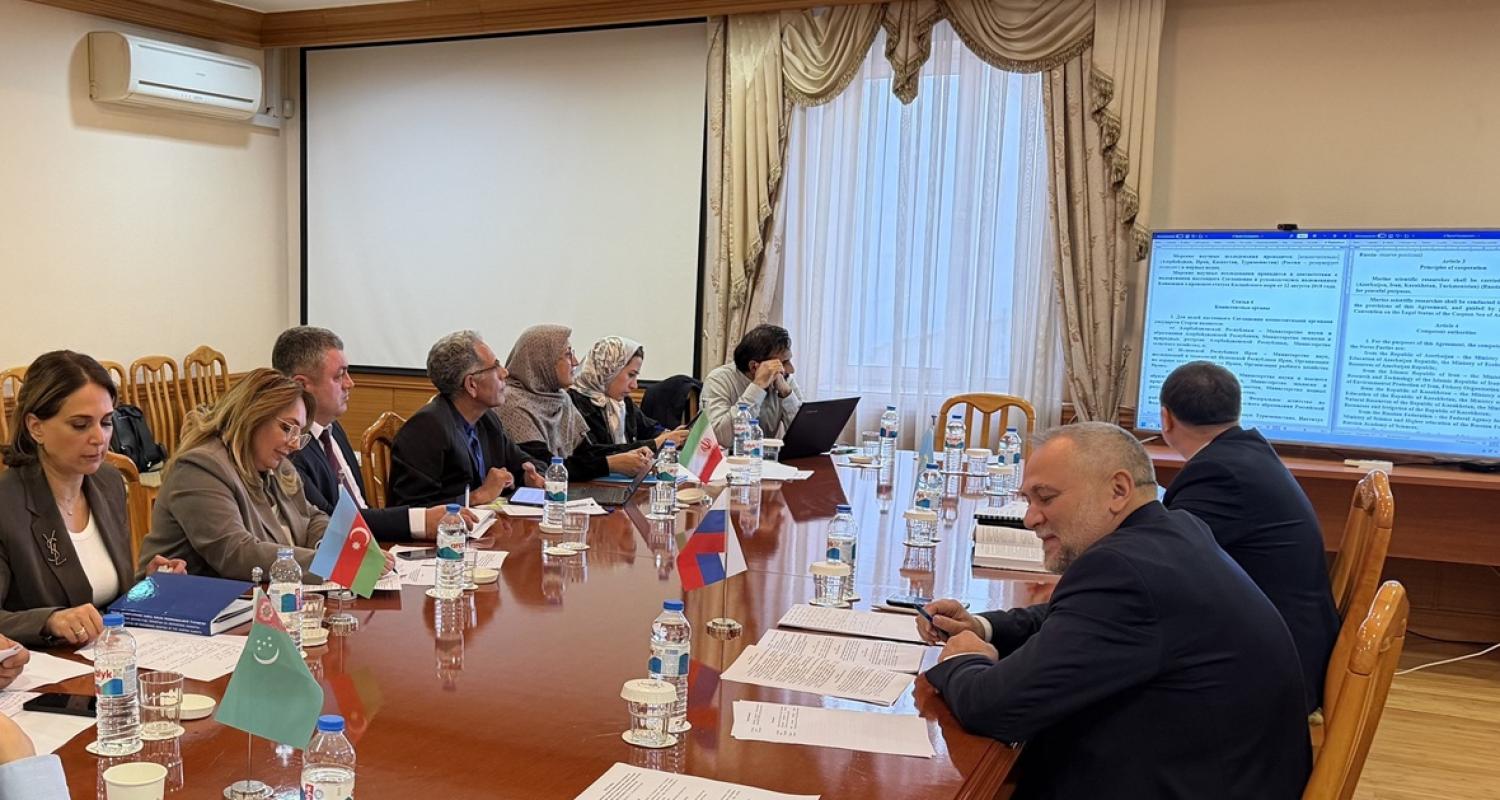

BAKU, Azerbaijan, October 27. Representatives of the Caspian littoral states have begun another round of talks in Ashgabat on a draft agreement on cooperation in marine scientific research in the Caspian Sea.
This was reflected in a press release published today by the Ministry of Foreign Affairs of Turkmenistan.
According to the report, the meeting opened on October 27 at the Caspian Sea Institute in Ashgabat. The talks focus on the draft agreement between the governments of the Caspian littoral states on cooperation in marine scientific research.
“The document is being prepared in accordance with an initiative put forward by the National Leader of the Turkmen people, Chairman of the Halk Maslahaty of Turkmenistan, Gurbanguly Berdimuhamedov, during the Fifth Caspian Summit in Aktau on August 12, 2018. At that time, the Turkmen leader proposed the development of a separate five-party agreement that would establish a systematic framework for joint scientific research in the Caspian Sea,” the report says.
Previous rounds of negotiations confirmed the littoral states’ interest in developing common approaches to the issue. The current meeting is expected to help advance agreement on the remaining provisions of the draft document.
The meeting will continue through October 28, 2026.
Meanwhile, cooperation on marine scientific research is part of broader efforts by the five Caspian littoral states - Azerbaijan, Russia, Iran, Kazakhstan, and Turkmenistan - to coordinate the use and protection of the sea. The region already has a legal framework for environmental cooperation under the Tehran Convention, signed in 2003 and in force since 2006, which provides for joint action on pollution, biodiversity conservation, and environmental monitoring. However, a separate agreement on marine scientific research would establish a more specific framework for cooperation in this field.
The need for coordinated research has become more pressing as the Caspian Sea faces environmental and economic challenges, including a sustained decline in its water level and its effects on ecosystems, fisheries, navigation, tourism and coastal infrastructure.
In a declaration adopted in Baku in November 2024, representatives of all five states called for a coordinated regional response based on scientific research and sustainable management.


