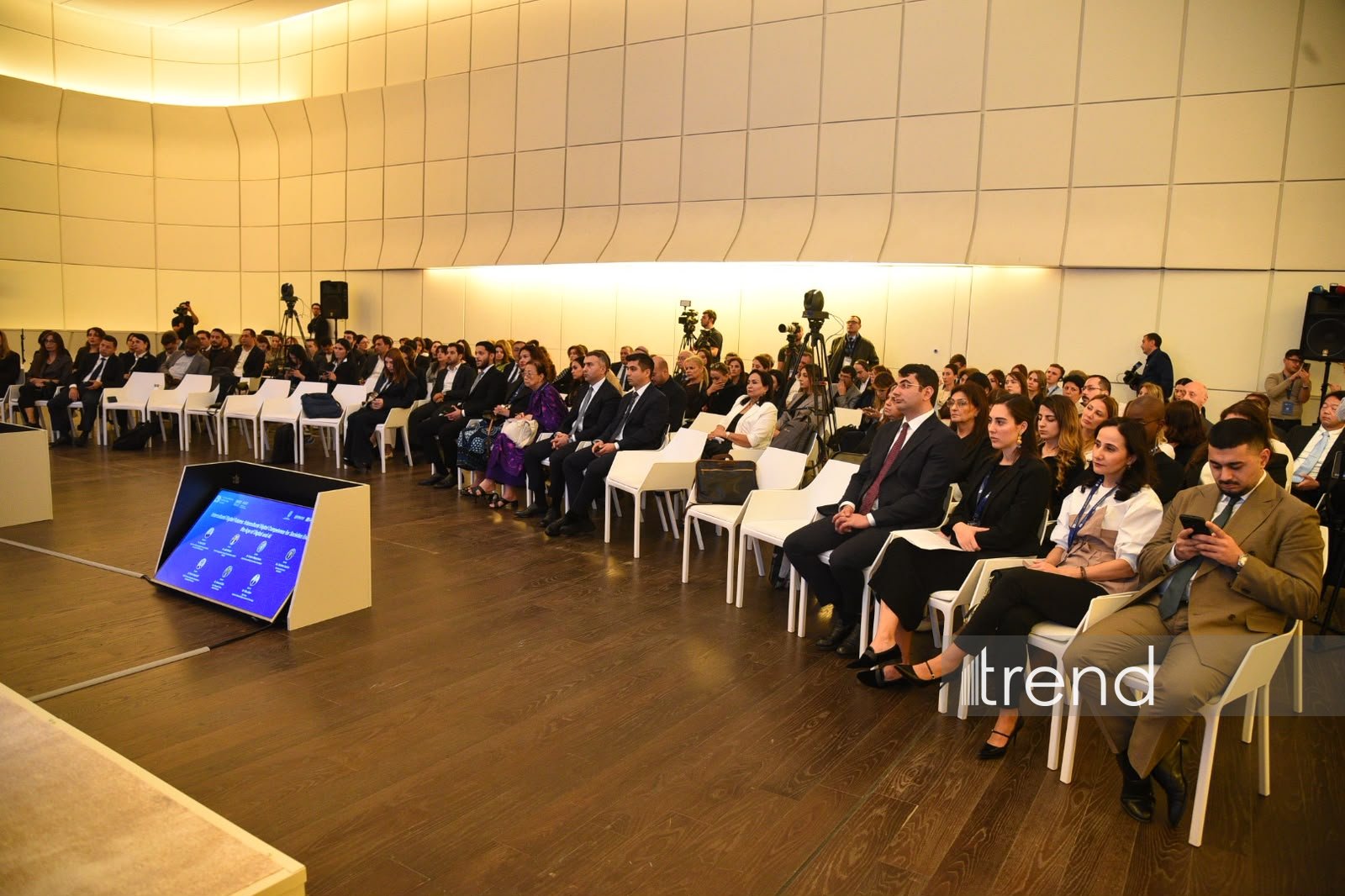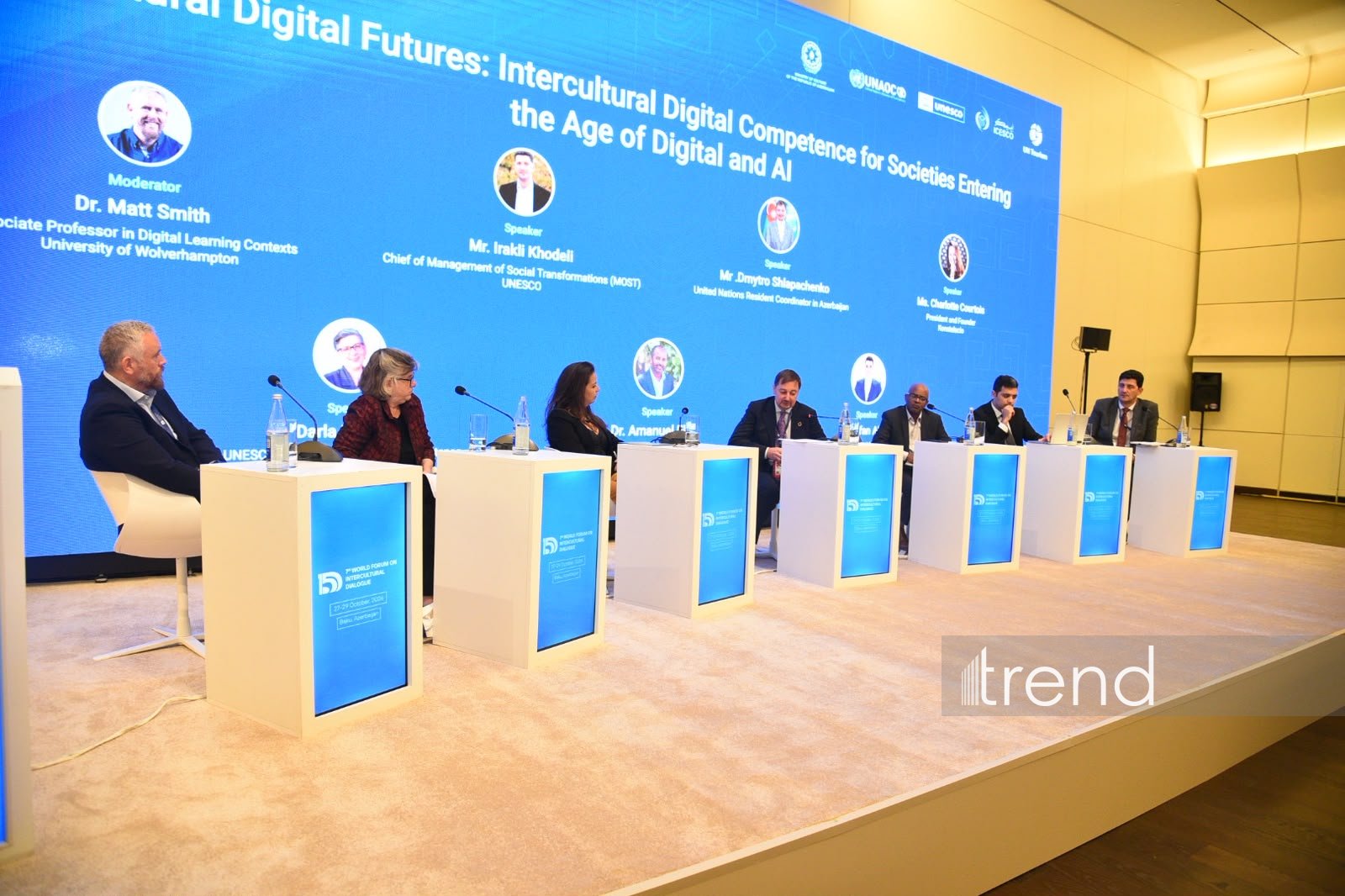

BAKU, Azerbaijan, October 27. A panel discussion titled "Intercultural digital future: intercultural digital competence for societies entering the era of digitalization and artificial intelligence" was held as part of the 7th World Forum on Intercultural Dialogue in Baku on Tuesday, Trend's correspondent reports from the event.
The discussion covered topics such as the development of artificial intelligence (AI), the impact of digital transformation on societies, the preservation of cultural diversity, the elimination of digital inequalities, and the ethical application of technologies.
Speaking during the discussion, Deputy Minister of Digital Development and Transport of Azerbaijan, Rashad Hasanov, said that Azerbaijani-language AI models are being developed for use in the provision of public services within the country.
He noted that global technology companies might not be interested in developing AI models in the Azerbaijani language for a market of 10 million people. Consequently, the country is developing these capabilities using its own resources.
"This has become a matter of sovereignty for us," the deputy minister emphasized.
Hasanov noted that speech-to-text conversion and the first agent-based services have been introduced on the ‘my.gov’ platform, a unified interface for citizen-state interaction. Plans are in place to expand the range of these services by the end of the year.
The deputy minister also highlighted the importance of enhancing digital literacy, stating that under the "Digital Horizons" program, training is planned for over 25,000 civil servants from 275 different institutions.
UNESCO Chair on Intercultural Competence at Stellenbosch University, Darla Deardorff, noted that intercultural competence in a digital environment extends beyond mere technical knowledge or the ability to communicate in various languages. According to her, mutual understanding, empathy, respect for diverse perspectives, and a human-centric approach should form the foundation of digital communication.
Charlotte Cotrois, founder and president of the intercultural learning organization "Constellations," emphasized the importance of considering the needs of all population groups when digitizing public services. Citing Azerbaijan’s ASAN Khidmet model as a successful example, she noted that mobile services, in particular, facilitate access to public services in remote settlements.
Commercial Director at the Azerbaijan National AI Center, Ulfan Aliyev, discussed the role of artificial intelligence in improving access to legal information. He pointed out that AI systems applied in the legal field must be trained in the Azerbaijani language and based on local data sources, as even a simple translation of legal texts could alter their meaning.
Chief of the Management of Social Transformations at UNESCO, Irakli Khodeli, remarked that the responsibility for the ethical use of AI should not rest solely with the users. According to him, researchers, engineers, government agencies, and regulatory bodies should also bear responsibility during the development and implementation of digital technologies.
The panel also highlighted the importance of combating racism, discrimination, stereotypes, and biases within the digital environment. It was emphasized that principles such as inclusivity, cultural diversity, and the prevention of discrimination must be taken into account from the very stage of developing AI systems.
At the conclusion of the discussion, the importance of carrying out digital transformation based on a human-centered approach, ensuring that technologies are accessible to all members of society, and strengthening international cooperation in this regard was noted.