


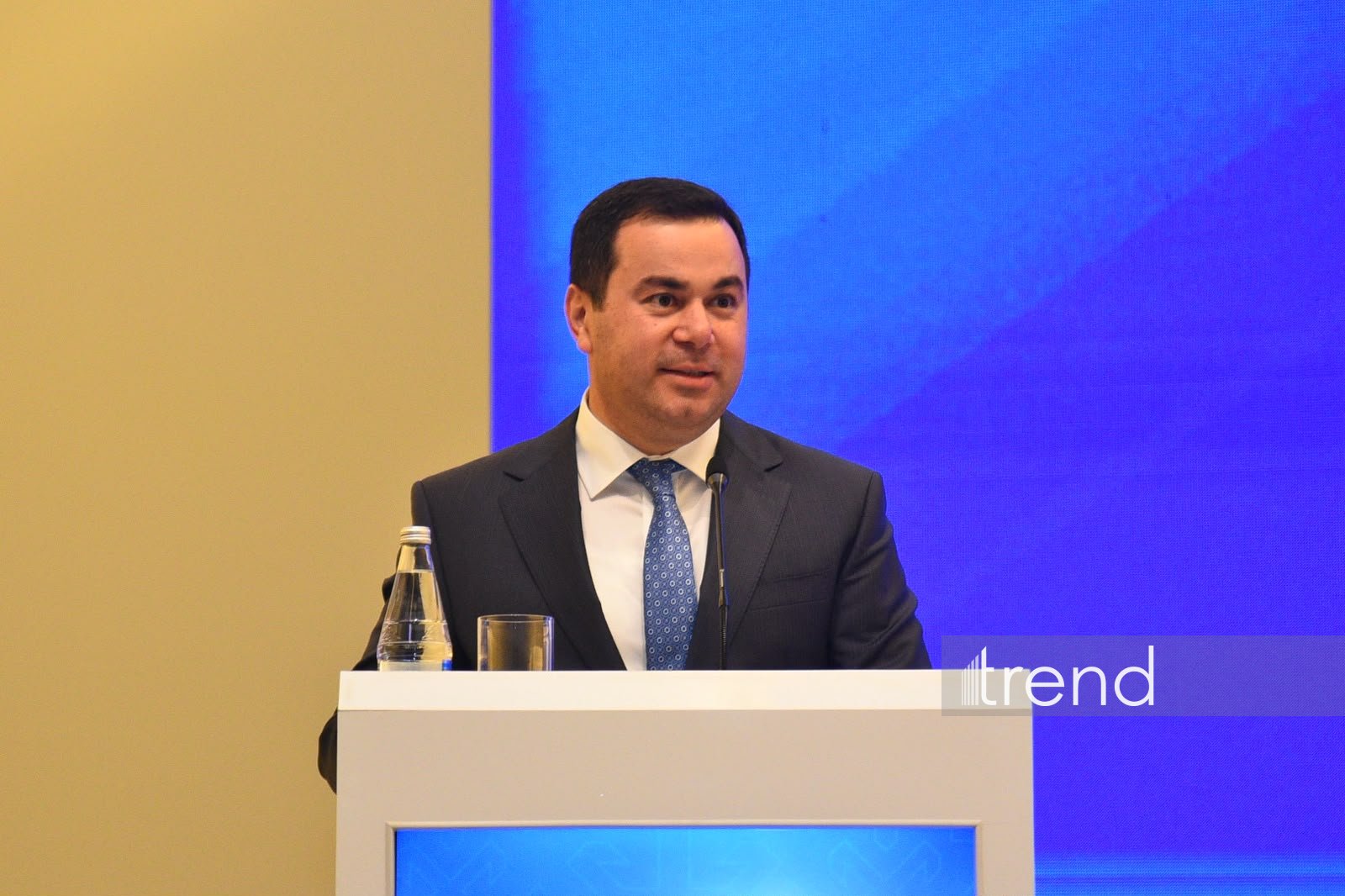

BAKU, Azerbaijan, October 27. More than 300 youth nongovernmental organizations are operating in Azerbaijan, the Deputy Minister of Youth and Sports, Farhad Hajiyev, said during the discussion “Intercultural Leadership for a Shared Future,” held on Tuesday as part of the World Forum on Intercultural Dialogue, Trend's correspondent reports from the event.
The deputy minister noted that the country has approximately 2 million schoolchildren and 200,000 university students. According to him, they represent Azerbaijan’s future leadership potential and human capital.
Hajiyev noted that, although the modern world has become more interconnected, the expansion of these ties does not always lead to greater mutual understanding.
“Despite the opportunities offered by globalization and technology, we are witnessing a rise in polarization, mistrust, and disunity within societies. Under such conditions, intercultural leadership ceases to be merely a desirable quality and becomes a vital responsibility,” he emphasized.
According to the deputy minister, true leadership does not lie in bringing everyone to a single position, but in uniting diverse perspectives around a common goal. An effective leader must be able to listen to others before making decisions, respect differences without compromising their principles, and build trust even in the face of disagreement.
Hajiyev said that intercultural dialogue has long been an important national value and a strategic priority for Azerbaijan. The Baku Process, initiated by President Ilham Aliyev in 2008, is a testament to the country’s commitment to promoting mutual understanding, cultural diversity, and cooperation among civilizations.
He noted that investing in the leadership potential of young people is one of the most important investments a country can make in its future. At the same time, leadership cannot be developed solely based on theoretical knowledge. It requires experience, responsibility, mentorship, and opportunities to collaborate with people who think differently.
The Deputy Minister welcomed UNESCO’s “Youth for Peace” program on intercultural leadership. According to him, the program brings together 50 young leaders selected from more than 8,000 applications from around the world.
“Developing leadership qualities is not only about preparing people for high-level positions, but also about preparing them to bring about positive change,” Hajiyev added.


