


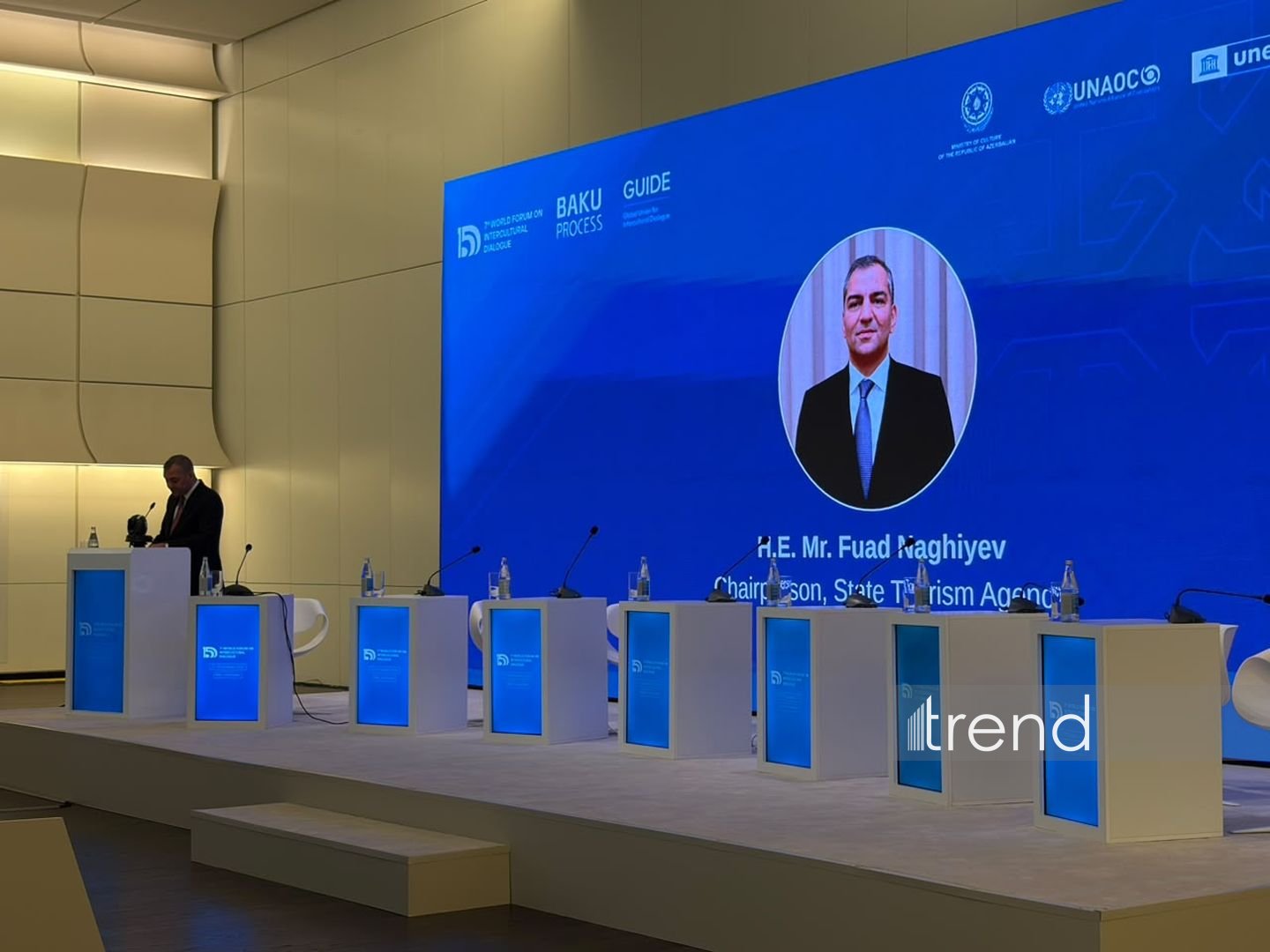

BAKU, Azerbaijan, October 27. The Baku Declaration has established a common framework for climate action in tourism, Chairman of the State Tourism Agency, Fuad Naghiyev, said during a discussion titled "Tourism for a shared future: how inclusivity, equality, and community leadership contribute to peacebuilding" held as part of the 7th World Forum on Intercultural Dialogue in Baku on Tuesday, Trend’s correspondent reports from the event.
According to him, the Baku Declaration on Enhancing Climate Action in Tourism has brought together states and non-state actors around the goals of reducing emissions and adapting to climate change.
He noted that the declaration has established a common framework for advancing climate action within the tourism sector.
Naghiyev recalled that, within the framework of COP29, hosted by Azerbaijan in 2024, a joint Tourism Day was organized by the State Tourism Agency, UN Tourism, and the COP29 Presidency. This marked the first such event at a UN climate conference, helping to draw greater attention to the role of tourism in combating climate change.
The agency’s chairman pointed out that, since 2013, tourism has been a significant component of the discussions held within the framework of the Baku Process forum. These discussions bring together experts from various countries around the world to explore tourism's potential for fostering intercultural understanding, preserving cultural heritage, and creating new opportunities for cooperation.
According to him, the tourism sessions addressed topics such as the promotion of mutual understanding and tolerance, social inclusion, support for local communities, and the construction of a more sustainable future. In collaboration with UN Tourism, best practices were also examined that demonstrate how tourism contributes to the recovery of communities in the post-conflict period, as well as to the promotion of mutual respect, unity, and peace.
Naghiyev remarked that tourism plays a significant role in bringing people closer together. Through tourism, people get to know one another and learn about different cultures and traditions.
"By discovering new places, people broaden their worldviews and become more tolerant. Tourism builds bridges between people, helping them to understand and respect one another despite their differences," he emphasized.
The head of the agency pointed out that not everyone has equal opportunities to participate in tourism. Persons with disabilities may encounter difficulties while traveling, while women and local communities may have more limited opportunities to benefit from the sector.
"Therefore, it’s essential to make travel more accessible, support women in tourism, and give local communities a greater voice in the development of tourism destinations. By making tourism more inclusive, we can ensure that its benefits reach more people, and contribute to building stronger, fairer, and more peaceful societies," Naghiyev added.


