


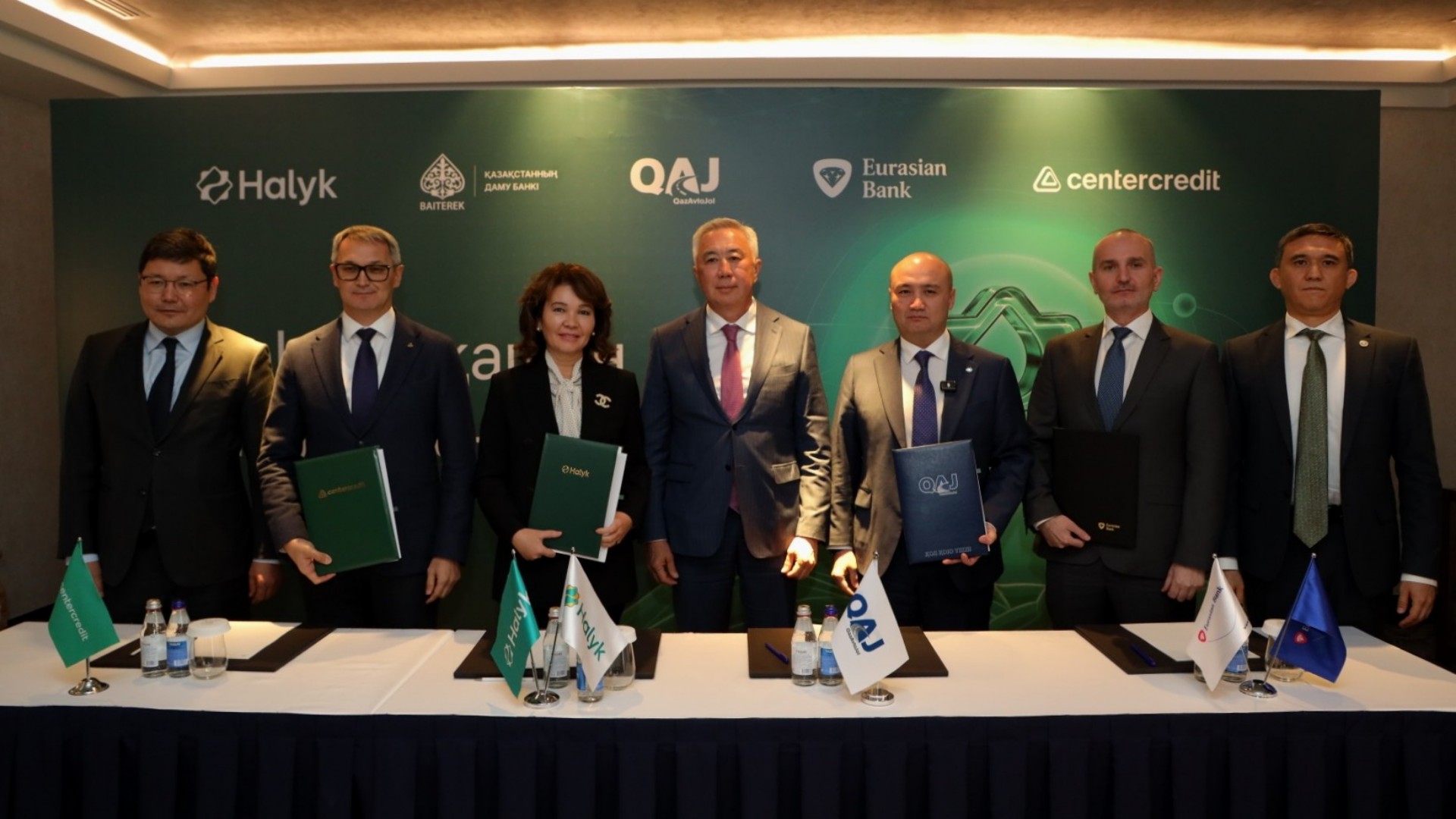

BAKU, Azerbaijan, October 28. Kazakhstan's national road operator KazAvtoZhol and a syndicate of Kazakh banks comprising Halyk Bank, Bank CenterCredit and Eurasian Bank have signed a credit agreement for up to $700 million, according to the Kazakh government.
The agreement was signed during a roundtable on financing the road sector and involving second-tier banks in infrastructure projects.
The document provides for financing of up to $700 million to further develop and expand the pool of investments for KazAvtoZhol projects that previously received support from the Development Bank of Kazakhstan (DBK).
In previous years, DBK resources were used to finance road repair and modernization works. Under the new agreement, cooperation will take the form of a long-term arrangement running until 2034. Halyk Bank will act as the arranger of the syndicated financing and as the agent bank.
Kazakh Deputy Prime Minister and Minister of National Economy Serik Zhumangarin said the agreement would help redistribute the credit burden among financial institutions and free up part of the DBK's credit limit to finance new priority infrastructure projects.
"The Head of State has repeatedly emphasized the need for second-tier banks to participate more actively in financing the real sector of the economy and for private capital to be attracted to major projects. Today, we are seeing a practical example of such cooperation. It is fundamentally important that this is not about new borrowing to build roads, but about refinancing existing obligations to the DBK using funds from commercial banks. This will not only expand the banking sector's participation in infrastructure financing, but also enable the development institution's resources to be directed toward new projects," Zhumangarin said.
Involving second-tier banks in road infrastructure development will help mobilize additional domestic investment resources and reduce the dependence of major national projects on government financing. This mechanism is expected to create conditions for greater participation by commercial banks in economic development without a significant increase in budget expenditure.


