


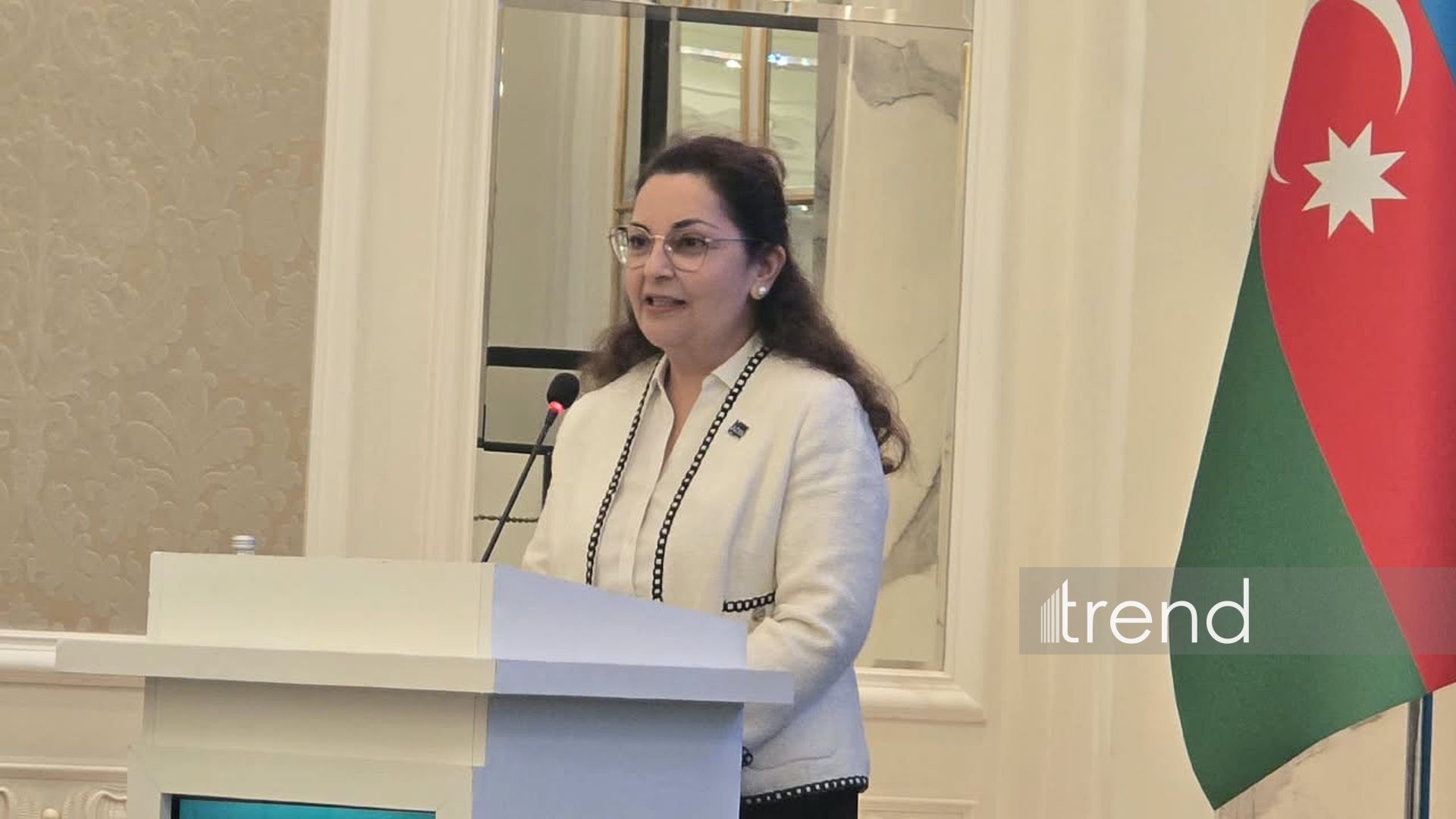

BAKU, Azerbaijan, October 28. We don’t have much time left to achieve the target of a 40% reduction in emissions by 2035, therefore, we must redouble our efforts, Country Director for Azerbaijan at the Central and West Asia Regional Department of the Asian Development Bank (ADB), Sunniya Durrani-Jamal, said during the 9th Sustainable Development Goals (SDG) Dialogue held in Baku on Wednesday, Trend’s correspondent reports from the event.
According to her, reducing methane emissions is of great importance for Azerbaijan to achieve its climate goals. In this regard, it’s essential to properly identify investments and prioritize the most effective measures.
Durrani-Jamal noted that Azerbaijan aims to reduce greenhouse gas emissions by 40% by 2035, compared to 1990 levels. To reach this goal, the country requires financial resources, modern technologies, and broad partnerships.
She added that SOCAR and its subsidiaries are working towards identifying and prioritizing investments to reduce methane emissions in the West Absheron field.
The ADB representative emphasized that the bank supports Azerbaijan's transition to a green economy through investments from both the public and private sectors, as well as through technical assistance.
According to her, the ADB’s partnership strategy with Azerbaijan for 2025–2029 focuses on economic diversification, the promotion of "green development," and the expansion of low-carbon transport connectivity.
"We support the diversification of Azerbaijan’s green economy and the development of low-carbon connectivity. This includes the development of a modern, energy-efficient, and safe railway network," Durrani-Jamal explained.
She added that the expansion and digitalization of the Baku Metro could contribute to improving urban mobility, increasing the efficiency of the transport system, and developing low-carbon transport solutions.
The ADB representative also touched upon the importance of regional green energy interconnections. According to her, the development of green energy corridors between Central Asia and the Caspian region facilitates the cross-border transmission of electricity and the integration of renewable energy sources into regional energy systems.
She pointed out that increasing investments in water infrastructure is also of great importance. Such investments not only strengthen the reliability of systems but also enhance their resilience against extreme weather conditions.
Durrani-Jamal also highlighted the ADB’s support for the development of solar energy projects in Azerbaijan. According to her, the bank’s private sector operations played a key role in supporting the Garadagh Solar Power Plant, which became operational in October, 2023, as well as the solar energy projects in Bilasuvar and Banka.
"The development of renewable energy projects is a vital part of Azerbaijan’s energy transition. At the same time, it is essential that existing energy production and industrial processes also become more efficient and environmentally sustainable to reduce emissions," she said.
The ADB’s country director also highlighted that the bank has provided technical support to Azerbaijan for the fulfillment of its climate commitments. She noted that this support encompassed the implementation of obligations under the Paris Agreement’s Enhanced Transparency Framework, the preparation of the first Biennial Transparency Report, and the formulation of Nationally Determined Contributions (NDCs).
Speaking about the development of "green finance," Durrani-Jamal remarked that the ADB has assisted the Central Bank of Azerbaijan in preparing and developing an appropriate framework. The application of this approach within commercial banks creates additional opportunities for financing "green projects."
She also said that the Ministry of Finance is working on a framework of "green bonds" that will support the development of capital markets.
According to Durrani-Jamal, the Ministry of Economy plays an important role in the implementation of solar energy projects through public-private partnership (PPP) mechanisms.
"Partnerships are critical to success. This includes collaboration between the public and private sectors, governments and consumers, as well as current and future generations," the ADB representative stressed.
She added that in order to achieve the goal of reducing emissions set by Azerbaijan for 2035, it’s important to increase investments, introduce new technologies and coordinate the activities of all interested parties.


