


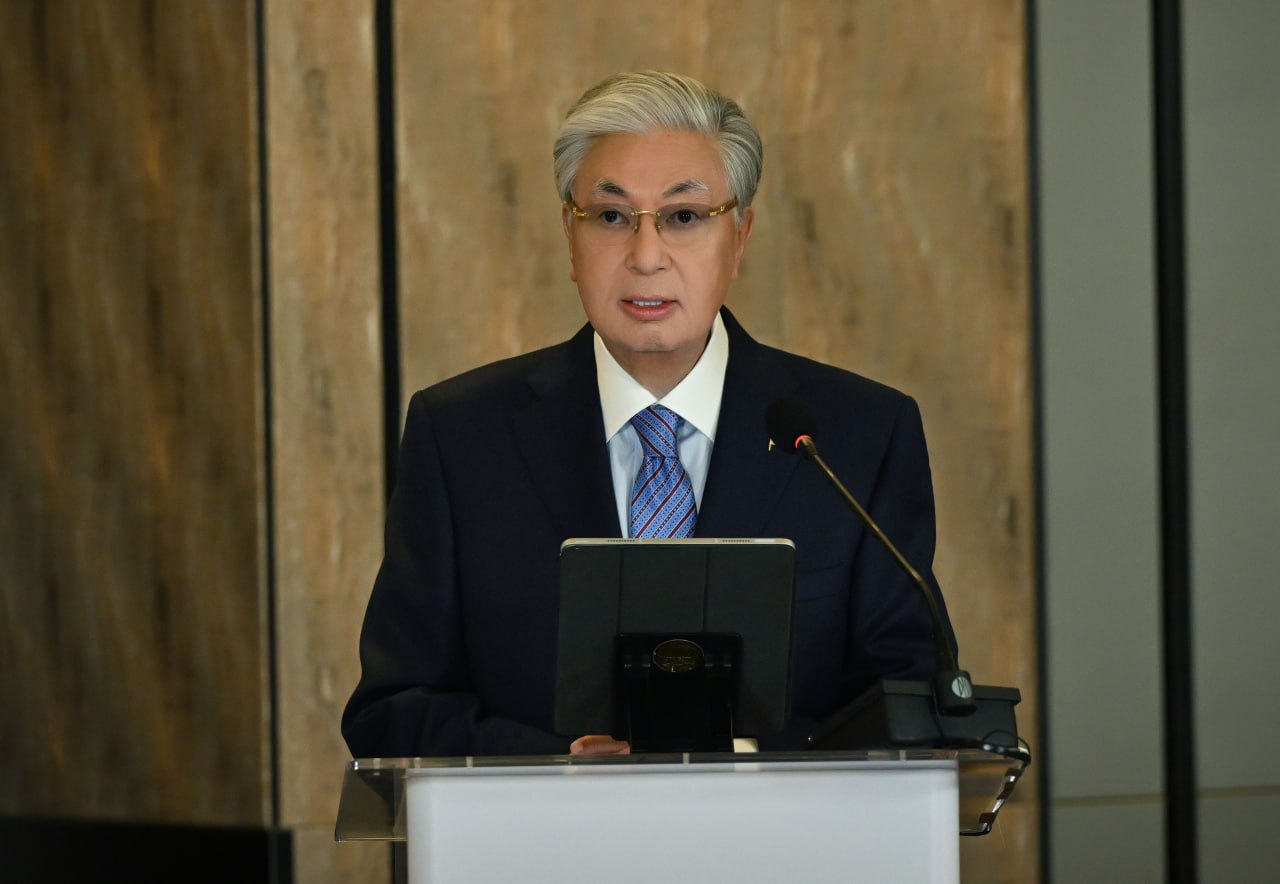
BAKU, Azerbaijan, October 28. Kazakhstan aims to integrate into global production chains, President Kassym-Jomart Tokayev said in his Address to the People of Kazakhstan, according to the presidential press service.
"Experts and specialists also point to the need to establish national reserves of non-ferrous and rare earth metals. The ultimate goal is to integrate our country into global production chains. Our export policy should also be pursued in line with this objective," Tokayev said.
He noted that Kazakhstan's mineral and raw material wealth was a strategic advantage, adding that the country needed to fundamentally change its approach to geological exploration.
"It is clear that searching for new deposits using methods inherited from the past will not produce positive results. Today, we must recognize geology as a high-tech industry," he said.
Tokayev stressed the importance of using advanced technologies to comprehensively study Kazakhstan's subsoil, ensure the transparency and accessibility of geological data, and actively attract private investment in the search for and exploration of new deposits.
He also noted the growing role of critical metals and called for the establishment of a national system to manage their reserves effectively, drawing on international experience.
The system should include mechanisms for long-term financing of mining projects, while guaranteed demand should be secured through offtake agreements with companies operating in this field in Kazakhstan, he said.
"This is one of the important tasks facing the Government. This issue needs to be discussed jointly with entrepreneurs, and concrete proposals must be submitted to me by the end of the year," Tokayev said.
He called on the government to establish strategic partnerships with developed countries in the sector and stressed that new enterprises should not create unjustified obstacles for existing local businesses.
Tokayev said each region and industry should be carefully assessed when attracting investors, warning that poorly coordinated decisions could lead to negative consequences.
He cited Qarmet, a major metallurgical company in Kazakhstan, noting that plans to establish similar production facilities in three other regions raised questions about market demand.
"Will these enterprises' products be in demand on the market? It seems there is no clear answer to this question. Therefore, the benefits of such uncoordinated decisions are questionable," he said.
Tokayev stressed the need to strengthen interagency coordination, warning that the economy could otherwise lose its potential. He said each region should identify its priorities and work accordingly.
He added that the government needed to significantly strengthen its coordinating role, while regions should avoid becoming dependent on a single industry or enterprise.
"It is important to develop each region's leading industry while building a fully integrated system around it and within it. In particular, we should develop education, applied science, logistics, services, related industries and technological entrepreneurship," Tokayev said.


