


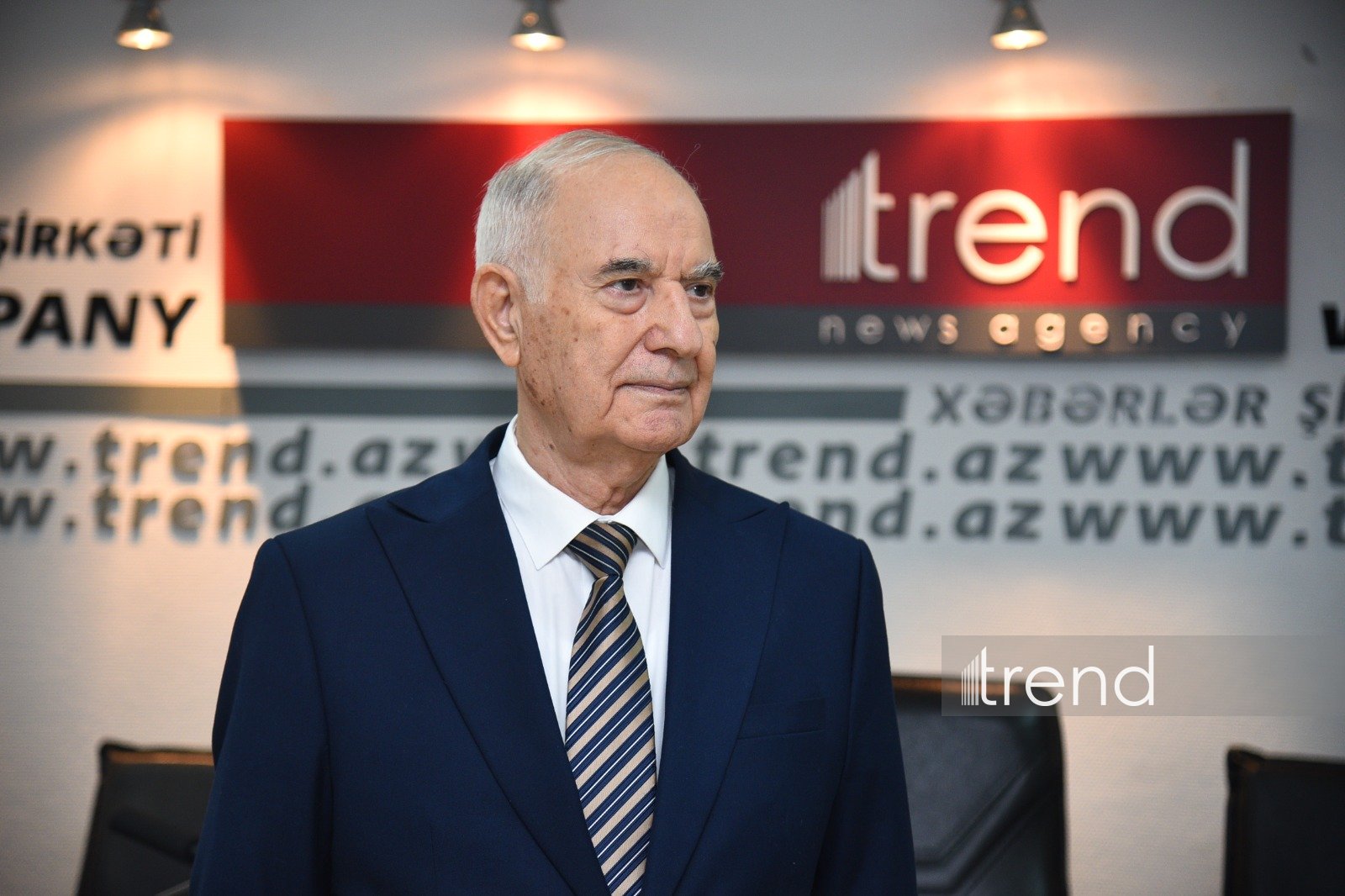

BAKU, Azerbaijan, October 28. Azerbaijan’s national unity, independent foreign policy, adherence to international law, the peace process with Armenia, and intercultural dialogue are among the key factors defining the country’s global standing, political analyst Azer Garayev told Trend.
He noted that President Ilham Aliyev’s speech at the opening of the 7th World Forum on Intercultural Dialogue contained significant messages encompassing Azerbaijan’s internal unity, independent foreign policy, approach to international law, and strategy for regional peace.
According to the analyst, the speech presents multiculturalism not merely as a cultural or spiritual value, but as a factor that strengthens state resilience, social solidarity, and international relations. At the same time, the speech emphasizes that while safeguarding its national interests, Azerbaijan advocates for an approach to international relations based on sovereignty, mutual respect, and lasting peace.
Garayev pointed out that the international scope of the forum underscores the significance of the platform established by Azerbaijan in the realm of intercultural dialogue. The participation of over 500 guests from more than 100 countries, combined with a total of over 2,000 registered participants, demonstrates the reach of this platform.
According to him, the forum, established in 2011 on the initiative of Azerbaijan, has evolved over the past 15 years into a significant event on the international agenda. A tradition has been established to hold the event biennially, with the only interruption occurring during the COVID-19 pandemic. As President Ilham Aliyev noted, significant changes, both positive and negative, have taken place globally since the previous forum held in 2024. Under these circumstances, the importance of international platforms for intercultural dialogue has grown even further.
The analyst remarked that Azerbaijan’s hosting of such an initiative is rooted in the country’s geographical location and historical experience. Situated at the crossroads of Europe and Asia, Azerbaijan has served for centuries as a meeting point for diverse cultures and religions. However, geographical location alone is not sufficient for the formation of a multicultural society. Respect for the rights of various ethnic and religious groups, mutual trust, and unity centered around shared statehood values play a crucial role in this process.
He stressed that Azerbaijan’s experience demonstrates the necessity of a consistent state policy and a shared national idea to ensure that diversity serves to strengthen overall development rather than lead to societal fragmentation.
According to Garayev, the significance of the concept of Azerbaijanism deserves special mention in this regard. In the President’s address, the way in which Azerbaijani citizens of diverse ethnic and religious backgrounds united around a common goal, both during the period of Armenia’s military aggression and throughout the Second Karabakh War, was highlighted as an example of national solidarity. The reference to the "Iron Fist" in this context underscores the importance placed on society uniting around shared statehood interests.
According to the analyst, national unity isn’t merely a factor creating advantage in the period of peaceful development, but it also determines the state’s capacity to withstand complex challenges.
He noted that Azerbaijan’s experience with statehood further reinforces this perspective. Despite having lived under various political systems, the people have managed to preserve their language, traditions, way of life, and national identity. The commemoration of the 35th anniversary of the restoration of state independence this October marks a significant milestone along this historical path. The fact that the majority of development projects implemented in the country, as well as the achievements attained, have taken place during the era of independence underscores the opportunities created by independent statehood.
According to Garayev, independence isn’t merely a political status, but it also signifies the ability of a nation to define its own development model, preserve its national values, and freely choose its future priorities.
The analyst also highlighted the President's views regarding ideological security. He noted that the threats faced by states in the modern era are not limited solely to military and physical risks. The weakening of national identity, the promotion of internal societal divisions, and the undermining of statehood values can also create serious problems.
"State security isn't confined to military capabilities and the preservation of territorial integrity. Safeguarding national identity, the values of statehood, and social cohesion are also vital components of this security," the analyst stated.
He added that emphasizing the importance of preserving Azerbaijan’s distinct character, independence, statehood, and way of life reflects a comprehensive approach to security. Given that potential risks often originate from outside the country's borders, it's of particular importance to closely monitor developments in the external environment and to safeguard national interests.
According to Garayev, one of the key aspects of the President's address concerns the application of international law. Azerbaijan’s experience regarding the liberation of its territories that had been under Armenian occupation demonstrates that this issue was not merely a theoretical or diplomatic matter for the country.
The analyst recalled that in 1993, the UN Security Council adopted four resolutions demanding the immediate, complete, and unconditional withdrawal of Armenian forces from Azerbaijani territories. However, these documents remained unimplemented for a long time. Despite Azerbaijan’s participation in negotiations that spanned many years, no resolution to the conflict was achieved, and the status quo remained unchanged.
He said that President Ilham Aliyev’s speech specifically emphasized how Azerbaijan restored its territorial integrity and sovereignty, first through the Second Karabakh War in 2020, and subsequently through an anti-terror operation in 2023. The head of state linked this process to the provisions of the UN Charter, including Article 51, which enshrines the right to self-defense.
According to the analyst, Azerbaijan’s experience demonstrates that it is not sufficient for international law to be merely enshrined in documents; its implementation must also be ensured. When decisions adopted by international organizations remain unimplemented for long periods, serious questions arise regarding the effectiveness of these organizations and the credibility of the international system.
He expressed an opinion that discussions on UN reforms should also focus on improving the mechanisms that ensure the implementation of Security Council resolutions. Azerbaijan’s experience with occupation highlights the gap that exists between the adoption of international decisions and their actual implementation.
"To uphold the authority of international law, its provisions must be applied consistently to all states; adopted decisions should not be subject to varying approaches based on political circumstances," he underscored.
The analyst noted that the President’s statements regarding double standards are also a continuation of the broader discussion on the application of international law. According to Garayev, Ilham Aliyev recalled Armenia’s occupation of approximately 20 percent of Azerbaijan’s territory, the displacement of one million Azerbaijanis from their native lands as a result of ethnic cleansing, and the destruction of 65 mosques in Karabakh. The failure to impose sanctions against Armenia during that period was also cited in the speech as an example of double standards.
Garayev pointed out that the issue of double standards is not limited solely to the resolution of conflicts. Interference in the internal affairs of states, including dictating how they should organize their political and social life, also brings the issue of sovereignty to the fore.
He said that Azerbaijan considers it essential to uphold the principle of mutual respect in international relations and to refrain from interfering with the right of states to determine their own path of development. This approach aligns with the country’s independent foreign policy course. Respect for one another’s sovereignty and national interests is a fundamental prerequisite for strengthening cooperation between states.
According to the analyst, the steps taken by Azerbaijan in the post-conflict phase shed light on the essence of the President’s messages regarding peace. The advancement of a peace initiative with Armenia, following the restoration of territorial integrity and sovereignty, is viewed not as a continuation of the war, but as a deliberate choice aimed at ensuring political normalization.
He stressed that persisting with a policy of revenge could cause the conflict to descend into an endless cycle. Therefore, it is of particular importance to halt military confrontation, demonstrate political will for peace, and establish the legal foundations for future relations.
According to Garayev, studying this experience at an international level is also significant. While various conflicts differ from one another, certain factors contributing to their emergence and prolonged duration are similar. Aggressive policies, excessive ambitions, claims of superiority, and a sense of impunity can all create conditions that deepen confrontations.
The analyst remarked that Azerbaijan’s peace initiative, launched after putting an end to a 30-year-long occupation, can be viewed as an example illustrating the significance of political decisions in the post-war phase.
He pointed out that it would be inaccurate to attribute the strengthening of Azerbaijan’s international standing solely to military and political events. The country’s economic capabilities, its role in the energy market, its transport infrastructure, and the partnerships it has established with various states also contribute to the shaping of this position.
According to Garayev, President Ilham Aliyev has linked Azerbaijan’s development to the hard work of its people, noting that since gaining independence, the country has transitioned from a state marked by destruction, occupation, and widespread poverty to a phase of development. The ability to make independent foreign policy decisions, the expansion of economic opportunities, and the establishment of regional cooperation are factors that have bolstered the country’s international standing.
The analyst highlighted that Azerbaijan’s international position is further reinforced by specific diplomatic milestones. The signing of a declaration on a comprehensive strategic partnership with China in April 2025, followed by a strategic charter with the U.S. in August of the same year, represent significant stages in the development of the country’s relations with these two major powers.
Furthermore, the signing of strategic partnership declarations or agreements with 10 member states of the European Union demonstrates that Azerbaijan has expanded its opportunities for cooperation within the European sphere. The significance of these ties, however, extends beyond the documents themselves. The key objective is to establish relations with various political and economic centers based on mutual interests and to consolidate these ties through concrete outcomes.
Garayev noted that Azerbaijan’s hosting of international events serves as an indicator of the country’s diplomatic standing. As mentioned in the President’s address, in 2027, Azerbaijan will host the Summit of the Organization of Islamic Cooperation, which brings together approximately 60 countries, and will assume the chairmanship of the organization. Furthermore, the Summit of the European Political Community, involving more than 50 countries, is scheduled to be held in Baku in 2028.
According to the analyst, these events demonstrate the importance that states, representing diverse political and cultural environments, place on cooperation with Azerbaijan. At the same time, they strengthen the country’s role as a venue for dialogue and mutual understanding on international platforms.
He also noted the significance of Azerbaijan hosting the Summit of the Conference on Interaction and Confidence Building Measures in Asia (CICA). The unanimous decision to extend Azerbaijan’s chairmanship of this organization, which brings together nearly 30 countries, for another two years can be viewed as a testament to the trust placed in the country.
Garayev added that Azerbaijan’s invitation to join the Central Asian Consultative Format as a full member in 2025 indicates a geographical expansion of the country’s regional ties. The inclusion of Azerbaijan, located in the Caucasus, in a cooperation platform with Central Asian nations can also be linked to the country’s connectivity potential along the East-West and North-South corridors.
The analyst emphasized that economic stability and infrastructure capabilities serve as key pillars of Azerbaijan’s international standing. According to him, the President stated that Azerbaijan’s external debt stands at slightly over 5 percent of its gross domestic product, characterizing this figure as a low level. The country’s position as a reliable partner in energy supply, along with its modern transport infrastructure and international connectivity, further enhances its strategic importance.
He pointed out that in order to transform a favorable geographical location into a tangible economic advantage, it is essential to develop infrastructure and maintain good relations with neighboring states, as well as with countries across the broader region. In this regard, the fact that Azerbaijan’s economic policy and foreign policy complement one another is of particular significance.
According to Garayev, the role of intercultural dialogue within this broader context is defined precisely by this dynamic. Beyond promoting mutual understanding among representatives of diverse cultures and religions, Azerbaijan also shares its experience in this field on international platforms. The cultivation of an environment for dialogue can foster greater trust between states, facilitate the resolution of political disagreements through discussion, and expand opportunities for cooperation.
The analyst expressed an opinion that while multiculturalism, economic development, and an independent foreign policy may appear to be distinct areas, they are, in fact, closely interconnected in terms of strengthening Azerbaijan’s international standing.
He said that the President’s warning regarding growing global uncertainty and the emergence of new conflicts must also be taken into account. In the current international climate, it is essential to assess security risks in a timely manner and strengthen the state’s defense capabilities in order to safeguard achievements made thus far.
According to Garayev, President Ilham Aliyev highlighted that, among the negative developments occurring since the previous forum held in 2024, new wars have broken out in areas close to the region, and among positive developments, he pointed out progress in the peace process with Armenia. This approach shows that, alongside political initiatives aimed at achieving peace, issues of security and strategic preparedness must also remain a priority.
The analyst specifically highlighted the initialing of the peace agreement text in August 2025 at the White House in Washington, which took place in the presence of U.S. President Donald Trump. The document was initialed by the foreign ministers of Azerbaijan and Armenia. A trilateral declaration was also signed during the event, with the U.S. President signing the document as a witness.
He emphasized that the initialing of a peace agreement is not the same as its signing. Nevertheless, in the President’s speech, this development is presented as a significant milestone in the formation of a new political reality in the South Caucasus and in the peaceful resolution of a long-standing conflict.
Garayev noted that President Ilham Aliyev’s address at the opening of the forum integrates Azerbaijan’s statehood priorities, its approach to international law, its peace strategy, and the core directions of its foreign policy into a coherent, logical framework.
"Azerbaijan’s international standing is not defined solely by economic indicators, military capabilities, or diplomatic ties. National solidarity, the right to sovereign decision-making, the consistent application of international law, regional cooperation, and the promotion of intercultural dialogue also serve as vital pillars of this position," the analyst remarked.
According to him, the primary task for the period ahead is to safeguard these pillars, expand economic and diplomatic capacities, remain prepared for potential threats, and transform peace in the South Caucasus into lasting political outcomes.


