


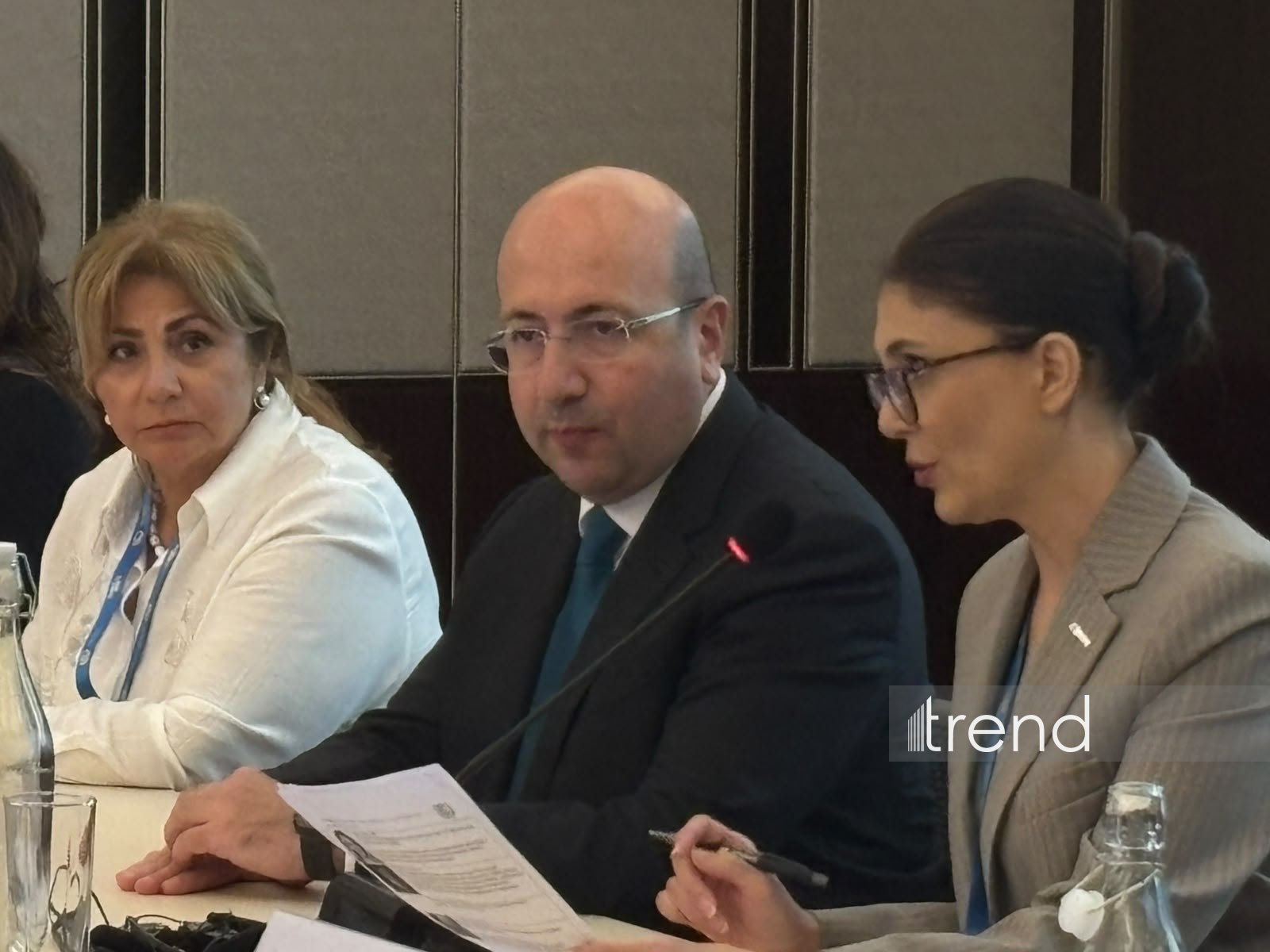

BAKU, Azerbaijan, September 10. National climate commitments are implemented through decisions regarding territories, including construction, housing and infrastructure provision, population displacement, management of land and natural systems, and protection of the population from climate risks, the chairman of Azerbaijan’s State Committee on Urban Planning and Architecture, Anar Guliyev said during Baku Climate Action Week, Trend's correspondent reports from the event.
“This is precisely why urban and territorial planning is not just one of many sectors. Planning translates climate ambitions into territorial priorities and investment decisions. Such a comprehensive approach is also important for post-crisis infrastructure.
Azerbaijan’s ‘Great Return’ program demonstrates how recovery can become a long-term process of territorial transformation, integrating spatial planning, housing, infrastructure, public services, and economic development, while ensuring sustainability—including environmental sustainability—from the very beginning,” he noted.
According to the chairman, in the run-up to COP31, it is necessary to strengthen the link between global governance and local implementation with the support of integrated planning, governments, financial institutions, and partners.
“The value of today’s dialogue will ultimately be measured not by the commitments made, but by partnerships, investments, and practical solutions,” Guliyev said.
He also emphasized the importance of the regional dimension and the global implementation of climate solutions.
"Global governance is not only an important part of this process but also an important part of development.
Azerbaijan has consistently promoted this approach within the framework of COP29 and COP30.
At COP29, we launched a cross-sectoral action pathway to accelerate the sustainability of our cities,” he said.
According to him, sustainable and healthy cities cannot be created through the fragmented implementation of climate, housing, transportation, health, environmental, waste management, and infrastructure policies.
“We need shared priorities, coordinated actions, and close alignment between sectors and levels of government,” Guliyev said.



