


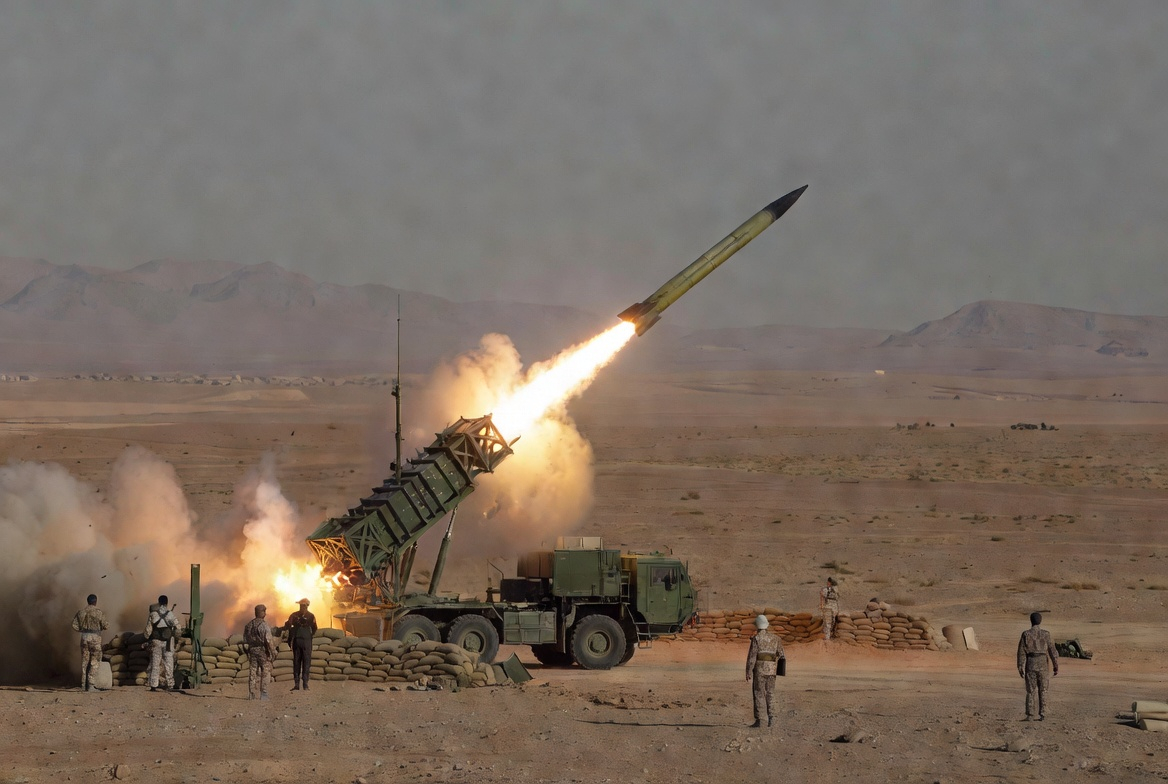

BAKU, Azerbaijan, March 31. The Islamic Revolutionary Guard Corps (IRGC) of Iran has targeted a meeting location of local Israeli front-line commanders in Bnei Brak, Trend reports via IRGC.
This action was part of the 88th stage of Operation True Promise 4, during which the group employed "Emad," "Khorramshahr 4," and "Ghadr" missiles. IRGC also reported strikes on Tel Aviv, Be'er Sheva, Galilee, Negev, Tel Nof, Arad, and the southern Red Sea regions.
In 2015, an agreement was reached between Iran and the P5+1 group on a Joint Comprehensive Plan of Action regarding Iran’s nuclear program, and the UN Security Council adopted Resolution 2231, which led to the repeal of the previous six resolutions and the lifting of widespread sanctions against Iran related to its nuclear program.
In 2018, the U.S. withdrew from the plan and imposed sanctions on Iran. Iran’s gradual lifting of the restrictions provided for in the plan was not unanimously accepted by other countries. Consequently, on September 28, 2025, UN Security Council resolutions against Iran were reinstated.
The International Atomic Energy Agency’s report, published in May 2025, indicated that Iran’s stockpile of enriched uranium stood at 9,247 kilograms, of which more than 408 kilograms were enriched to 60% or higher.
Although two rounds of negotiations on Iran’s nuclear program took place between the U.S. and Iran at different times, the parties failed to reach a concrete agreement, and both rounds of talks ended in conflict. The most recent of these conflicts began on February 28, when the U.S. and Israel launched military airstrikes against Iran.
In response, Iran began launching missile and drone strikes against Israeli and U.S. targets in countries across the region. Over time, the conflict expanded significantly and engulfed various countries in the Middle East.
The conflict has placed the region’s energy infrastructure and maritime shipping under serious threat. Due to security tensions in the Strait of Hormuz, global oil prices have risen significantly. Iran fully controls the Strait of Hormuz and allows passage only to vessels it deems necessary.
Stay up-to-date with more news on Trend News Agency's WhatsApp channel



