


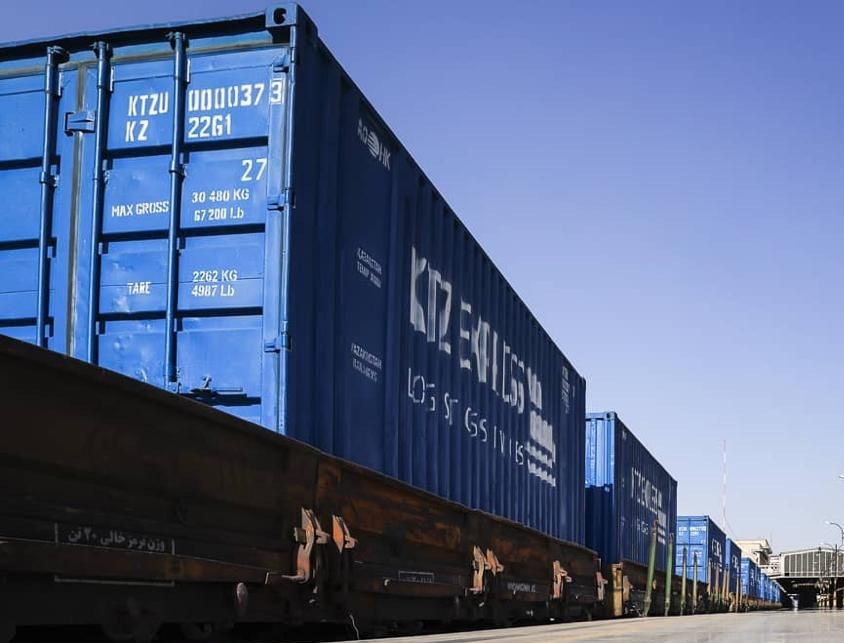

BAKU, Azerbaijan, September 12. Kazakhstan Temir Zholy (KTZ) is playing a central role in the development of the Middle Corridor, which is driving trade and investment growth across Central Asia, Moody’s said in a recent outlook, Trend reports.
The corridor’s expansion is boosting sectors beyond railways, including logistics, construction, energy, and port operations. Export-oriented industries in Kazakhstan, particularly agricultural producers, coal, metals, and fertilizers, are expected to benefit from improved access to Chinese and European markets.
KTZ, rated Baa2 with a stable outlook, is leading major infrastructure upgrades to handle growing freight volumes and enhance multimodal services. The company is modernizing its locomotives and railcars, developing domestic and cross-border terminal networks, and exploring new railway lines and digitalization projects. Capital spending has surged, reaching 807 billion Kazakh tenge ($1.5 billion) in 2023 and 700 billion Kazakh tenge ($1.3 billion) in 2024, up from 358 billion Kazakh tenge ($667 million) in 2022. Spending is expected to remain high through 2025–26.
While the investment program is largely financed through borrowing, Moody’s notes that strong government support via Samruk-Kazyna JSC and regulatory tariff adjustments help mitigate financial risks. Recent approval for annual railway tariff increases of 24% through 2026, along with efforts to implement a new tariff methodology, are aimed at ensuring KTZ’s long-term profitability and financial sustainability.
Despite these measures, Moody’s expects KTZ’s adjusted debt/EBITDA to remain above 4.0x in 2024, reflecting a leveraged position amid ambitious infrastructure spending.
“KTZ’s strategic role in implementing Kazakhstan’s transport strategy positions it to capture growing freight flows along the Middle Corridor,” Moody’s said. “Continued state support and efficient project execution will be critical to unlock the corridor’s full potential.”



