


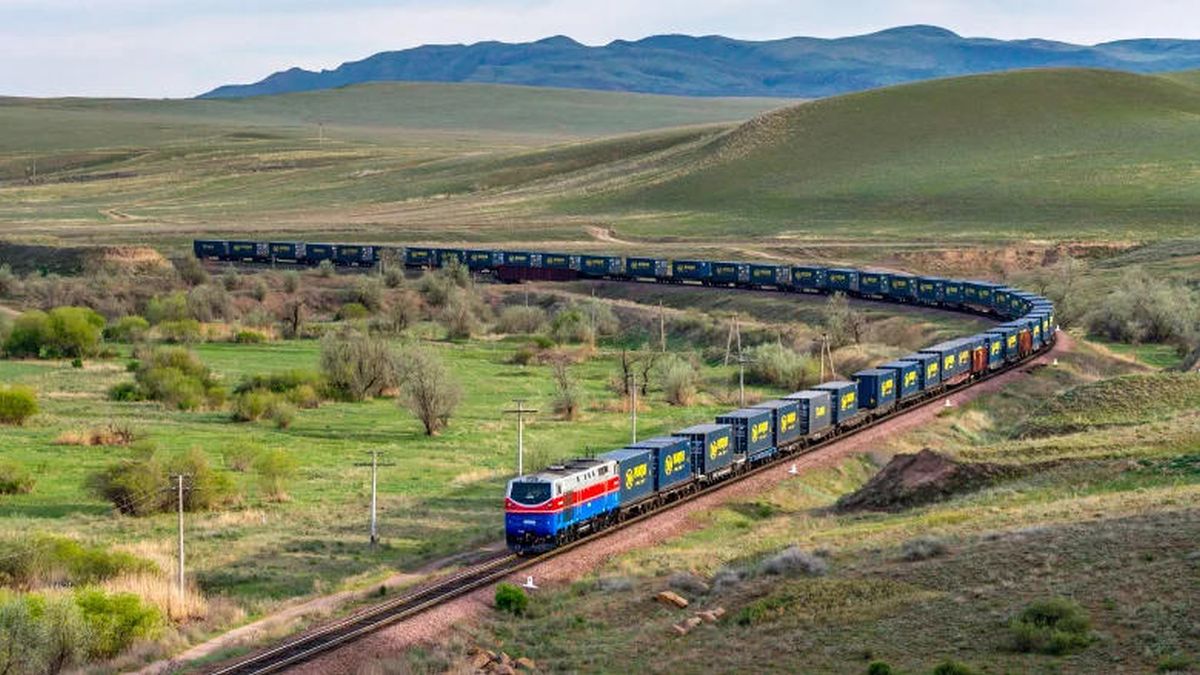

BAKU, Azerbaijan, October 26. Kazakh President Kassym-Jomart Tokayev is consistently strengthening the country’s position as a transport and logistics hub in Eurasia.
“Airports, railway stations, bridges, seaports and border infrastructure are being built and modernized. This is important work, and it will continue,” he said at a ceremony marking Republic Day.
One of the areas of this work is the development of transport links with South Asia. Kazakhstan is exploring a new railway route through Uzbekistan and Afghanistan to Pakistan’s seaports, which could complement the country’s existing transport corridors and expand its access to international markets.
On September 30, the ministries of transport of Kazakhstan and Uzbekistan and the UAE Ministry of Energy and Infrastructure signed a memorandum of cooperation on the CASA route project (Kazakhstan - Uzbekistan - Afghanistan - Pakistan). The parties intend to conduct technical and economic studies and assess the feasibility of developing the necessary railway infrastructure. The establishment of a working group to address technical, economic and financial issues is also under consideration.
Under the proposed arrangement, Kazakhstan and Uzbekistan could make use of their railway infrastructure and transit potential, while the UAE could contribute its experience in transport infrastructure development, logistics and the implementation of major investment projects.
The cost and implementation timeline for CASA have not yet been determined, as the project remains under study. The route’s prospects will depend on its economic feasibility, the availability of sufficient cargo volumes, financing and transit conditions. Security along the Afghan section and the coordination of transportation terms among all countries along the route will also be important.
Developing the southern route alongside the Middle Corridor could expand Kazakhstan’s transport links with several major markets. The route through Uzbekistan, Afghanistan and Pakistan could provide access to South Asian markets and Indian Ocean ports, while the Middle Corridor connects Kazakhstan with Europe via the Caspian Sea and the South Caucasus. Developing these routes would allow Kazakh exporters to choose the most suitable options based on the geography of their shipments and trade requirements.
Germany has also expressed interest in developing Central Asia’s transport links. The issue was discussed by Kazakh Deputy Prime Minister and Minister of National Economy Serik Zhumangarin and German Ambassador Heike Peitsch at a meeting in Astana on October 23. Zhumangarin highlighted the importance of developing the southern route and diversifying transport corridors. According to Peitsch, the development of such routes is of interest not only to Central Asian countries but also to Germany. It was noted that the region could become an important link between European and Asian markets. The discussion covered not only railway connections but also the development of digital communications, gas pipelines and oil pipelines, which would expand opportunities for trade and economic cooperation.
Cooperation between Kazakhstan and Germany received additional momentum following Tokayev’s visit to Germany on September 29-30, 2026. The parties agreed to expand cooperation in industry, energy, critical raw materials and transport. Bilateral trade reached $4.5 billion in 2025, an increase of 13.4%, while German investment in Kazakhstan since 2005 has amounted to $8 billion.
Thus, CASA complements Kazakhstan’s efforts to develop international transport links. Alongside the Middle Corridor, which is oriented toward European markets, the southern route could expand the country’s access to South Asian markets and Indian Ocean ports. As the project is further assessed, key tasks will include evaluating its economic viability, determining financing mechanisms, and coordinating transit conditions. If these issues are resolved, CASA could expand logistics options for Kazakh exporters and strengthen the country’s position in the Eurasian transport system.


