


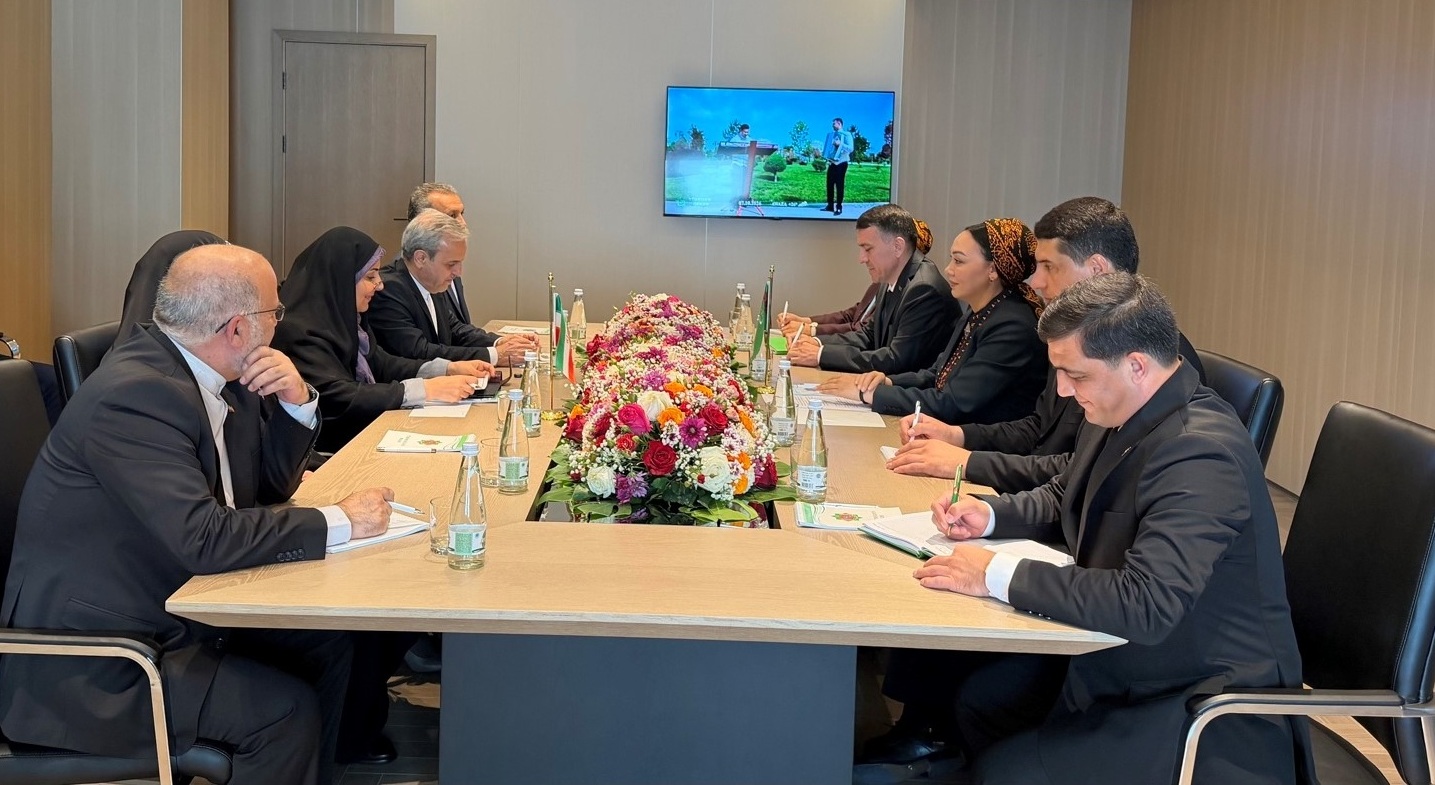

BAKU, Azerbaijan, October 8. Turkmenistan and Iran discussed strengthening transport, trade and economic cooperation during a meeting between the Chairperson of the Mejlis of Turkmenistan, Dunyagozel Gulmanova and Iran’s Minister of Roads and Urban Development, Farzaneh Sadegh, in Avaza yesterday.
This was reflected in a press release published by the Mejlis (Parliament) of Turkmenistan.
According to the publication, the sides highlighted the development of bilateral relations and cooperation in political, trade, economic and cultural-humanitarian spheres. Gulmanova also thanked Sadegh for her participation in international events held in Turkmenistan’s Avaza National Tourist Zone.
The two sides also discussed cooperation between the inter-parliamentary friendship groups, relevant parliamentary committees, young parliamentarians and women parliamentarians.
Sadegh Malvajerd’s portfolio includes Iran’s roads and urban development sector, making transport cooperation a key area of bilateral economic interaction between the neighboring countries.
Meanwhile, Iran is one of Turkmenistan's longest-standing regional partners, with bilateral cooperation spanning energy, transport, trade, and border connectivity. The two countries share a 1,100-kilometer border and maintain an institutional dialogue through a Joint Intergovernmental Commission on Economic Cooperation, which regularly reviews progress across sectors ranging from gas and electricity to transport, customs, agriculture, and investment. During the commission's latest meeting in Tehran in 2025, the sides also discussed the creation of cross-border trade and economic zones to stimulate bilateral commerce.
Energy remains a cornerstone of the relationship. In recent years, Ashgabat and Tehran have expanded cooperation on natural gas supplies, including swap arrangements and discussions on direct exports and transit through Iran to third-country markets. The two sides have also advanced cooperation in electricity transmission and maritime transport, while recent high-level meetings resulted in agreements covering natural gas, customs cooperation, port partnerships between Turkmenbashi and Amirabad, and intergovernmental cooperation plans.
Transport and logistics have become another major pillar of bilateral ties as both countries seek to strengthen regional connectivity. Turkmenistan and Iran have been working to increase cargo flows across their shared border, improve road, rail, and port links, and enhance multimodal transport routes connecting Central Asia with the Persian Gulf and broader international markets.



