


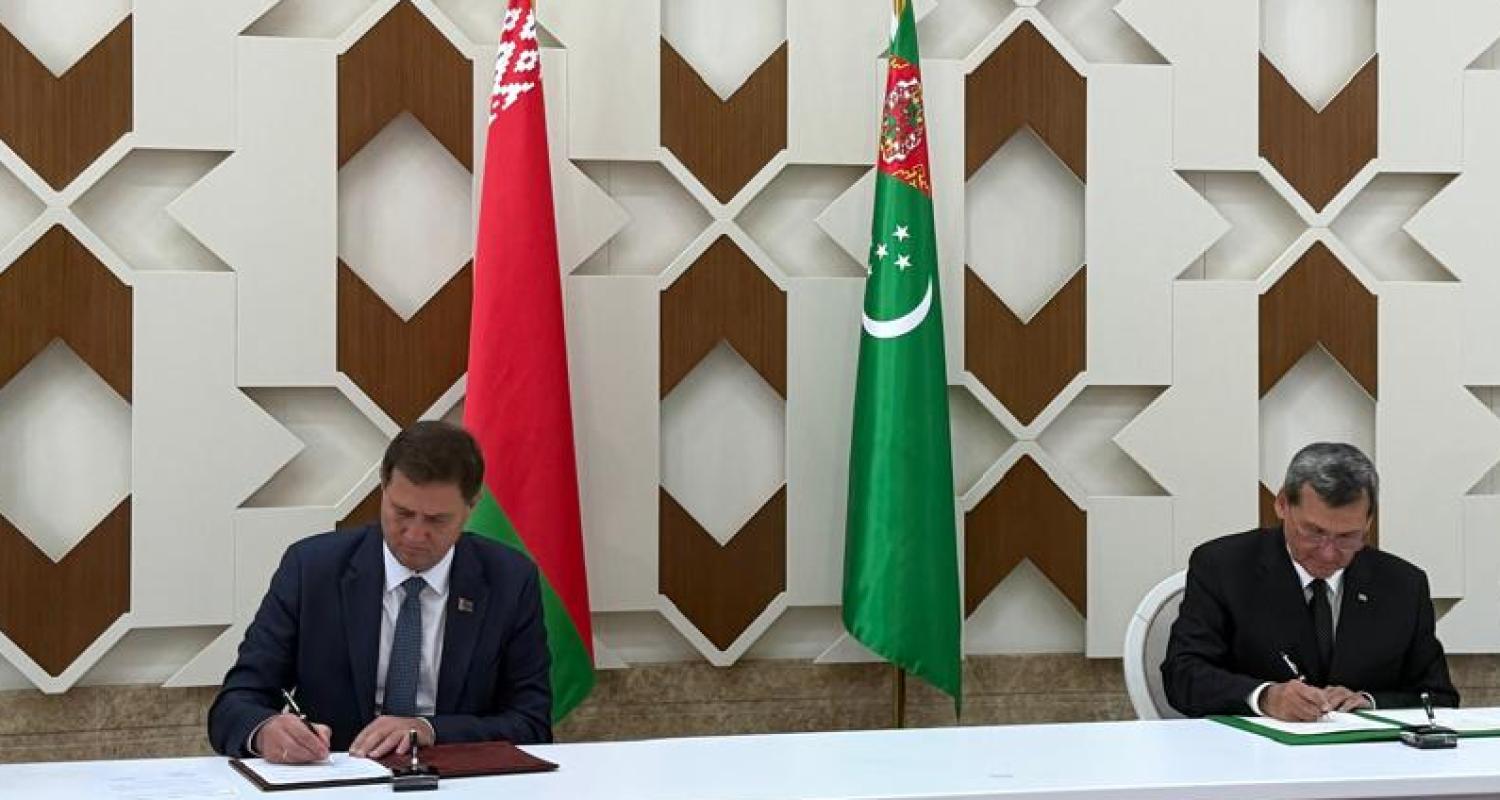

BAKU, Azerbaijan, October 7. Turkmenistan and Belarus signed a cooperation program between their foreign ministries for 2027-2028, aimed at further developing and systematizing interagency cooperation.
This was reflected in a press release issued by the Ministry of Foreign Affairs of Turkmenistan following talks between Turkmen Foreign Minister Rashid Meredov and Belarusian Foreign Minister Maxim Ryzhenkov held today in the National Tourist Zone of Avaza.
During the meeting, the sides discussed the current state and prospects of Turkmen-Belarusian relations and exchanged views on key areas of bilateral cooperation.
Particular attention was paid to expanding cooperation in the trade, economic, cultural and humanitarian spheres.
The officials also emphasized the importance of maintaining regular political dialogue and further strengthening contacts between government agencies.
The sides expressed readiness to continue their dialogue and develop mutually beneficial cooperation between Turkmenistan and Belarus.
The new cooperation program is intended to provide a framework for further interaction between the two countries’ foreign ministries in 2027-2028.
Notably, Turkmenistan and Belarus have maintained regular political and economic contacts, with the two sides describing each other as strategic partners. Economic cooperation has traditionally focused on industrial goods, machinery, agriculture, transport and infrastructure.
Earlier work of the Intergovernmental Turkmen-Belarusian Commission on Economic Cooperation identified mechanical engineering, agro-industry, construction, transport and communications among the areas with potential for expanded trade. Belarusian proposals included supplies of trucks, buses and agricultural machinery to Turkmenistan, while a Belarusian Machinery Service Center operates in Ashgabat.
The economic track remained on the agenda in 2026. During inter-ministerial consultations in Ashgabat in May, the sides reviewed bilateral trade and discussed ways to expand economic cooperation, including through the private sector. They also highlighted cooperation in education, science and culture.



