


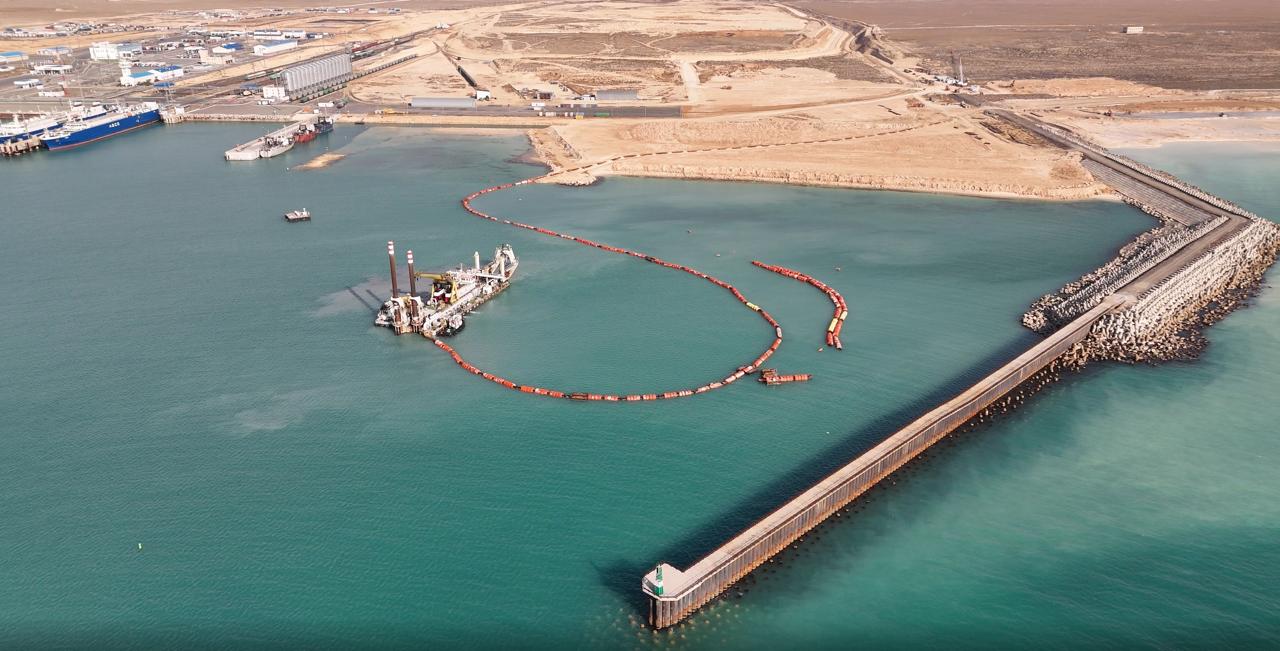

BAKU, Azerbaijan, November 23. Kazakhstan is building the Beyneu-Saksaulsk highway at a cost of $1.65 billion. The road is expected to speed up the delivery of cargo transported from China through Kazakhstan to the ports of Aktau and Kuryk. From there, the cargo can cross the Caspian Sea to the Port of Baku, located in Alat, and continue to Europe via the Middle Corridor. The project is expected to improve domestic transport links and facilitate access to the Caspian route for export and transit shipments.
Construction began in August 2026 with the participation of Kazakh President Kassym-Jomart Tokayev. The highway, with a total project length of approximately 800 kilometers, will pass through the Mangystau, Aktobe and Kyzylorda regions and will form the main section of the Aral-Caspian Highway. Official announcements have cited both 2028 and 2029 as the expected completion dates.
The Development Bank of Kazakhstan provides up to $413.8 million for the project. The overall financing is expected to be arranged jointly with the International Bank for Reconstruction and Development, the European Bank for Reconstruction and Development, and the Asian Development Bank.
The project also includes the installation of an intelligent cargo weighing system with meteorological monitoring, the construction and major renovation of road maintenance units, as well as the development of access roads to settlements with a total length of 240.5 kilometers.
Speaking at the construction launch ceremony on August 3, 2026, Tokayev described the future highway as a "golden bridge" between China and Europe.
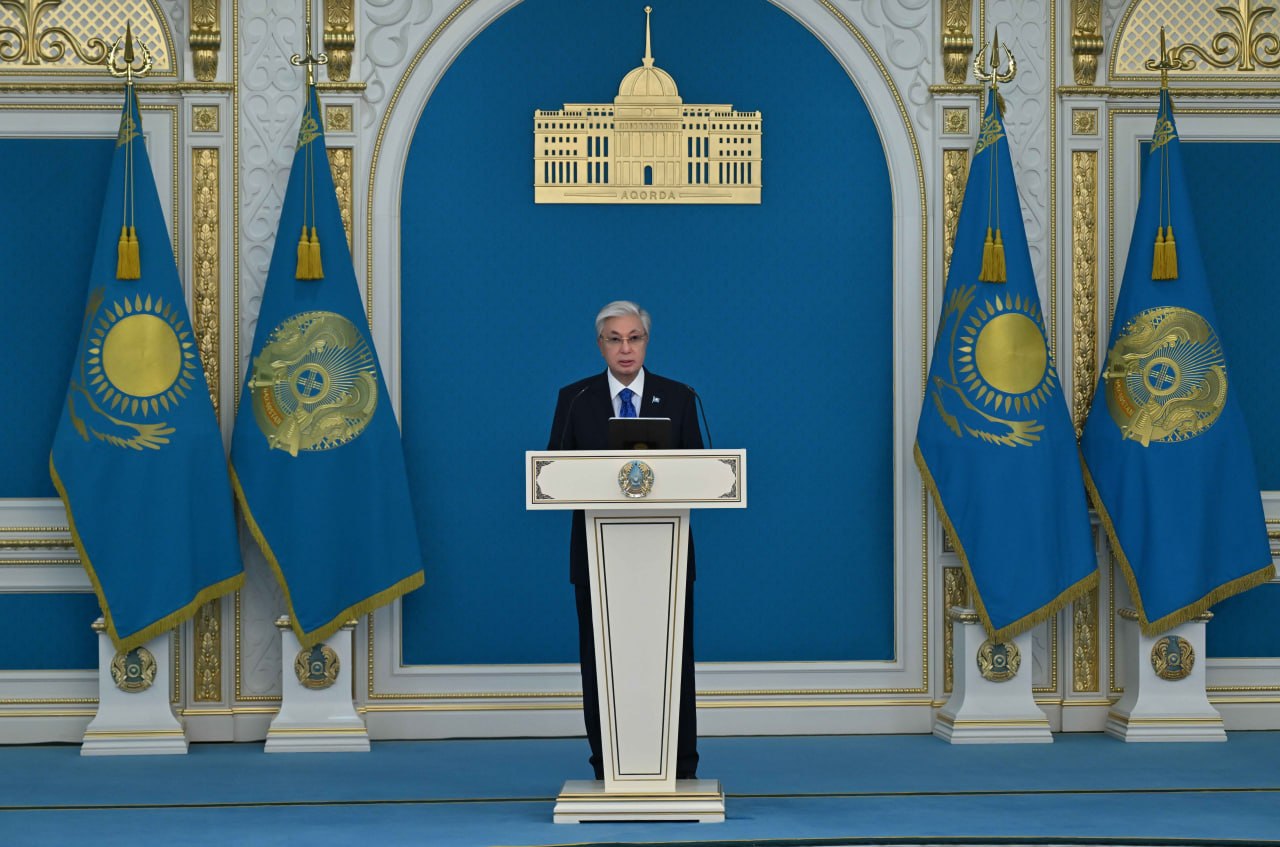
"While strengthening connections within Kazakhstan, the road will also become a 'golden bridge' between China and Europe. The project will directly connect border checkpoints on the Chinese border with the ports of Aktau and Kuryk. As a result, the distance for cargo transportation from China to Europe will be reduced by 1,000 kilometers, while delivery time will be cut by up to three days," Tokayev said.
According to him, the Beyneu-Saksaulsk highway will become a key transport artery of national, regional and transcontinental importance.
"That is precisely why the name 'Aral-Caspian Highway' is the most appropriate for this route," the president noted.
Two other road projects were launched on the same day. One involves the reconstruction of the 312-kilometer Ulgaysyn-Saksaulsk highway, which forms part of the Samara-Shymkent transport corridor. The project is estimated to cost approximately $1.6 billion, with financing planned to be provided entirely by the Development Bank of Kazakhstan.
The other project envisages the reconstruction of the 462-kilometer Kyzylorda-Saksaulsk highway. It is part of the international Western Europe-Western China transport corridor, which connects China, Kazakhstan and Russia with European markets. The total project cost stands at $1.767 billion, of which the Development Bank plans to provide up to $522.784 million.
The three road projects are estimated to cost approximately $5 billion in total. They are expected to improve connectivity between the country's regions and link several international transport routes. Beyneu is particularly important as a transport hub in western Kazakhstan, with routes connecting the country to Russia, Uzbekistan and Turkmenistan, as well as to the ports of Aktau and Kuryk. The new highway will link the Western Europe-Western China corridor with the Middle Corridor.
At the same time, Kazakhstan is expanding its railway infrastructure. Construction is underway on the 303-kilometer Bakhty-Ayagoz railway line. Work was launched in late 2023, and the line is scheduled for completion and commissioning in 2027.
The new line is expected to increase the capacity of the Kazakhstan-China border by 20-25 million tonnes of cargo per year. By easing pressure on existing border crossings and expanding railway connectivity, it will strengthen the overall transport chain linking the Chinese border with the Caspian ports.
Infrastructure development is taking place amid growing freight volumes. According to Kazakhstan's Ministry of Transport, total container traffic in the country reached 1.234 million twenty-foot equivalent units (TEUs) in the first ten months of 2026, up 8% year-on-year. The Middle Corridor accounted for 57,300 TEUs, a 64% increase compared to the same period last year.
According to the World Bank, freight volumes along the Middle Corridor could increase 3.6-fold by 2040, provided that infrastructure investment continues. This will require the development of railway lines, access roads to ports, terminals and border crossings. Kazakhstan is seeking to prepare its transport network in advance for a potential increase in cargo flows, as growing demand without sufficient investment could lead to congestion along certain sections of the route and delays in delivery.
In October 2026, Kazakhstan and Azerbaijan signed an intergovernmental agreement on the development of the Middle Corridor. The document provides for stronger transport and logistics cooperation, ensuring sufficient capacity along the route and maintaining tariff stability. This is expected to make transportation conditions more predictable for cargo owners and facilitate supply planning.
In November, the two countries signed agreements on the Caspian Bridge project, which focuses on integrating ferry services into a unified railway logistics system. Its capacity is expected to reach at least 8 million tonnes of cargo per year, with the potential to increase to 10-12 million tonnes. In addition, the parties agreed on the terms for establishing a joint intermodal cargo terminal at the Port of Baku in Alat.
These initiatives complement Kazakhstan's investments in road and railway infrastructure. However, increasing capacity along individual sections does not automatically translate into a similar rise in freight volumes across the entire route, as ports and ferry services could become bottlenecks if they are not ready to handle additional cargo. Coordinated development of the entire chain, from border crossings to ports and ferry services, is therefore essential.
In this transport system, Azerbaijan's Port of Baku is becoming an important link on the western route. As cargo flows from Kazakhstan to the ports of Aktau and Kuryk increase, demand for capacity on the Azerbaijani coast is also expected to grow, and the joint intermodal terminal will help prepare the infrastructure to receive and further dispatch these shipments.
Overall, Kazakhstan's investments in transport infrastructure are aimed at generating long-term economic returns by reducing delivery times and costs, increasing the capacity of export routes and attracting additional transit cargo.


